For more than 135 years, there has been a pharmacy at 96 Main Street. The names over the door have changed, but the promise behind it has remained remarkably consistent: this is a place where people come not simply to have a prescription filled, but to know the person filling it.
It began with John D. Blauvelt, who brought his Spring Valley apothecary to Nyack in 1890. In 1934, the business became Koblin’s, a name that would become woven into the fabric of downtown Nyack for generations. Jerry Koblin eventually passed the torch to Jeff Rucker, who carried the tradition into a very different era of American healthcare.
And now there is another chapter. Karan Kharawala has taken over the pharmacy, becoming the latest steward of a business that has moved from Blauvelt to Koblin to Rucker to Kharawala without losing the essential character that made it special in the first place.
Karan never had the chance to meet Jerry Koblin, but, as he puts it, “I feel like I’ve known him through his stories.” Those stories, passed down by customers and staff, have given the new pharmacist a sense of the responsibility he has inherited. “I look forward to helping the patients in our community and making Koblin’s a home where everyone feels welcome.”
The Origins of Koblin’s

In 1890, John D. Blauvelt relocated his Spring Valley apothecary to Nyack in an effort to create the most exclusive drug store in Rockland County. The interior looked more like a soda shop than a pharmacy and the staff more like waiters than healthcare workers.
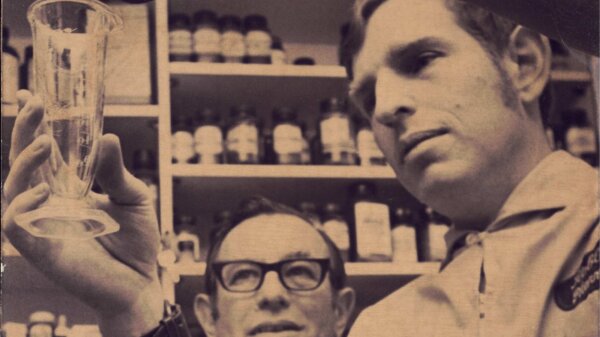
David Koblin purchased the business from the Blauvelts in 1934 and continued filling the community’s prescriptions. His son, Jerry Koblin started as a stock runner, resupplying the shelves from the cavernous storage space in the basement as products were sold. After his graduation from the University of Connecticut and 6 years in the Air National Guard, which included a year and a half at Andrews Air Force base, Jerry returned to Nyack with his pharmacist’s license.
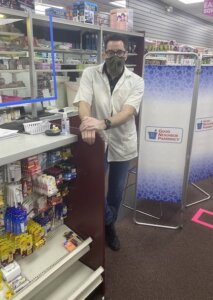
Jerry’s father was ambivalent about passing on the torch to his son. “He pleaded with me not to do this,” Jerry told me. His father warned him that the obligation was 7 days a week and 365 days a year. But Jerry looked at his father and saw a man that everybody liked and respected. “I never thought about doing anything else.” When Jerry sold Koblin’s he was 75 years old and worked that many hours per week.
Jeff Rucker Before Koblin’s
The previous Koblin’s owner, Jeff Rucker, started in the business behind the counter as a tech at Walgreens. He worked the 2 – 10p night shifts, while pursuing a degree in Computer Science. After a while, the pharmacists must have seen that Jeff had the temperament for the trade and encouraged him to join the ranks. “I transferred in LIU and that was that.”

After almost 20 years at Walgreen’s, Jeff and some partners decided to buy a pharmacy. “The Walgreens that hired me in 1991 was not the Walgreen’s I left in 2009. You really can’t provide personal services when you are filling 800 scripts a day.”
As recent social media posts have observed, Jeff kept some of the staff that people have come to know over the decades like Manager Chuck Travers, Tom O’Malley both who have been on board for over 20 years, and Sam Jackson who was hired by David Koblin in the 1960s. Sam’s daughter Sharon works the counter.
Modern Challenges
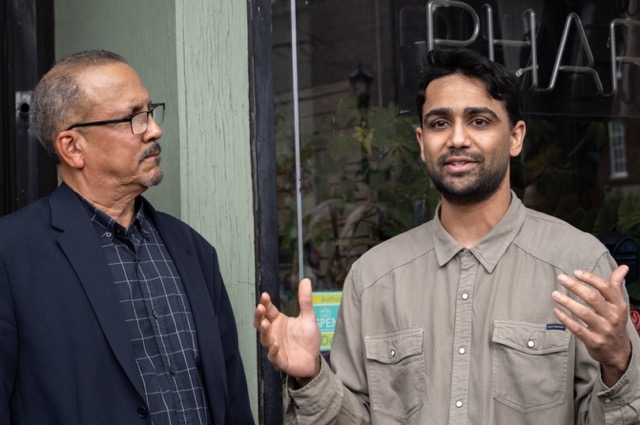
The healthcare system that prompted Jerry’s father’s admonition was profoundly less complex and litigious than today’s. In 1970, people paid for their medicine out of pocket. There were no health insurance companies and no computerized records. Most prescriptions cost between $4 and $6 to fill. Jerry vividly remembers the first time a third party paid the cost of someone’s medication. In 2013, Jeff mentions underpayments by third party insurers as a continued struggle for the independent pharmacy.
On the same topic, Karan described recently dispensing a medication that costs 150 dollars, but the insurance company will only pay 85 dollars for it. “However, if you fill it at CVS, the insurance company will pay CVS 185 dollars for the same medication or they’ll sell it to them for cheaper. “At the end of the day. I’m a pharmacist first and a business owner second. Losses are inevitable, and navigating them is the challenge pharmacies face today. I’d rather take on the loss and hope to make it up in the future than see my patients suffer,” Karan said.

With Halloween around the corner, the familiar Koblin’s sign has gotten its annual makeover, with the “K” becoming a “G” and Koblin’s becoming Goblin’s. This word play is a light-hearted tradition started by Jeff Rucker, that has survived another change of ownership says something important: not everything needs to change just because the person behind the counter does.
That continuity is visible in more ways than the name on the door. Jerry Koblin’s respect for his staff has become part of the pharmacy’s legacy, too. When you visit on a weekday, you will find Sharon Jackson daughter Sharon behind the counter.
The era of the traditional mom-and-pop pharmacy may have largely disappeared, but at 96 Main Street, something of that spirit is still very much alive. For generations, Nyack has trusted this corner pharmacy to look after its health and well-being. Now Karan Kharawala has the opportunity to write the next chapter—and if you have a prescription to fill, or simply need a pharmacy that knows its community, stop in and give Koblin’s a chance to take care of you
An activist, artist and writer, Bill Batson lives in Nyack, NY. Nyack Sketch Log: “Nyack Sketch Log: Koblin’s Continues” © 2022 Bill Batson. Visit billbatsonarts.com to see more.