Nyack History A to Z
How a 5-foot-2 Nyack Senator Took on Tammany Hall – and Won
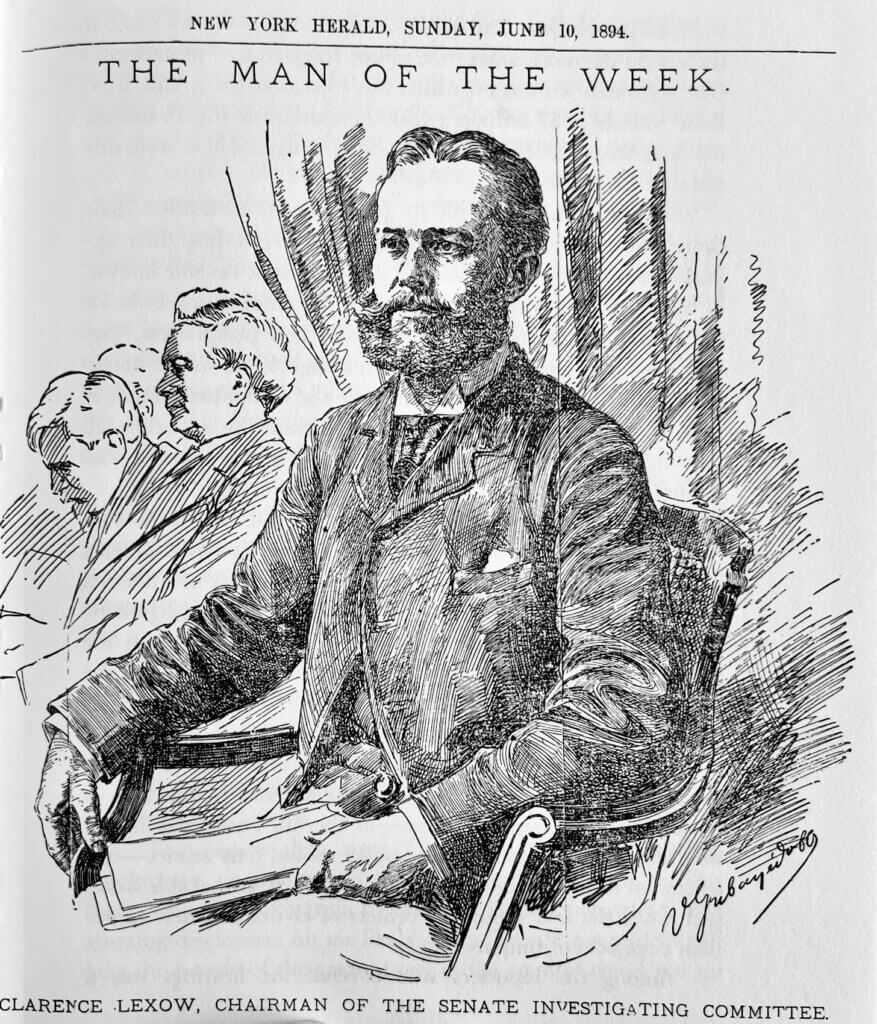
In the Gilded Age, when Tammany Hall dominated New York City politics, Clarence Lexow hardly looked like a man who would challenge one of the nation’s most powerful political machines. Standing just 5 feet 2 inches tall, the South Nyack lawyer wore a grand top hat and sported a pair of extravagant whiskers that attracted almost as much attention as his politics. Tammany Hall dismissed him as a “little whipper snapper from Nyack.” They soon learned not to underestimate him.
In 1894, the freshman state senator led an investigation that exposed astonishing corruption in the New York City Police Department and helped drive Tammany Hall from power. Then he turned to another seemingly intractable problem: getting the legislation that created Greater New York through Albany. Although largely forgotten today, Clarence Lexow left an enormous mark on New York City and New York State from his small village on the Hudson.
The Making of a Reformer
Born in Brooklyn in 1852, Clarence was the second son of Rudolph Lexow, a German intellectual and businessman who came to America following the failed German Revolution of 1848. The family eventually settled at Rock Manor, a large farm in Nanuet.
Rudolf, who spoke eleven languages, expected great things from his son. Clarence studied at the German American Institute in Brooklyn and later at the universities of Bonn and Leipzig. While in Germany, he embraced liberal and socialist ideas and was arrested three times for participating in political protests.
Back in America, however, Clarence surprised his father by rejecting the family publishing business. He enrolled at Columbia Law School, graduated in 1874, and began practicing law in New York City.
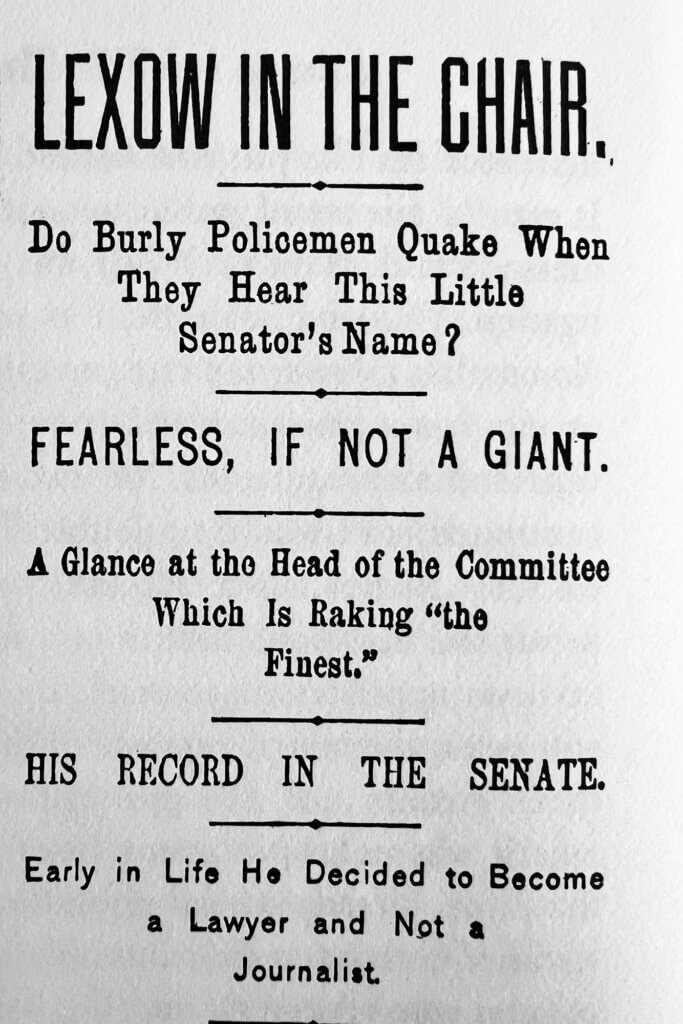
Contemporary newspapers made much of Lexow’s diminutive stature. One profile asked whether “burly policemen quake when they hear this little senator’s name?” New York Herald, June 10, 1894
From Nyack to Albany
Clarence married Katharine Morton Ferris in 1881, and the couple moved to Nyack the following year. In 1884, they built an elaborate Victorian home at 298 Piermont Avenue in South Nyack, where they raised their family. An 1889 newspaper profile called Lexow “the pioneer of South Nyack” and credited him with transforming former swampland into one of the village’s finest properties.
Lexow quickly became part of Nyack’s civic and business establishment. He organized the Nyack Electric Light and Power Company, the forerunner of today’s Orange and Rockland utilities, led a local building and loan association. He also served as president of South Nyack, participated in the Nyack Boat Club, and helped found Nyack Hospital.
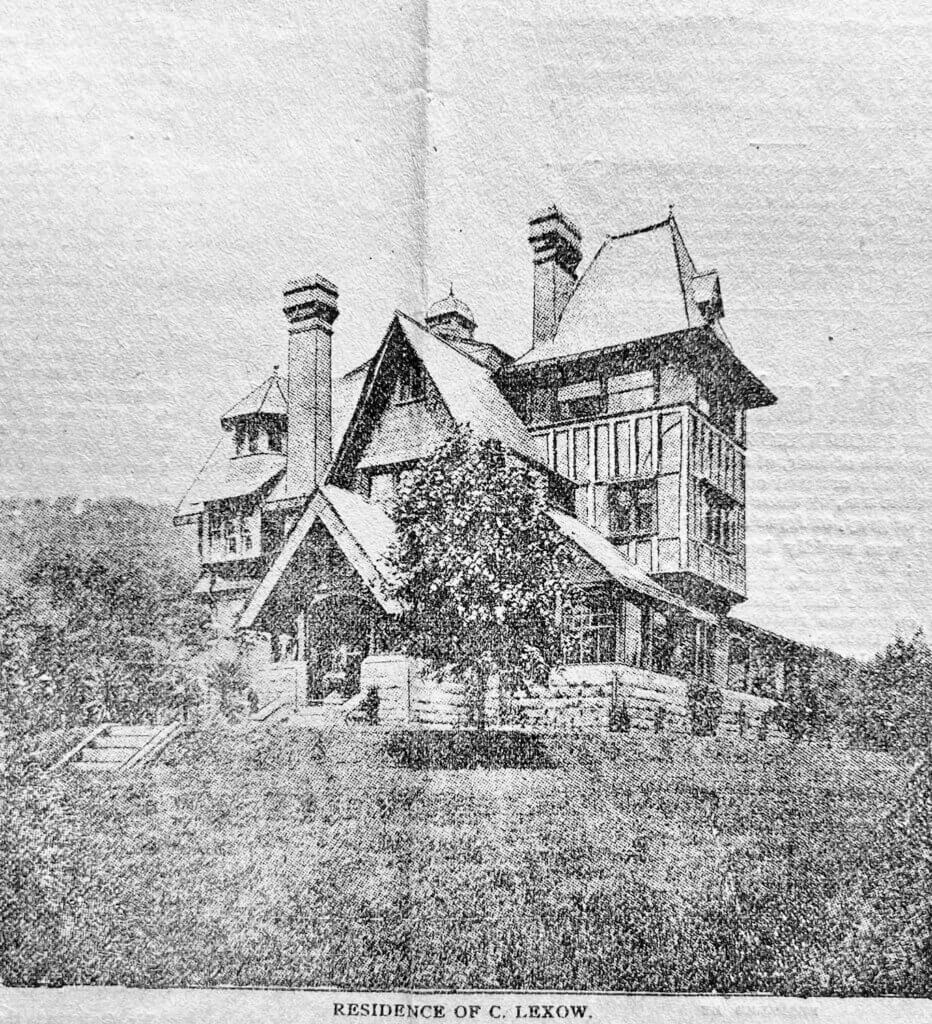
Politics increasingly occupied his attention. In 1886, he became chairman of the Rockland County Republican Party. After losing a State Senate race in 1890, he tried again in 1893 and won a district encompassing Rockland, Orange, and Dutchess counties.
Lexow was a Republican, but many of the causes he championed would became hallmarks of the Progressive Era. These included attacking government corruption, curbing concentrated power, reforming elections, and demanding greater public accountability.
The little senator from Nyack was headed for Albany.
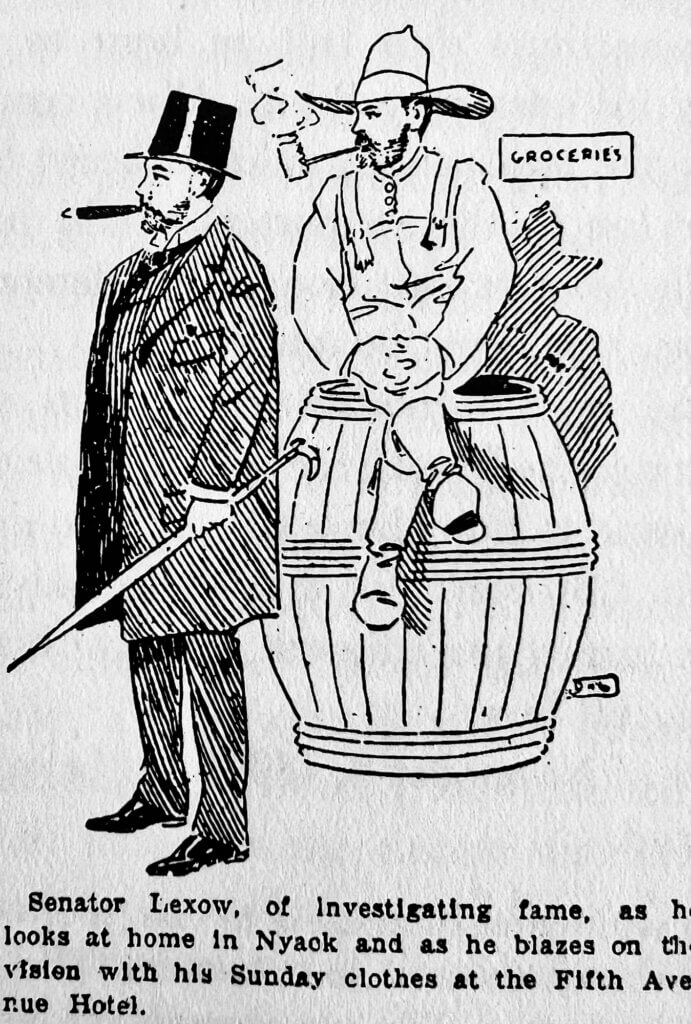
A contemporary cartoon contrasts Lexow at home in Nyack with the newly famous senator dressed for New York’s Fifth Avenue Hotel. From Politics in the Gilded Age, Savell, 1984.
Taking On Tammany Hall
Almost immediately after arriving in Albany, Lexow introduced legislation calling for an investigation of the New York City Police Department. Remarkably for a freshman senator, he was chosen to chair the committee.
What followed became one of the great political spectacles of the Gilded Age.
Over months of hearings, the committee questioned 678 witnesses and compiled 10,576 pages of testimony. Police captains, commissioners, inspectors, businessmen, criminals, saloonkeepers, and ordinary citizens described a system in which corruption had become woven into everyday government.
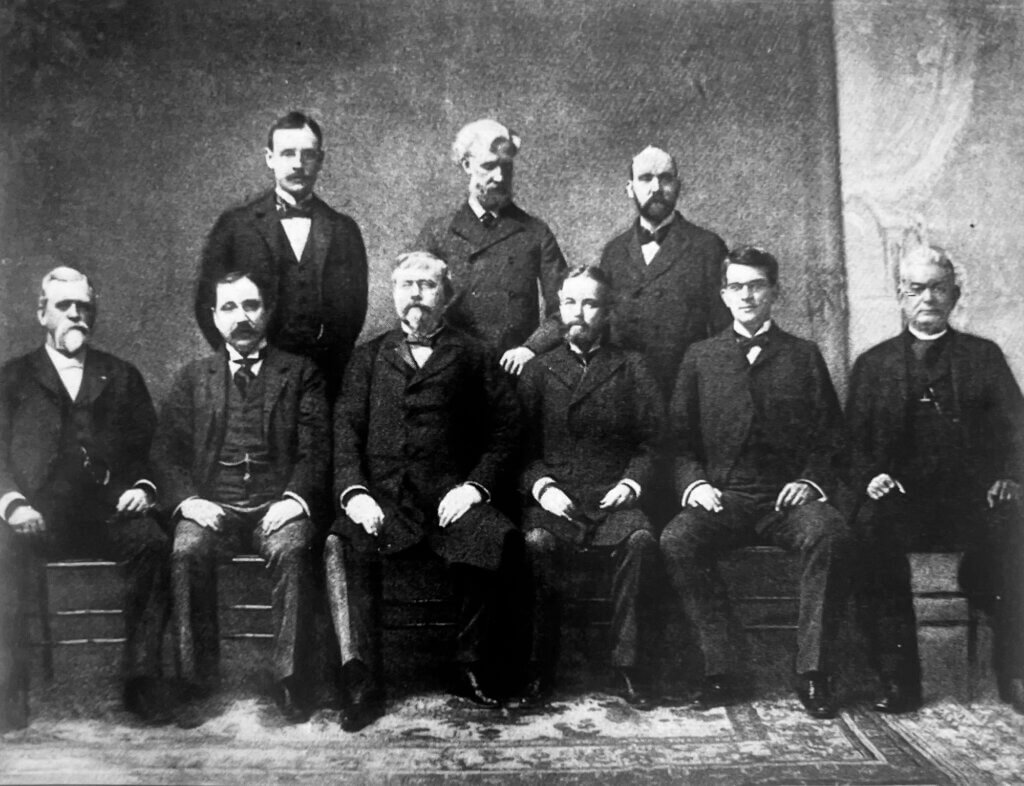
Clarence Lexow, seated third from right, chaired the State Senate committee investigating corruption in the New York City Police Department. Harper’s Weekly, January 5, 1895.
Police officers paid for appointments and promotions. A sergeant’s position could cost $2,500; promotion to captain could require more than $10,000. Gambling establishments, brothels, saloons, and other businesses paid police for protection. The investigation also uncovered evidence of fraudulent voting and close connections between the police department and Tammany Hall.
The committee’s final report minced few words:
“It has been conclusively shown that in a very large number of the election districts of the City of New York, almost every conceivable crime against the elective franchise was either committed or permitted by the police.”
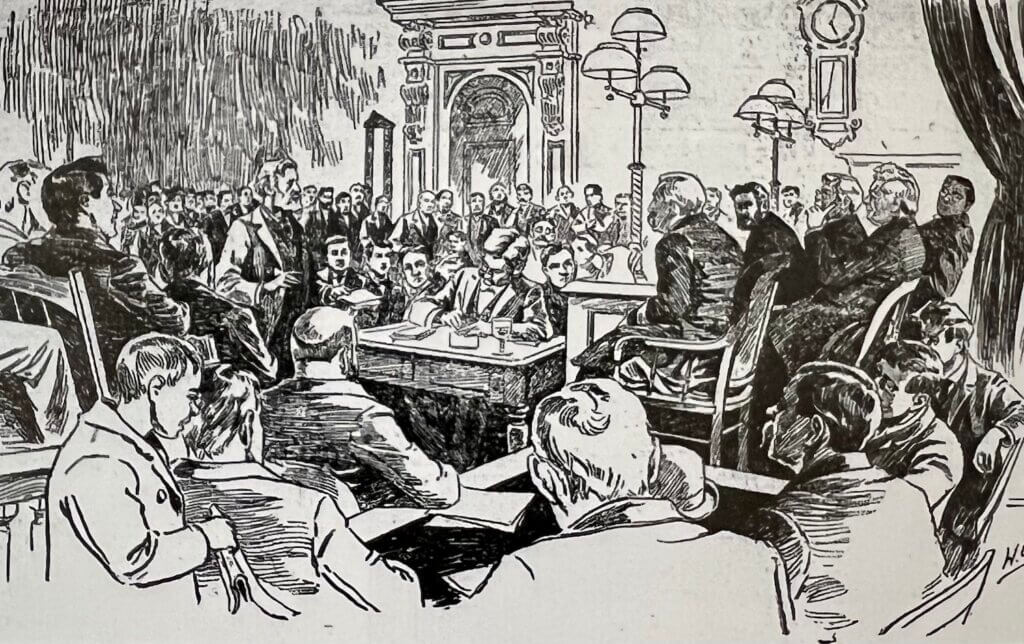
Crowds packed the sensational hearings as witnesses testified before Lexow’s committee. New York Herald, December 15, 1894.
The hearings attracted enormous public attention. Sessions became standing-room-only events, while newspapers across the country reported the latest testimony. Lexow, previously little known outside Rockland County political circles, became a national figure.
To Be Lexowed
Within months, Lexow had become more than the name of a senator. His surname had become a verb.
Newspapers across the country began using “to be Lexowed” as shorthand for being subjected to a searching public investigation. The expression soon escaped its original New York police context. Cities were to be “Lexowed.” Police departments were “Lexowed.” Eventually newspapers applied the term to investigations involving local governments, public boards, and even school boards.
And the expression lasted. Decades after the original hearings, newspaper editors could still put “Lexowed” in a headline and expect readers to understand what it meant.


A Name Becomes a Verb.
From the 1890s into the 1920s, newspapers across the country used “Lexowed” as shorthand for being subjected to a searching public investigation.
Tammany Hall Strikes Back
Tammany Hall did not take kindly to the investigation. Lexow endured personal attacks from politicians and hostile newspapers. Critics called him the “Grand Inquisitor,” a tool of upstate “hayseeds,” and the “little whipper snapper from Nyack.” The insults did little to stop him.
The investigation helped turn public opinion against Tammany Hall. In the 1894 election, Tammany lost control of City Hall and reform candidate William L. Strong became mayor. Strong appointed Theodore Roosevelt to the city’s Police Commission, where the future president took on the task of reforming the department whose corruption the Lexow Committee had laid bare.
Tammany Hall eventually returned to power, and not all of the committee’s proposed reforms endured. But in 1894, the little senator from Nyack had accomplished what few thought possible: he had helped expose one of America’s most powerful political machines, drive it temporarily from City Hall, and set the stage for a new generation of reformers.
Helping Create Greater New York
Lexow’s political career could have ended with the Tammany investigation and still been remarkable. Instead, he played a key role in another transformation: the creation of Greater New York.
The vision belonged largely to Andrew Haswell Green, who had promoted consolidation beginning in 1868. By the 1890s, the idea of joining New York City with Brooklyn and surrounding communities had gained momentum. Voters approved consolidation in an 1894 referendum, but turning that mandate into law proved difficult. The legislation repeatedly became entangled in Albany politics.
Republican leader Thomas C. Platt turned to Lexow to break the impasse. Lexow introduced the consolidation bill, guided it past objections in committee and through the State Senate. His success cleared the way for Greater New York to become a reality.
On January 1, 1898, Manhattan, Brooklyn, Queens, the Bronx, and Staten Island became the five boroughs of the Greater City of New York.
For a state senator from South Nyack serving only his second term, it was another extraordinary achievement. Lexow had helped expose the government of America’s largest city, and then helped create the city we recognize today.
Then, just as suddenly as his political career had begun, it ended. After only two terms in the State Senate, Lexow declined to seek reelection and returned to his law practice in Nyack. The documentary record does not clearly explain why. According to a story passed down in the Lexow family, he feared that a relative’s financial wrongdoing would become pubic and disgrace the family name if he ran again. Without supporting evidence, however, the story remains family tradition rather than documented history.
A Reformer With Limits
Lexow believed strongly in reforming government, but his definition of reform had limits.
His wife, Katharine, became involved in woman suffrage, and their daughter Caroline Lexow emerged as one of the nation’s determined suffrage activists. A Barnard graduate, Caroline helped found the Women’s Political Union and traveled around the country campaigning for women’s right to vote.
Clarence did not share her commitment to suffrage. The disagreement created a serious rift between father and daughter.
There is an irony in Caroline’s story. The young woman who grew up watching her father challenge entrenched political power eventually challenged the political assumptions of her own household. She would continue fighting for women’s rights long after her father’s death and later advocated for the Equal Rights Amendment.
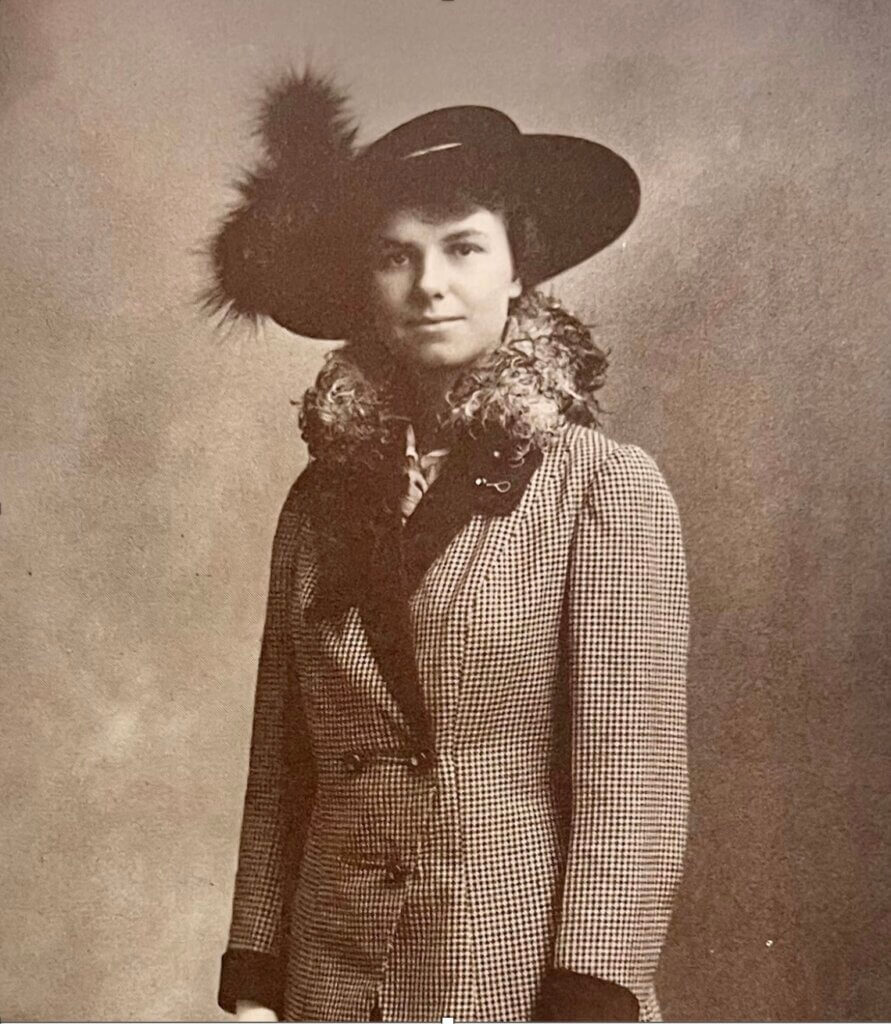
Lexow’s daughter became a nationally prominent leader in the campaign for woman suffrage. Courtesy of the Nyack Library.
Nyack’s Little Giant
Lexow believed strongly in reforming government, but his definition of reform had limits.
His wife, Katharine, became involved in woman suffrage, and their daughter Caroline Lexow emerged as one of the nation’s determined suffrage activists. A Barnard graduate, Caroline helped found the Women’s Political Union and traveled around the country campaigning for women’s right to vote.
Clarence did not share her commitment to suffrage. The disagreement created a serious rift between father and daughter.
There is an irony in Caroline’s story. The young woman who grew up watching her father challenge entrenched political power eventually challenged the political assumptions of her own household. She would continue fighting for women’s rights long after her father’s death and later advocated for the Equal Rights Amendment.
Nyack’s Little Giant
Clarence Lexow died of pneumonia in 1910 at just 58 years old. His death was reported far beyond Nyack.
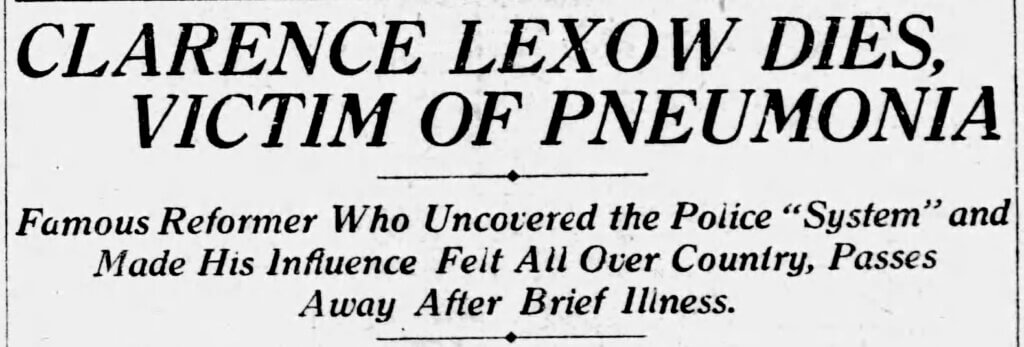
At Lexow’s death in 1910, the Syracuse Post-Standard remembered the “Famous Reformer” who “Made His Influence Felt All Over Country.”
At his death, Clarence Lexow was remembered as a nationally famous reformer. His name had become a verb, his investigation had helped unseat Tammany Hall, and his legislative career helped reshape Greater New York.
Today, except in histories of New York politics, he is largely forgotten. In Nyack, his name survives most visibly on Lexow Avenue, a quiet reminder of the 5-foot-2 senator whose influence once reached far beyond his village on the Hudson.
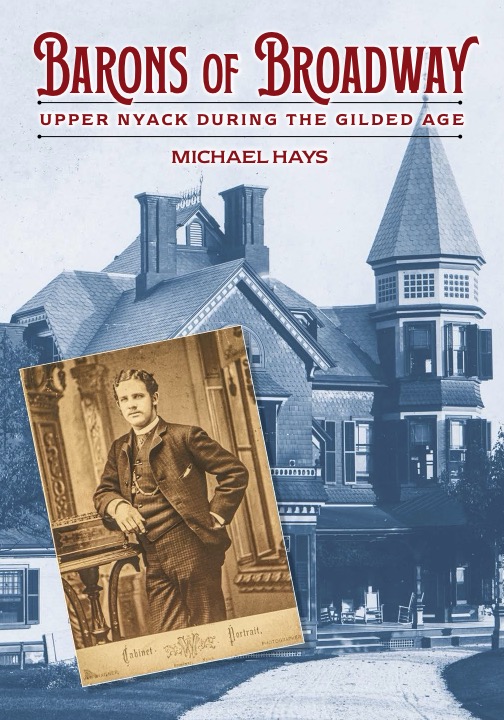
Just Published
Barons of Broadway: Upper Nyack During the Gilded Age
Available at Pickwick Books, Historical Society of the Nyacks, and Amazon
About the author
Mike Hays has lived in the Nyacks for 38 years. After a career as an executive at McGraw-Hill Education in New York City, he now focuses on researching, writing, and interpreting local history.
He serves as Treasurer and past President of the Historical Society of the Nyacks. He is also a Trustee of the Edward Hopper House Museum & Study Center and Historian for the Village of Upper Nyack. In these roles, he works with community partners to preserve historic resources and expand public understanding of the area’s past.
Since 2017, he has written the popular Nyack People & Places column for Nyack News & Views. The series chronicles the history, architecture, and personalities of the lower Hudson Valley.
Hays has also developed museum exhibitions, written interpretive materials, and led well-attended walking tours that bring Nyack’s history to life.
He is married to Bernie Richey. He enjoys cycling, history walks, and winters in Florida. You can follow him on Instagram at @UpperNyackMike.
Editor’s note: This article is sponsored by Sun River Health and Ellis Sotheby’s International Realty. Sun River Health is a network of 43 Federally Qualified Health Centers (FQHCs) providing primary, dental, pediatric, OB-GYN, and behavioral health care to over 245,000 patients annually. Ellis Sotheby’s International Realty is the lower Hudson Valley’s Leader in Luxury. Located in the charming Hudson River village of Nyack, approximately 22 miles from New York City. Our agents are passionate about listing and selling extraordinary properties in the Lower Hudson Valley, including Rockland and Orange Counties, New York.