Nyack History A to Z
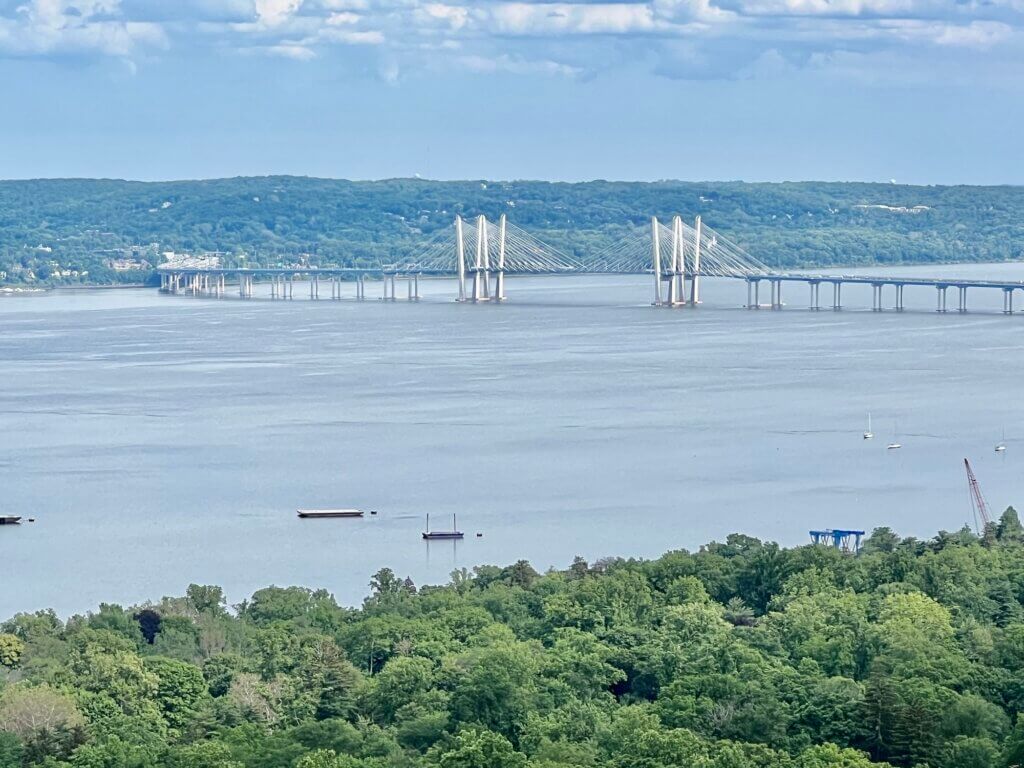
Hidden near a group of trees on a lonely ridge above Upper Nyack lies the rectangular stone foundation of one of Rockland County’s most unusual landmarks. In 1891 attorney Richard Dickinson “Major” Jewett built a private astronomical observatory atop West Hook Mountain, the wooded ridge across Route 9W from the better-known Hook Mountain.On clear summer evenings, Jewett would climb the stairs of his wood-frame tower to use his telescope. For a few peaceful hours, the busy attorney focused on the night sky.
Described as a “large tower” that “could be seen for miles up and down the river,” the observatory was a point of interest to Gilded Age visitors in Nyack. Unfortunately, fire destroyed the tower in 1905. It remained forgotten for generations, until the site was rediscovered more than a century later by Upper Nyack resident Tom Perry while exploring newly acquired Clarkstown parkland.
Jewett did not arrive at astronomy by accident. It was one of the many interests pursued by this remarkably energetic and curious man.
A Man of Many Interests

His interests ranged widely: he practiced law in Washington, served in the National Guard, experimented with photography, designed stonework around Water Crest, built an imposing winter residence near Washington D.C.’s Dupont Circle, and pursued astronomy from his private mountaintop observatory.
Born in Piermont, Jewett attended Williams College before graduating from Columbia Law School. He joined the New York Bar in 1880 and later established a successful legal practice in Washington, D.C., specializing in claims before the General Land Office. During the same period, he served as Major of Company K, Tenth Regiment, New York National Guard. Proud of both his military service and Revolutionary War ancestry, he adopted the title “Major” throughout the rest of his life.
In 1890, Jewett purchased a strip of land on West Hook Mountain and built his observatory there the following year. In 1892, he added the forty-acre Brush estate along the Hudson River, joining his riverfront property to the mountain tract. The purchase created a continuous estate stretching of more than 40-acres from the Hudson to the summit of West Hook Mountain.
“I am much pleased with the property. It gives me a fine waterfront, and I find it connects with the mountain strip which I purchased some time ago for my observatory.”
Rockland County Journal, October 18, 1892
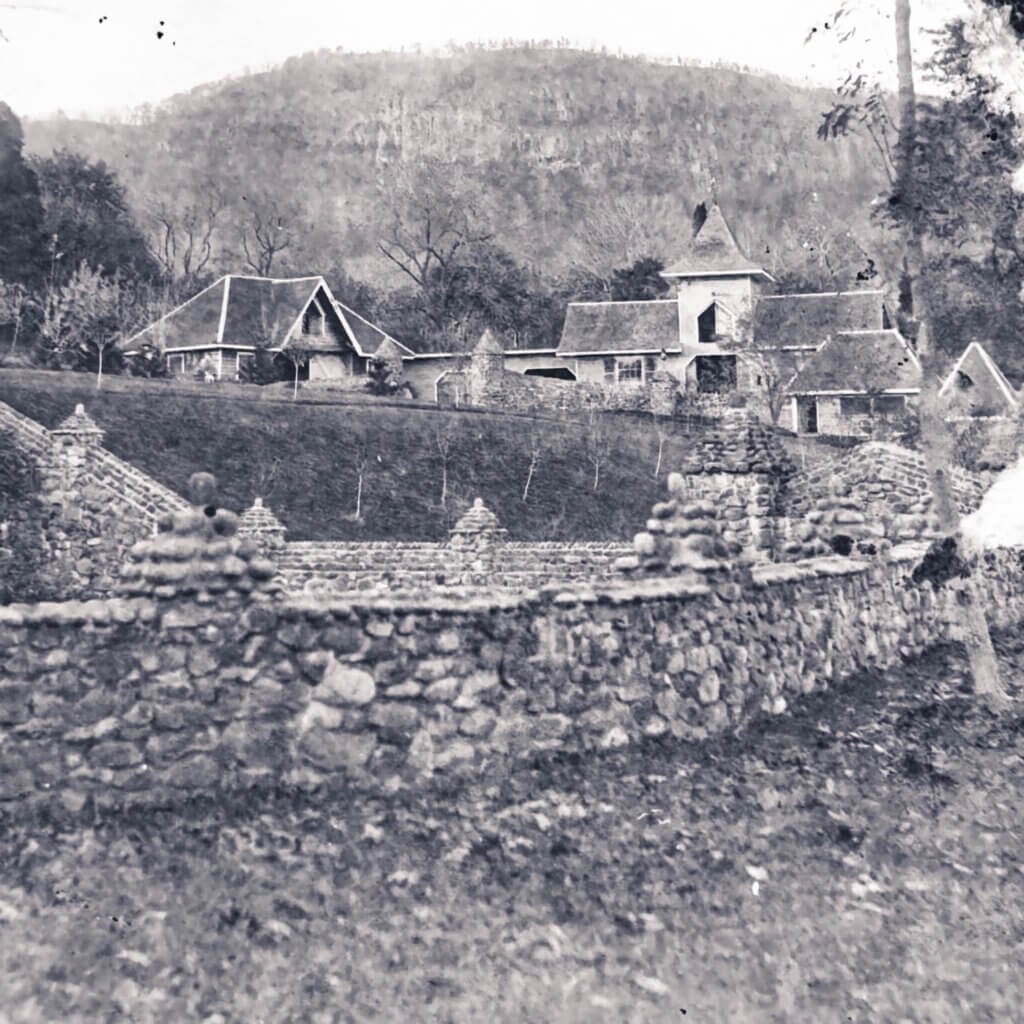
In 1896 he completed Water Crest, one of Upper Nyack’s finest riverfront summer homes, surrounding it with fieldstone walls, arches, and towers of his own design.
Fascinated by Light
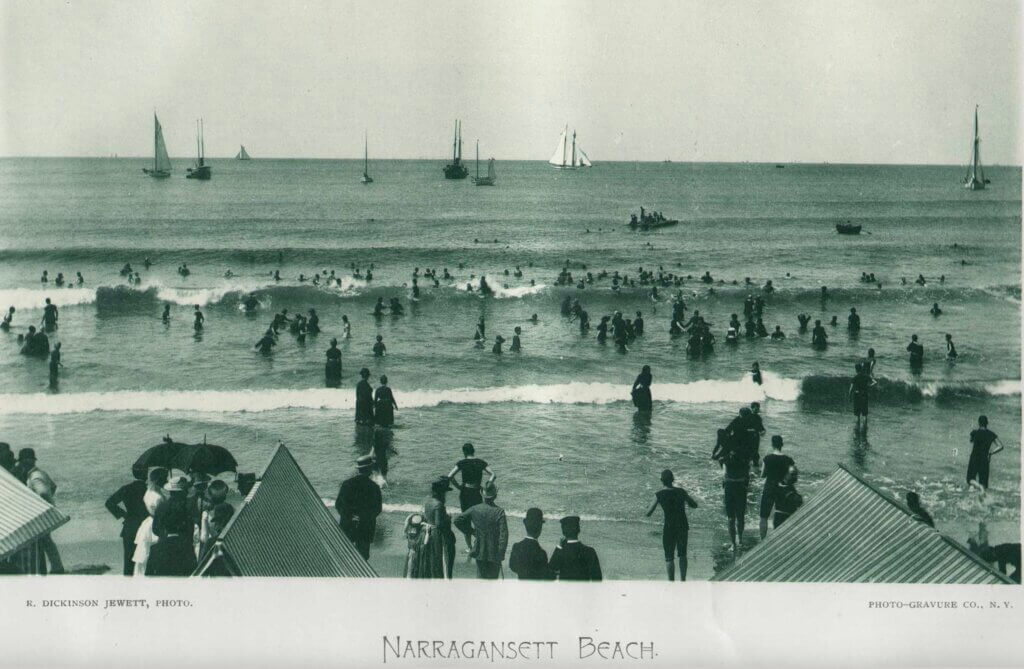
Jewett’s fascination with light extended far beyond astronomy. While practicing law in Washington, D.C., he became an active member of the Washington Camera Club, one of the nation’s leading organizations devoted to the art and science of photography. In November 1889, The Photographic Times selected his photograph Narragansett Beach as its frontispiece and published his comments on photographic technique, including the developer formula he preferred. His work reflected both artistic vision and technical mastery.
Reaching for the Stars
The broad summit of West Hook Mountain offered expansive views of the eastern sky over the Hudson River. Although Nyack had been illuminated by electric streetlights since 1887, the village generated only a fraction of today’s artificial light. From the mountain, Jewett still enjoyed skies dark enough for serious astronomical observing.
Although no photographs of Jewett’s observatory are known, contemporary observatories built during the early 1890s provide a good idea of what he likely built.
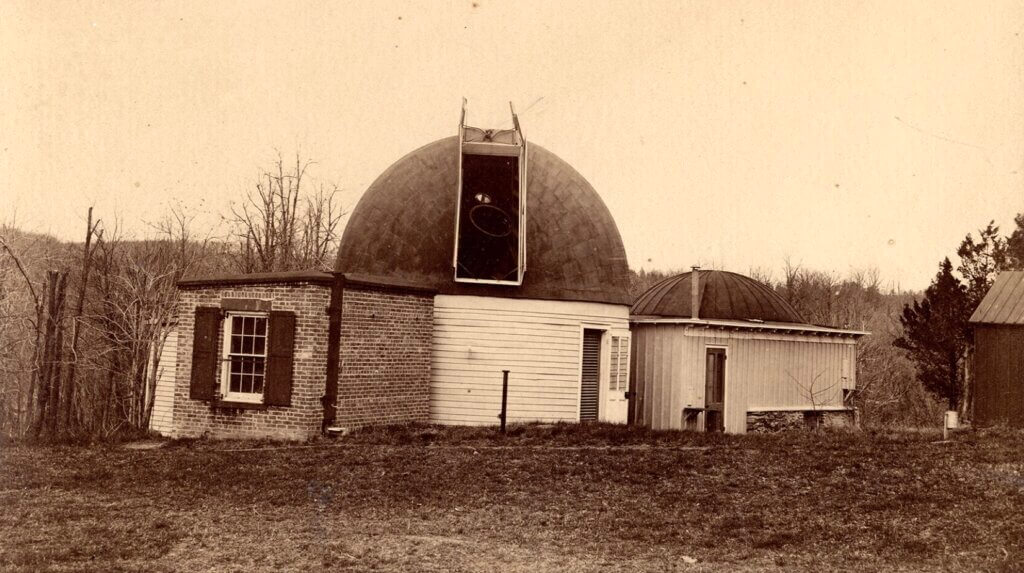
Contemporary newspapers described the observatory as a very tall wooden tower with a large telescope reached by wooden stairs. It sat on a stone foundation laid on bedrock to minimize vibrations from footsteps. Private observatories of the time commonly used a rotating dome with an observer slit as shown in the nearby Draper Observatory.
The telescope was probably a refracting instrument with a lens of six to eight inches, typical of wealthy amateur astronomers of the period. Once aimed with a smaller finder telescope and focused by hand, it would have revealed Saturn’s rings, Jupiter’s cloud belts, and the mountains and craters of the Moon.
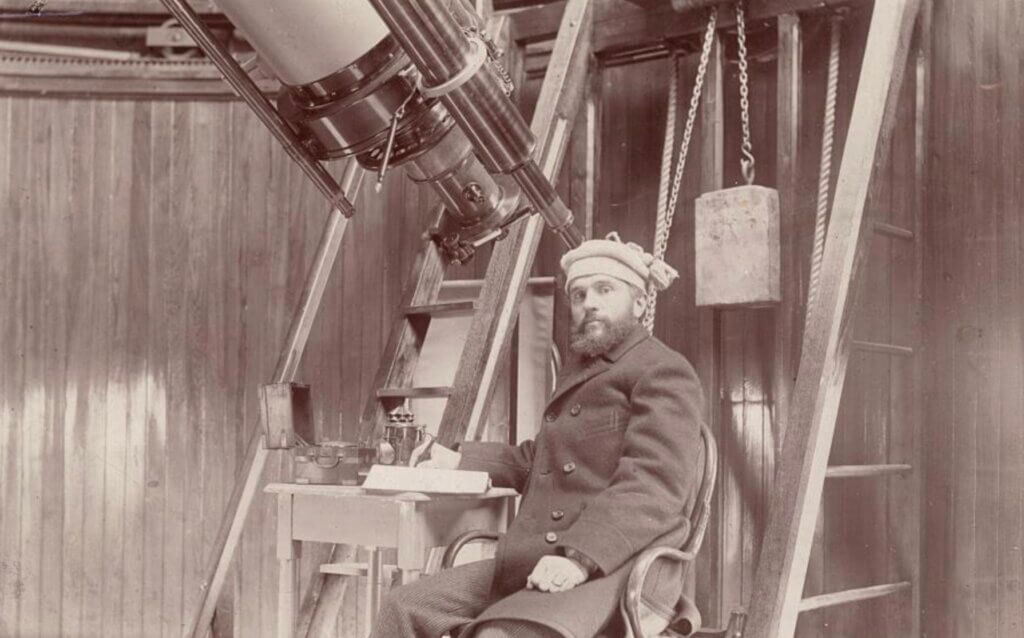
Jewett built his observatory during one of the most exciting periods in American astronomy. Precision refracting telescopes had become available to wealthy amateurs, while observatories and scientific societies flourished across the country.
His years practicing law in Washington, D.C. brought him near important centers of astronomical research including the Smithsonian Institution, the United States Naval Observatory, and the Philosophical Society of Washington.
Fire on the Mountain
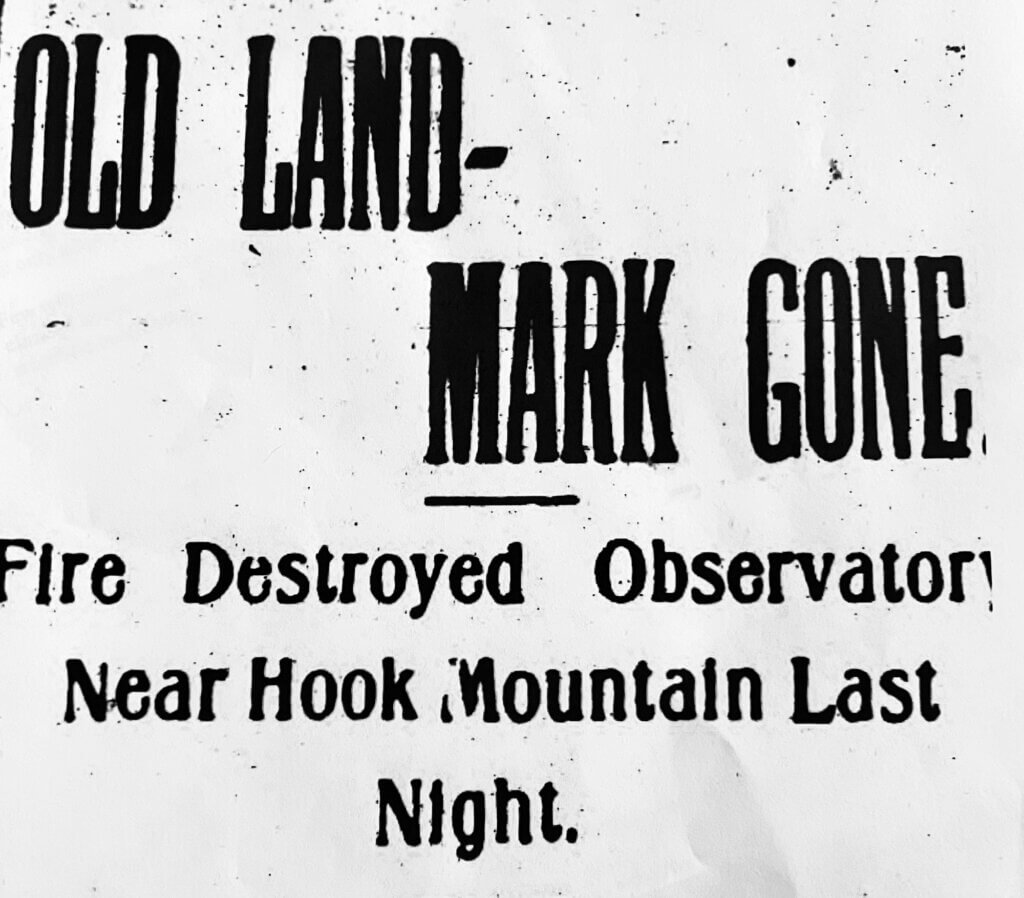
By 1905, Jewett’s observatory had already fallen into decline. No longer used as an observatory, the remote tower attracted hiking parties for its views, and some of its wood had reportedly been removed to fuel campfires.
During the first week of April 1905, brush fires swept across the ridges surrounding Nyack. Flames threatened the Alliance Missionary School on South Mountain and consumed large areas of woodland along the hills above Christian Herald Road.. Among the buildings destroyed was Jewett’s observatory on West Hook Mountain.
Within a few years the mountaintop returned to forest, and the observatory gradually faded from local memory.
Rediscovering a Forgotten Landmark
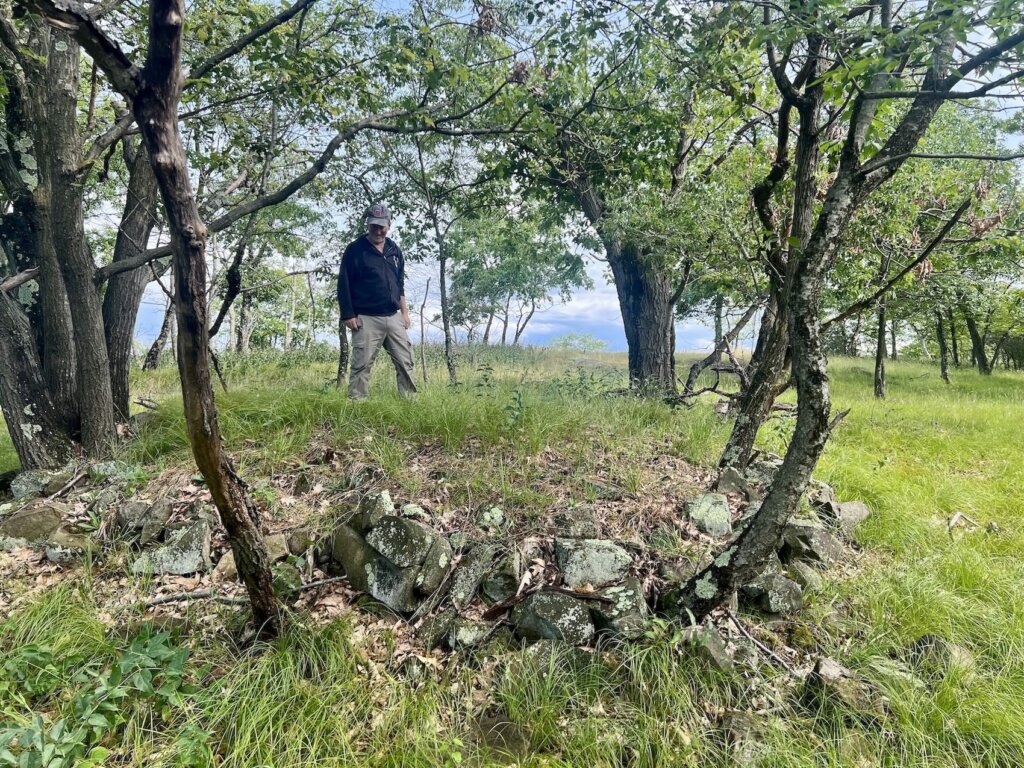
More than a century later, Upper Nyack resident Tom Perry was exploring newly acquired Clarkstown parkland when he noticed a stone foundation hidden beneath the trees. Familiar with local history, Perry realized the site matched newspaper descriptions of Jewett’s long-lost observatory.
Today the former observatory sits within land preserved as open space. Future plans call for rerouting part of the Long Path across West Hook Mountain. Most hikers who pass nearby will see only an overgrown rectangle of stone.
Few will realize they are standing where on quiet nights more than a century ago, Major Jewett climbed above Nyack to explore the heavens through one of Rockland County’s most remarkable scientific landmarks.
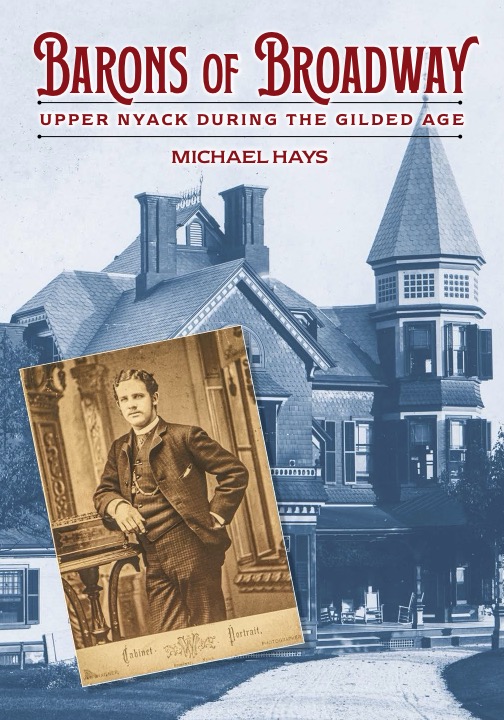
Just Published
Barons of Broadway: Upper Nyack During the Gilded Age
Available at Pickwick Books, Historical Society of the Nyacks, and Amazon
About the author
Mike Hays has lived in the Nyacks for 38 years. After a career as an executive at McGraw-Hill Education in New York City, he now focuses on researching, writing, and interpreting local history.
He serves as Treasurer and past President of the Historical Society of the Nyacks. He is also a Trustee of the Edward Hopper House Museum & Study Center and Historian for the Village of Upper Nyack. In these roles, he works with community partners to preserve historic resources and expand public understanding of the area’s past.
Since 2017, he has written the popular Nyack People & Places column for Nyack News & Views. The series chronicles the history, architecture, and personalities of the lower Hudson Valley.
Hays has also developed museum exhibitions, written interpretive materials, and led well-attended walking tours that bring Nyack’s history to life.
He is married to Bernie Richey. He enjoys cycling, history walks, and winters in Florida. You can follow him on Instagram at @UpperNyackMike.
Editor’s note: This article is sponsored by Sun River Health and Ellis Sotheby’s International Realty. Sun River Health is a network of 43 Federally Qualified Health Centers (FQHCs) providing primary, dental, pediatric, OB-GYN, and behavioral health care to over 245,000 patients annually. Ellis Sotheby’s International Realty is the lower Hudson Valley’s Leader in Luxury. Located in the charming Hudson River village of Nyack, approximately 22 miles from New York City. Our agents are passionate about listing and selling extraordinary properties in the Lower Hudson Valley, including Rockland and Orange Counties, New York.