Nyack History A to Z
The 1909 fire that ended Nyack’s Gilded Age.

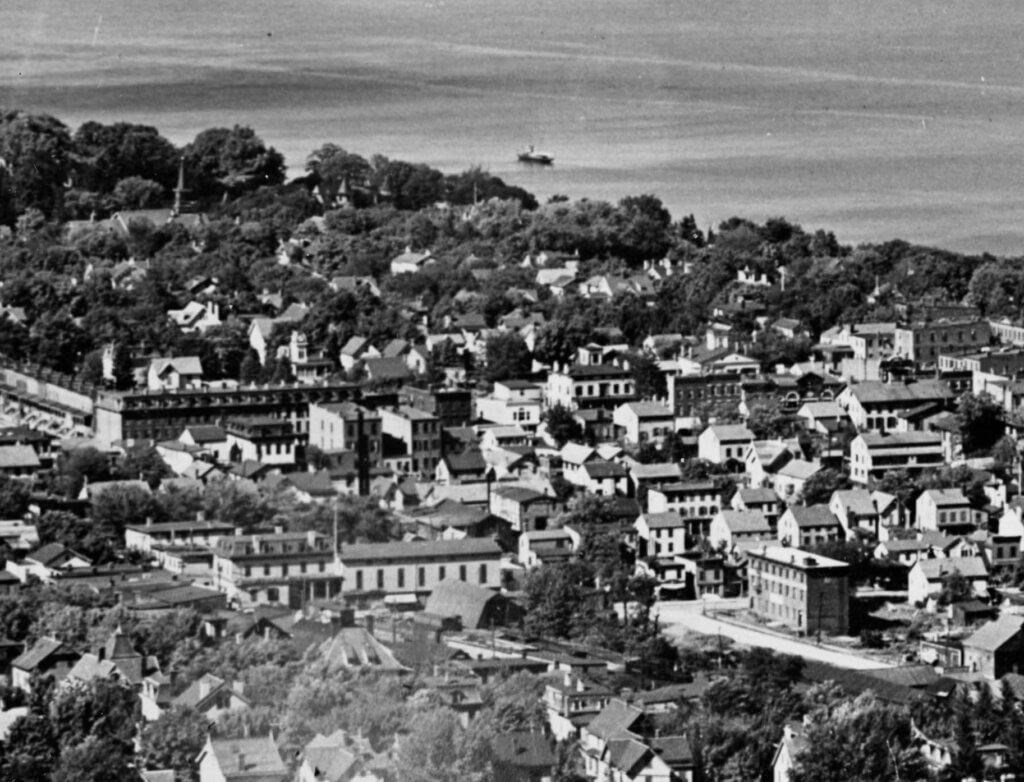
Steam locomotive whistles pierced the early morning air as the village fire bell began to ring. At 4 a.m. on Sunday, July 18, 1909, Nyack awoke to flames pouring from the second floor of the Nyack Opera House. Residents rushed toward the corner of Depew Avenue and Franklin Street, where firefighters fought the blaze in near darkness.

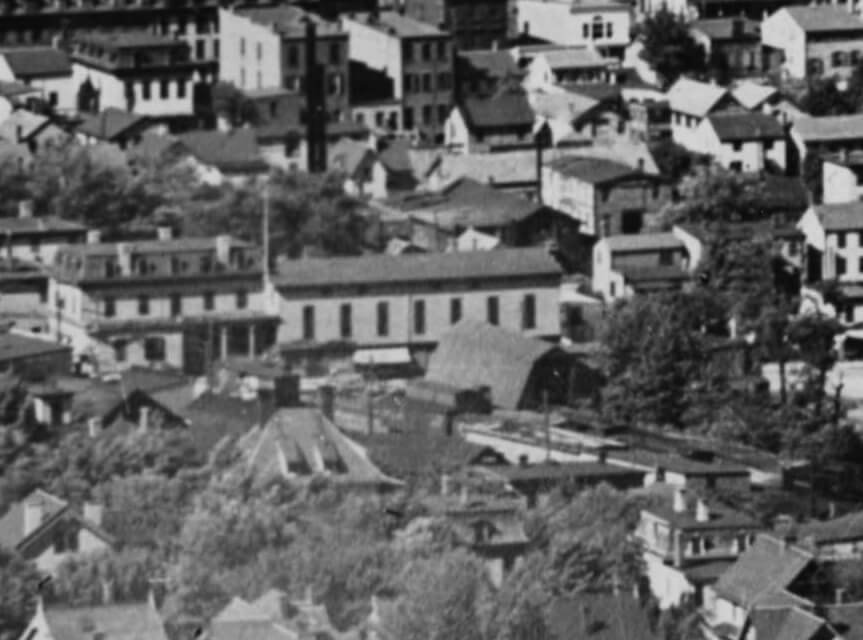
No lives were lost, but Nyack lost far more than a building. For nearly forty years, the Opera House had been one of the village’s principal gathering places, a stage for concerts, plays, and vaudeville, and a hall for weddings, dances, benefits, and political rallies. The fire ended that era. Today, few people know the Nyack Opera House ever existed.
An Evening at the Opera House
No known photographs of the Opera House interior have survived, leaving only newspaper accounts and advertisements to suggest what audiences experienced. On a concert or theater night, as many as six hundred people arrived by carriage or on foot, entering from Depew Avenue before climbing the stairs to the second-floor hall.
Inside, rows of wooden chairs faced a raised stage framed by rolled curtains and interchangeable painted scenery. A piano stood to the side of of the stage, while dressing rooms behind the scenes accommodated visiting performers. A small balcony overlooked the auditorium, and large windows admitted the last light of a summer evening before the gaslights took over. Depending on the evening’s program, the stage might hold a lone lecturer, a piano recital, a small musical ensemble, or a full orchestra accompanying an operatic or theatrical production. During dances, workers pushed the chairs aside and dusted the wooden floor with wax powder to improve footing.
The Franklin Hotel
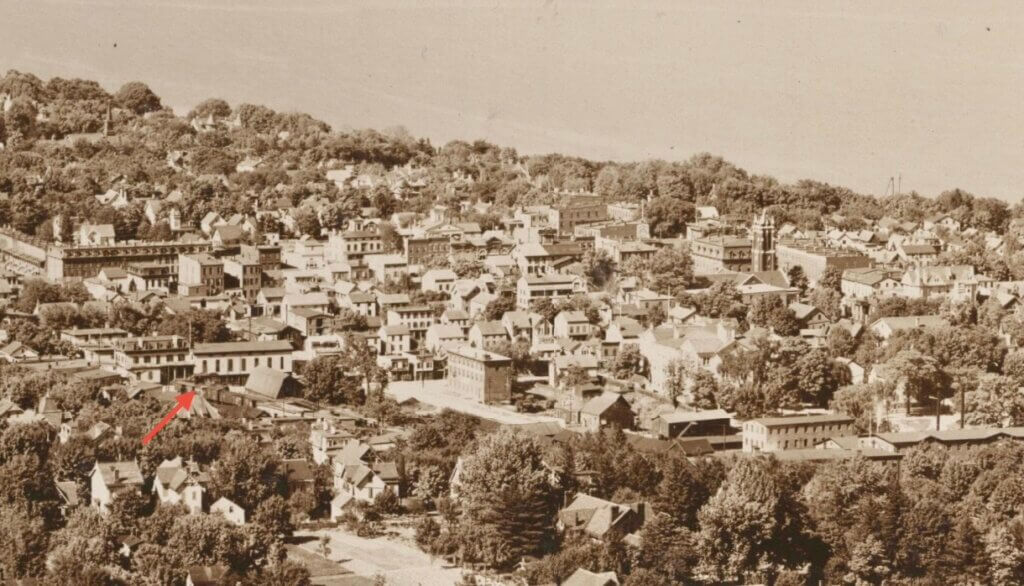
The performances that filled the hall were possible only because of the remarkable complex Louis Hoffer created beside the railroad depot. In 1870, Hoffer, a German immigrant, built a three-story mansard-roofed hotel at Franklin Street and Depew Avenue. The site stood near the Northern Railroad terminus, making it ideal for travelers. Hoffer named the building the Franklin Hotel. The hotel quickly became a popular stopover. It offered a restaurant, a bar, and a barber shop, all under one roof.
Construction of the Opera House

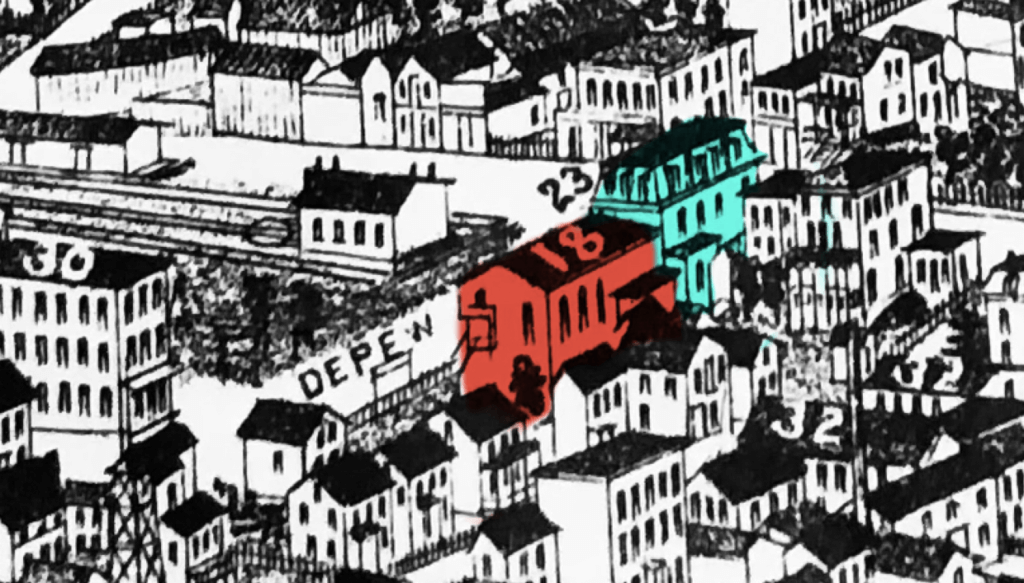
During the decades following the Civil War, opera houses appeared in towns across America. Nyack soon followed that national trend. A few years after completing the Franklin Hotel, Hoffer constructed a two-story auditorium beside the hotel along Depew Avenue.
The Opera House stood partly over Nyack Brook, one of several village buildings to straddle the waterway.

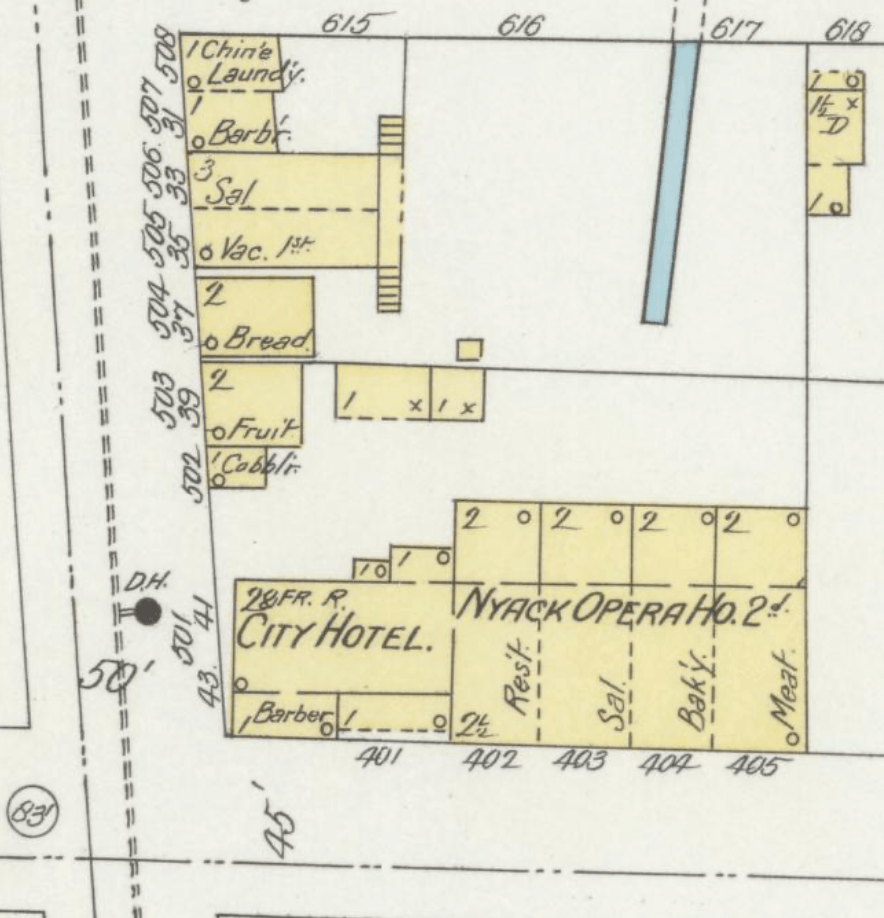
Like several other Nyack buildings, the Opera House straddled Nyack Brook. Shops occupied the first floor, while a large hall filled the second. The hall measured roughly forty by seventy feet. Behind the building, a garden sloped down toward the brook. Over time, residents began referring to both buildings together as the Opera House.
Entertainment at the Opera House
From the start, the Opera House hosted a wide range of public events. Traveling performers shared the stage with local talent. Vaudeville troupes found the venue especially convenient. They arrived by train, performed, stayed at the hotel, and departed the next day.
The entertainment varied widely. Audiences enjoyed operettas, dramas, magic acts, singers, lecturers, and clairvoyants. Among the most notable performers was Thomas “Blind Tom” Wiggins, the celebrated pianist and composer who appeared there several times. In 1879, the Nyack Jubilee Singers, a local Black ensemble, presented a Grand Concert.

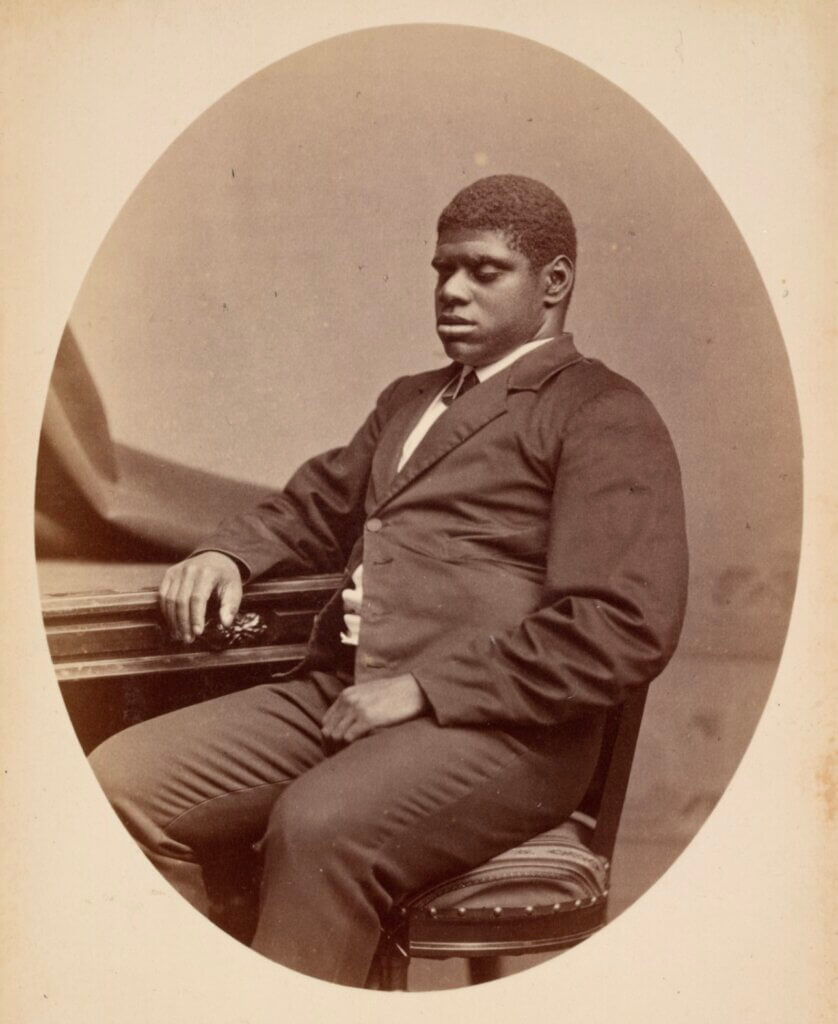
Popular productions drew large crowds. A performance of Gilbert and Sullivan’s H.M.S. Pinafore filled the hall. Reserved seats sold for fifty cents, while general admission cost thirty cents. Nyack composer and teacher Grenville Dean Wilson also used the space. His Nyack Philharmonic and Nyack Choral Society performed there, with the Philharmonic numbering twenty-seven musicians.
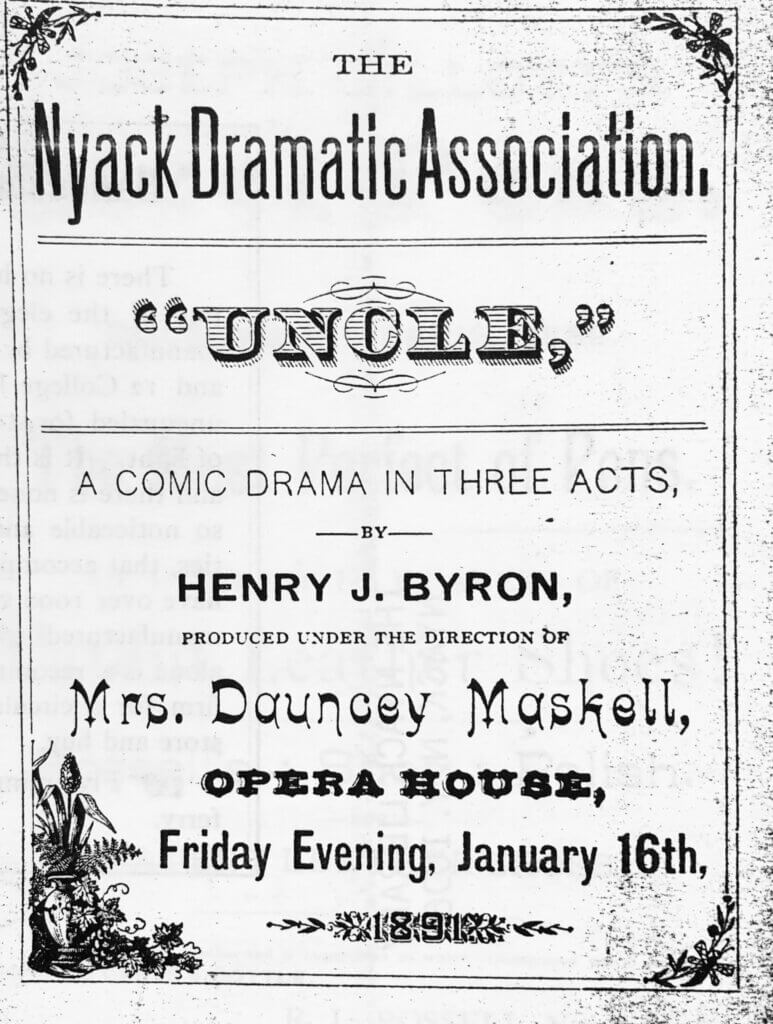
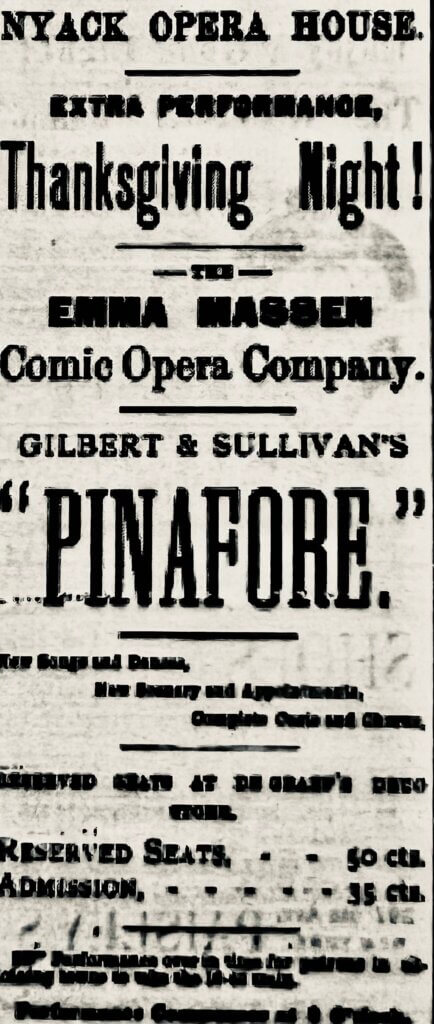
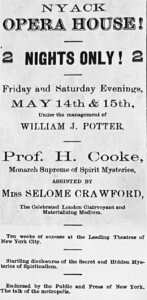
Newspaper advertisements for entertainment at the Nyack Opera House. Traveling shows, concerts, and theatrical productions filled the hall throughout the late nineteenth century.
Charitable Benefits
Beyond entertainment, the Opera House served the community. Churches, fire companies, veterans groups, cycling clubs, and civic organizations all held benefits there.
Beginning in 1873, Grace Church staged elaborate annual benefits. Organizers decorated the hall with flags, banners, and evergreen displays. Floral arrangements filled the space, and themed booths sold rugs, cushions, and imported goods. Young Madeline Burd, daughter of Nyack builder Thomas Burd, drew attention while hosting a mock stone well. In the restaurant, guests lined up for ice cream beneath a frosted pyramidal cake. Volunteers even sold a household safe valued at two hundred dollars.
Minstrel Shows and Cakewalks
During the Jim Crow era, minstrel shows remained a popular form of entertainment. These performances featured local white citizens in blackface, presenting degrading caricatures of Black life. Organizations such as the Mazeppa Fire Company and the Nyack Rowing Association regularly staged minstrel benefits, often to packed houses.
The shows followed a familiar structure. A formal opening gave way to comic skits by stock characters known as Tambo and Bones. The final act depicted a plantation scene populated by figures modeled on racist stereotypes. While popular at the time, these shows reflected some of the most troubling aspects of American culture.

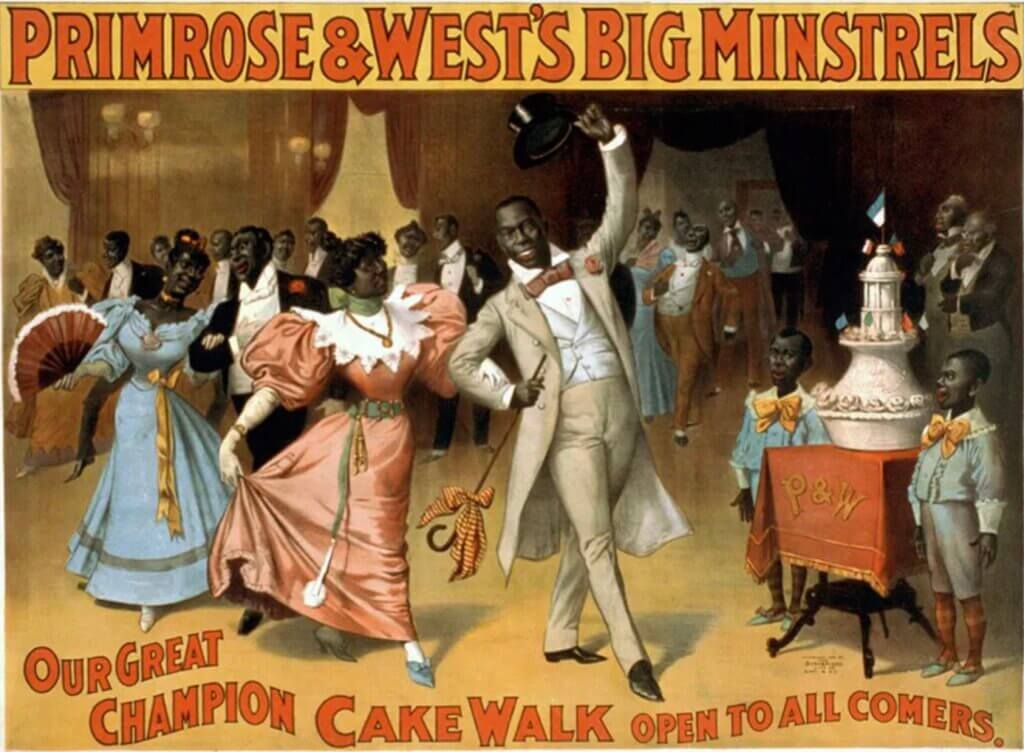
The Opera House also hosted cakewalks. This dance form emerged from plantation traditions and featured Black performers parodying white fashion and manners. Hotels such as the Prospect House and the Tappan Zee House sponsored these events. Service staff often performed, while white audiences voted for winners. The prize, usually a cake, gave the tradition its name.
Telephones, Movies, and Basketball
The Opera House also introduced new technologies to Nyack. It hosted the village’s first public telephone demonstration. Operators ran a wire between the Opera House and Liberty Street School so residents could test the device.
Entertainment technology soon followed. Magic lantern shows appeared early, and in 1897 the Opera House screened Nyack’s first moving pictures using an Edison projector. These short films lasted only a few minutes but thrilled audiences with scenes of horse races, fire engines, swimmers, and distant landmarks.
Even sports found a place there. In 1906, players staged a basketball game inside the hall.
Earlier Fires
Fire plagued the Opera House long before 1909. In 1906, trainmen across Franklin Street heard an explosion inside the hotel section. They sounded the alarm immediately. By the time firefighters arrived, flames had already consumed the bar and climbed the stairway to the second floor.
Hotel guests fled into the street wearing nightclothes. Although damage remained limited, some bystanders looted liquor from the bar during the confusion.

The Great Opera House Fire
The final fire struck three years later. Flames ignited inside the second floor hall shortly after 4 a.m. By the time the fire broke through the walls, the auditorium stood fully engulfed.


Nyack newspaper headlines reporting the Opera House fire, July 18, 1909.
Three firefighters suffered injuries. Chief Harry Jones of the Empire Hook and Ladder Company later recalled clinging to the roof flagpole as the structure collapsed. His thumbprints reportedly remained pressed into the metal. When a wall between the restaurant and the hall gave way, two more firefighters were hurt. The fire destroyed the auditorium completely, leaving only the ground floor intact.
The Aftermath
Despite the loss, the Franklin Hotel and the remaining first-floor spaces continued operating for decades. During Prohibition, the restaurant became a speakeasy. Later generations knew it as Macs Inn.
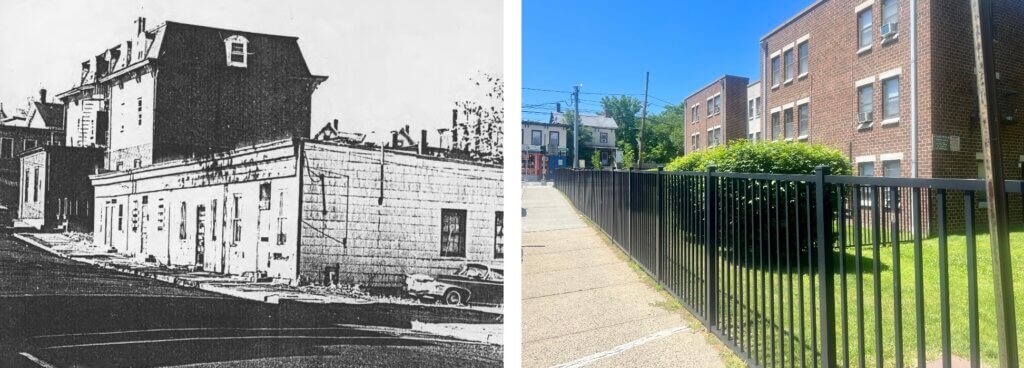
Opera House site, then and now. At left, the base of the former Opera House and the Franklin Hotel shortly before demolition for urban renewal in 1965. At right, the same location today.
In 1965, urban renewal erased the last physical traces of the Opera House and hotel. Today, the Nyack Plaza apartments stand on the site.
The fire of 1909, however, had already marked the end of an era. For nearly forty years, the Opera House served as Nyack’s principal gathering place for concerts, theater, lectures, charitable benefits, and civic celebrations. Although the village continued to grow and change, the cultural world of Gilded Age Nyack had passed.
Today, few visitors to Nyack Plaza realize they are standing where bright stage lights once illuminated the village’s grandest theater, where carriages lined Depew Avenue, and generations of residents gathered to be entertained and brought together as a community.
About the author
Mike Hays has lived in the Nyacks for 38 years. After a career as an executive at McGraw-Hill Education in New York City, he now focuses on researching, writing, and interpreting local history.
He serves as Treasurer and past President of the Historical Society of the Nyacks. He is also a Trustee of the Edward Hopper House Museum & Study Center and Historian for the Village of Upper Nyack. In these roles, he works with community partners to preserve historic resources and expand public understanding of the area’s past.
Since 2017, he has written the popular Nyack People & Places column for Nyack News & Views. The series chronicles the history, architecture, and personalities of the lower Hudson Valley.
Hays has also developed museum exhibitions, written interpretive materials, and led well-attended walking tours that bring Nyack’s history to life.
He is married to Bernie Richey. He enjoys cycling, history walks, and winters in Florida. You can follow him on Instagram at @UpperNyackMike.
Editor’s note: This article is sponsored by Sun River Health and Ellis Sotheby’s International Realty. Sun River Health is a network of 43 Federally Qualified Health Centers (FQHCs) providing primary, dental, pediatric, OB-GYN, and behavioral health care to over 245,000 patients annually. Ellis Sotheby’s International Realty is the lower Hudson Valley’s Leader in Luxury. Located in the charming Hudson River village of Nyack, approximately 22 miles from New York City. Our agents are passionate about listing and selling extraordinary properties in the Lower Hudson Valley, including Rockland and Orange Counties, New York.