A local story of slavery, labor, and life after emancipation
The Old Stone Meeting House In Upper Nyack, completed in 1813, was built in part by Peter Williamson, one of the last individuals in Rockland County born into slavery. As a young teenager, Williamson was compelled to work on the construction of the building that still stands on North Broadway, linking his story to one of the village’s most enduring landmarks.
The village has recognized Williamson with an interpretive plaque near the Meeting House he helped build. The marker acknowledges both his role in its construction and the presence of enslaved labor in the early development of the community.
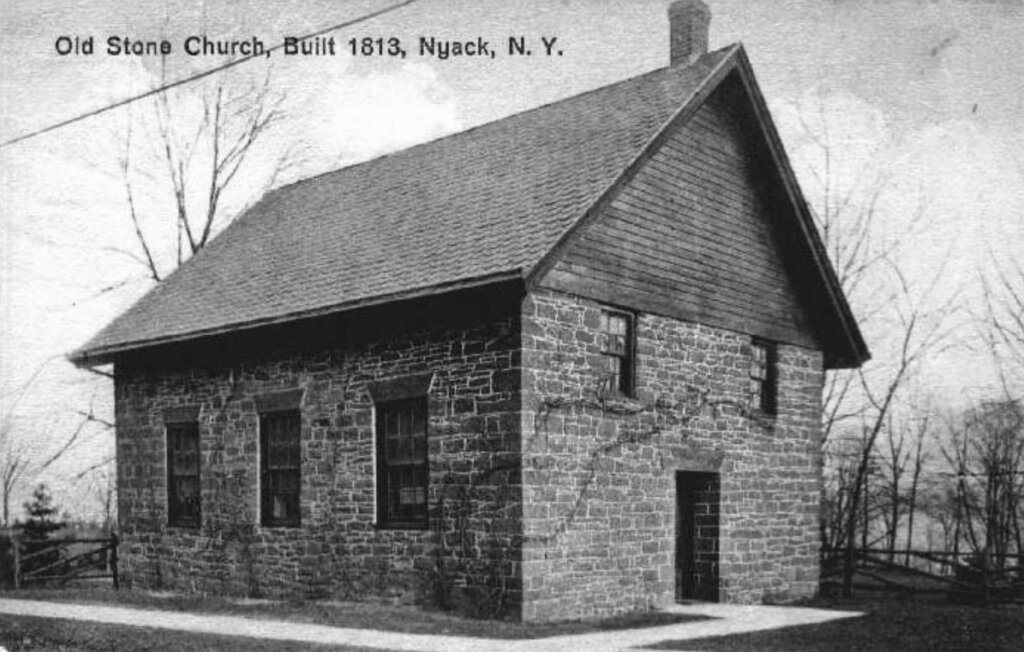
Completed in 1813, this building was constructed in part by enslaved labor, including Peter Williamson as a young teenager. Courtesy of the Nyack Library.
Born into Slavery on the Williamson Farm
Peter Williamson was born circa 1800 on the Williamson farm in Upper Nyack. Like many enslaved individuals in the area, he took the surname of his owner. As a boy, likely 13 or 14, he was put to work on the construction of the Old Stone Meeting House.
The building remains an important architectural landmark. It also stands as evidence of the reliance on enslaved labor that shaped early Nyack.
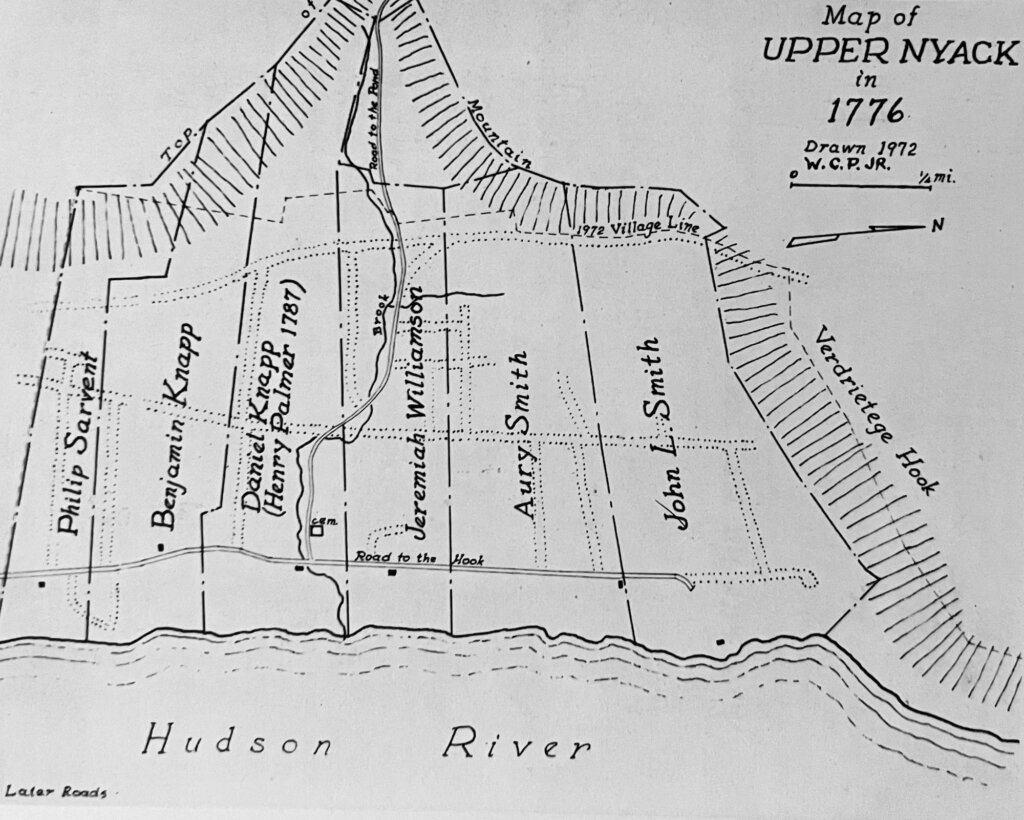
This map identifies the property where Peter Williamson was born into slavery around 1800. Courtesy of Win Perry, Jr.
Slavery in New York and Rockland County
Slavery existed in New York from the Dutch colonial period through the early nineteenth century. The state began a gradual process of emancipation in 1799, but full abolition did not occur until 1827. During this long transition, many people remained in conditions that differed little from slavery.
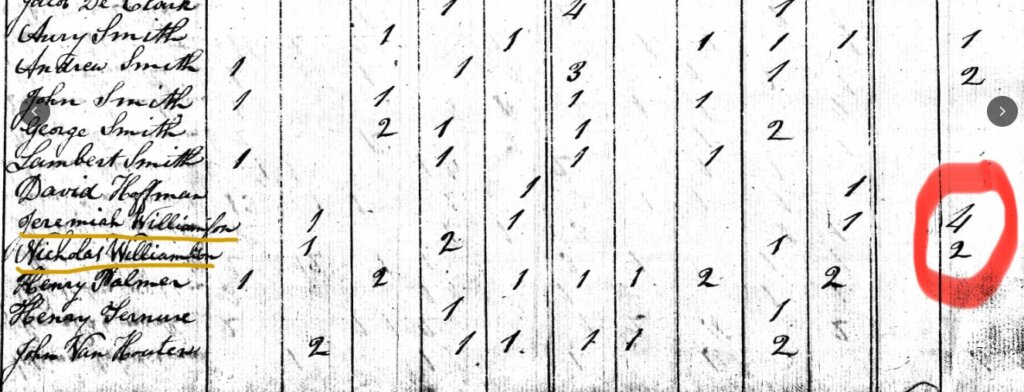
The Williamson household is recorded with six enslaved individuals, reflecting the extent of slavery in early Rockland County. Courtesy of the National Archives.
In Rockland County, slavery was widespread. Early Dutch settlers, including the Kuyper and Tallman families, owned enslaved people. Census data from 1800 shows that a significant share of Orangetown households held enslaved individuals. Enslaved people made up a notable portion of the county’s population.
Nineteenth century local histories often minimized this reality. Some accounts downplayed both the scale of slavery and the conditions endured by those in bondage.
Evidence from Runaway Advertisements
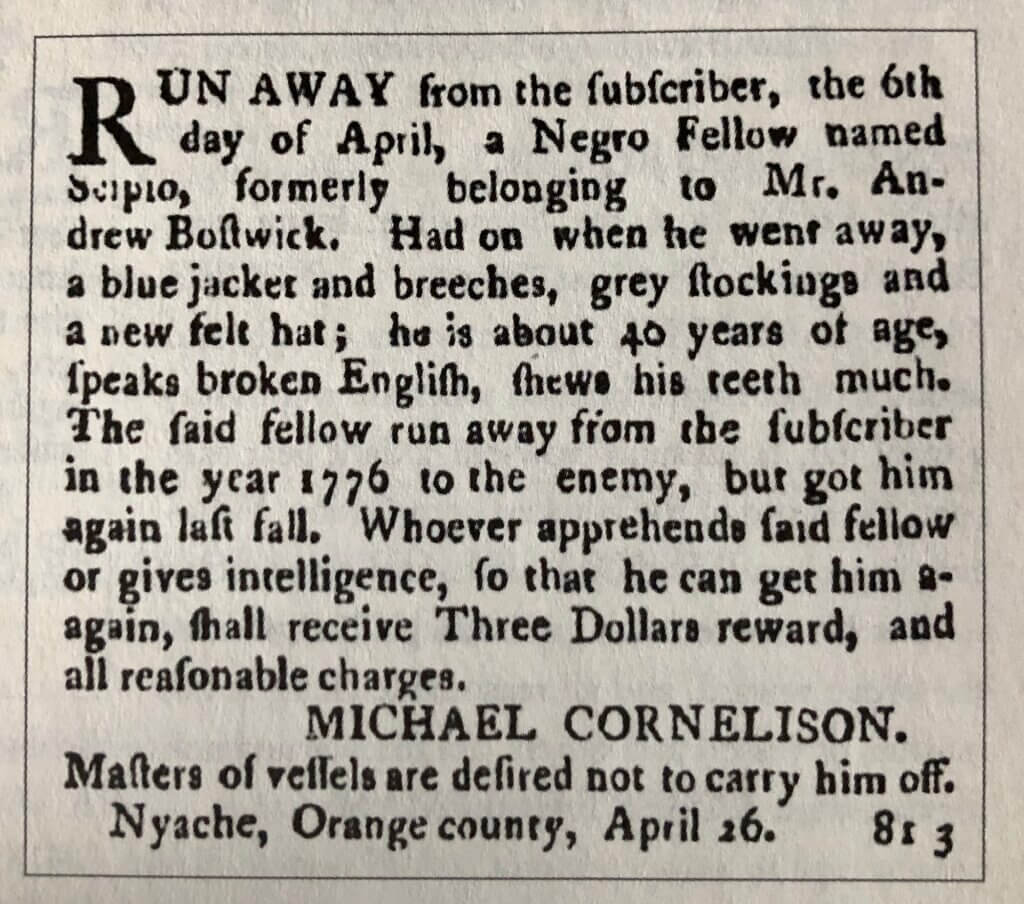
Notices such as this offered rewards for the capture of escaped individuals, providing direct evidence of slavery in the region. Courtesy of local newspaper archives.
Runaway advertisements provide some of the most direct evidence of slavery in New York. In 1784, South Nyack landowner Michael Cornelison advertised for the return of Scipio, a man he had purchased years earlier. Scipio, about 40 years old, had previously fled to the British during the Revolutionary War, likely seeking freedom, and was again on the run. Cornelison offered a reward of $3.
Such notices continued even after the Gradual Abolition Act. In 1814, Nicholas Lansing of Orangetown offered a $1 reward for Isaac, described as a 21-year-old of “slow speech.” Lansing warned ship captains not to employ him and threatened prosecution for those who did. These advertisements underscore the persistence of slavery and the risks faced by those seeking freedom.
The Williamson Farm as a Slaveholding Estate
Jeremiah Williamson assembled a farm of roughly 90 acres around 1750. The property extended from the Hudson River west to above present-day Route 9W, north of Upper Nyack Brook. It functioned as a working farm sustained by enslaved labor, typical of larger holdings in colonial Rockland County.
By 1800, enslaved individuals outnumbered white residents on the estate. They lived in small dwellings on the property, forming an essential part of the farm’s operation.
After emancipation, records indicate that a former enslaved resident received a small cabin on the farm. Over time, the property passed through multiple heirs and was eventually sold. Family accounts also suggest that documents recording slave ownership were retained by descendants into the nineteenth century.
The Moorings, the Williamson family’s manor house, still stands on North Broadway.
Life After Emancipation
In 1835, Peter Williamson married 18-year-old Emeline in Tappan. They had their first of seven children the following year. For a time, Peter worked as a quarryman, likely in the local stone industry. By 1850, he had become a shopkeeper, operating a small store that sold candy and groceries near the Old Stone Meeting House.
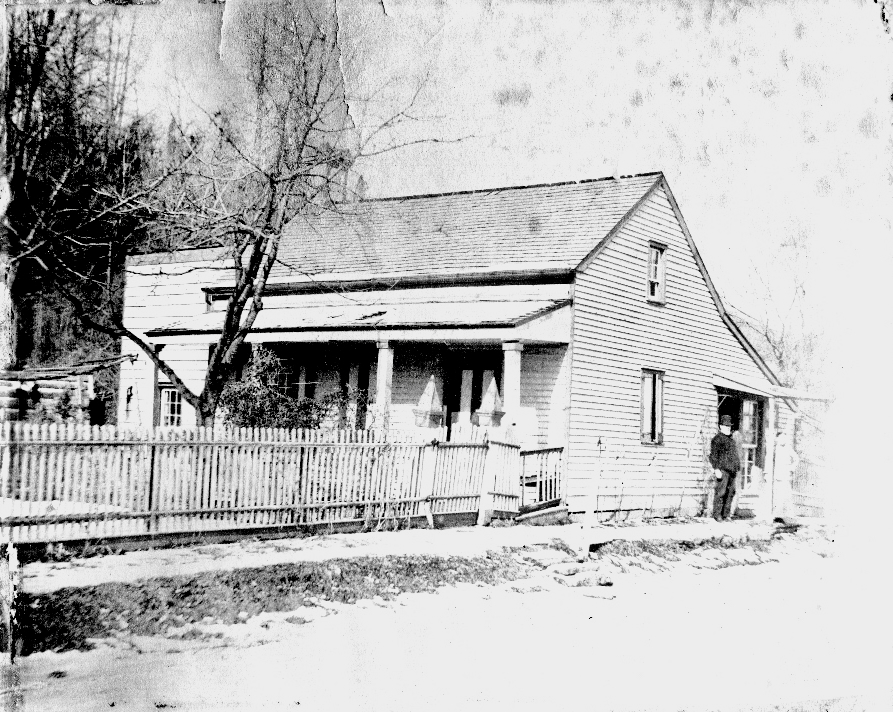
This structure has been associated with Peter and Emeline Williamson, though definitive documentation has not been established. The location is near the Old Stone Meeting House and may have been the site of their home and small store. Courtesy of the Nyack Library.
The store likely operated from or adjacent to the family’s home on North Broadway, a site later associated with a small structure near the Meeting House.. It served the surrounding neighborhood for many years. Peter, known locally as “Pete,” was described as quiet, frugal, and well respected. The store was burglarized more than once, including a theft in 1877 in which goods valued at $25 were taken. No arrests were reported.
Emeline worked as a housekeeper for the Maxwell family, whose estate occupied a large tract of land across North Broadway. The couple lived nearby, close to the Meeting House and within sight of the Maxwell property.

Property Disputes and Legal Recognition
In 1885, the Williamsons marked their fiftieth wedding anniversary at their North Broadway home. The event was noted in the local press, which described Peter and Emeline as “highly respected by their neighbors.” Reports at the time suggested that the Maxwells had given them the house in recognition of Emeline’s long service. A subsequent notice, however, disputed that claim and clarified that no formal transfer had occurred.

A brief notice in the Rockland County Journal records the couple’s fiftieth wedding anniversary and their standing in the community. Courtesy of the Nyack Library.
The issue came to a head in 1892 when the village sought to widen North Broadway. Emeline Williamson refused to relocate. Authorities ultimately recognized her claim to the property through adverse possession, after which the house was moved slightly east to accommodate the road.
Disputes resurfaced during the partition of the Maxwell estate in the late 1890s, when Hugh Maxwell Jr. again asserted ownership. The matter effectively ended after the deaths of both Emeline Williamson and Maxwell in 1898.
The Williamson Family and Civil War Service

Two of the Williamsons’ sons served in the Civil War. George Williamson served as a private in the 26th United States Colored Infantry. He trained at Riker’s Island and deployed to South Carolina. His brother John enlisted in the U.S. Navy and served aboard the steamer Dawn in the South Atlantic Blockading Squadron.
Their service reflects a broader pattern of African American military participation during the war.
From Slavery to Property and Service
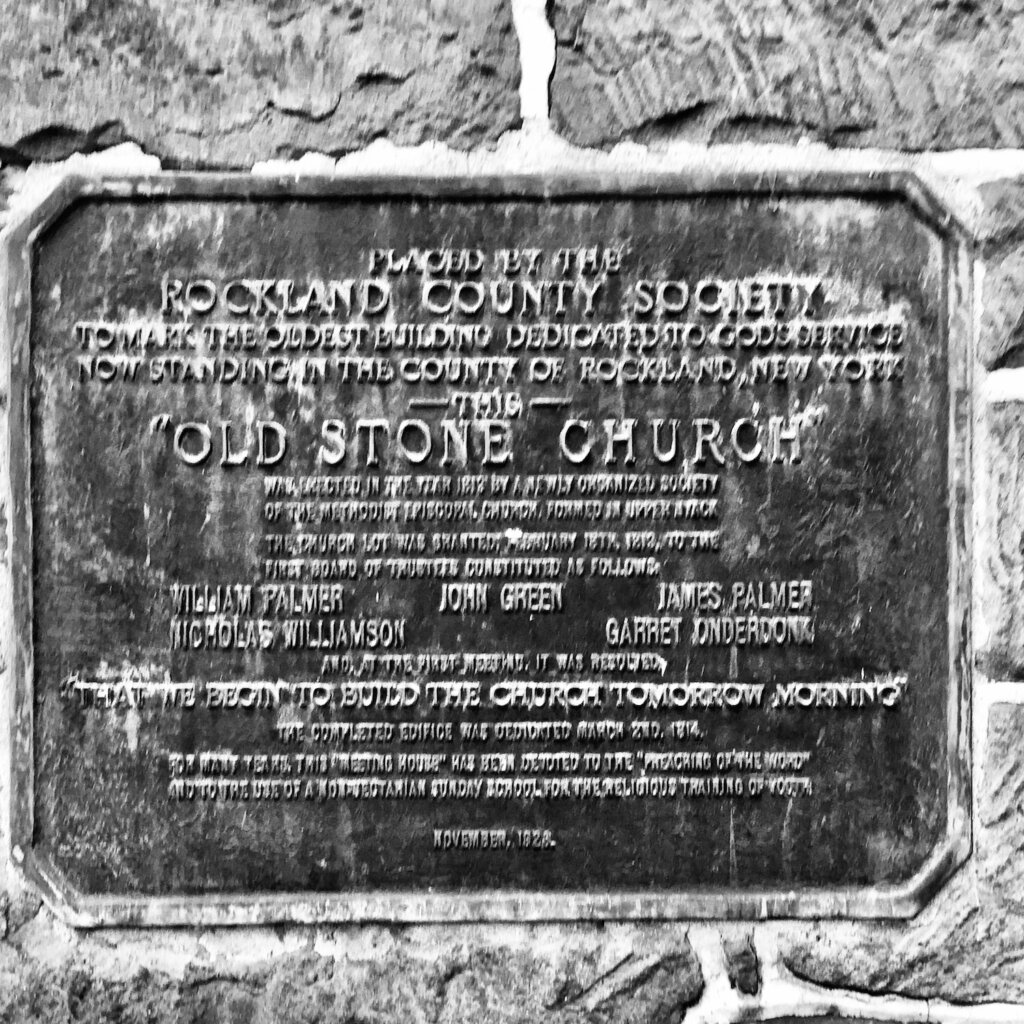
The marker recognizes early benefactors of the church property but does not reference the enslaved laborers, including Peter Williamson, who helped construct the building. Photo by author.
Peter Williamson died in 1886. His funeral took place in the Old Stone Meeting House, the same building he had helped construct decades earlier. Emeline Williamson died in 1898 after years of legal and financial struggle.
Their lives trace a path from slavery to independence, marked by work, property disputes, and military service by the next generation. Members of the Williamson family served in the Civil War, operated a business on North Broadway, and secured legal recognition of their home.
The Williamson story provides a documented local account of slavery and its aftermath in Rockland County, anchored to a specific place, a surviving building, and a family whose history can be traced in the record.
The story endures not as legend, but in the record and in the building itself.
About the author
Mike Hays has lived in the Nyacks for 38 years. After a career as an executive at McGraw-Hill Education in New York City, he now focuses on researching, writing, and interpreting local history.
He serves as Treasurer and past President of the Historical Society of the Nyacks. He is also a Trustee of the Edward Hopper House Museum & Study Center and Historian for the Village of Upper Nyack. In these roles, he works with community partners to preserve historic resources and expand public understanding of the area’s past.
Since 2017, he has written the popular Nyack People & Places column for Nyack News & Views. The series chronicles the history, architecture, and personalities of the lower Hudson Valley.
Hays has also developed museum exhibitions, written interpretive materials, and led well-attended walking tours that bring Nyack’s history to life.
He is married to Bernie Richey. He enjoys cycling, history walks, and winters in Florida. You can follow him on Instagram at @UpperNyackMike.