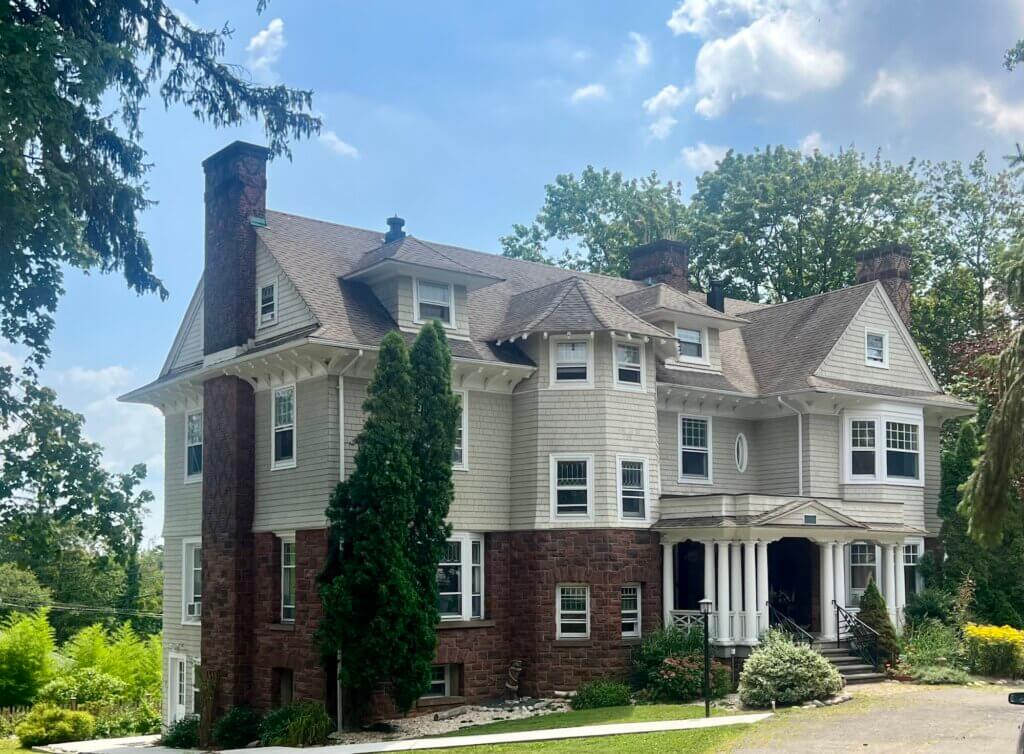
During the Gilded Age, only a few carpentry shops in Nyack were responsible for constructing the beautiful Victorian homes that are still revered today. Among these craftsmen was Charles McElroy, a man who, after learning the carpentry trade locally, became one of the most influential builders in South Nyack. Beginning in the 1880s and continuing into the early 20th century, McElroy constructed many of the area’s most prominent structures. Not only did he build several of the Missionary Alliance buildings that still stand, but he also contributed to the construction of St. Paul’s Methodist Church, the Bell Memorial Chapel, and numerous residences, including his own at 29 Division Avenue.
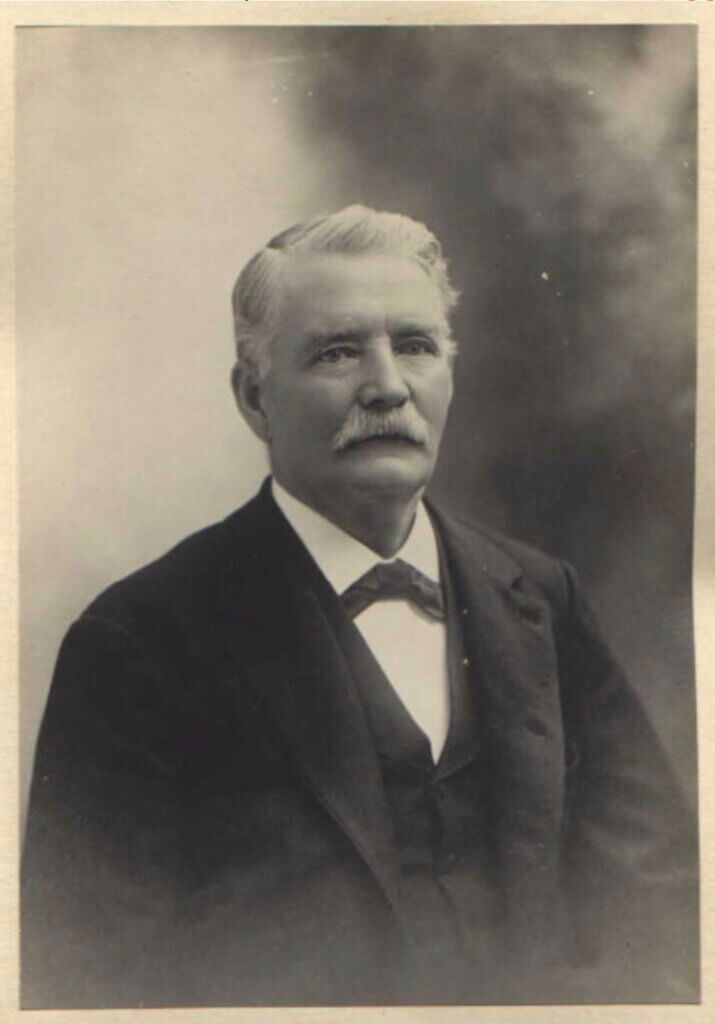
McElroy was well-liked and respected in the community. His reputation as a fair and even-handed leader was evident in his service as President of the South Nyack Board of Trustees for seven years, as well as his leadership on the Nyack School Board. His personal business motto, which he consistently used in advertising, spoke volumes about his character:
“Thorough workmanship in all branches.”
The McElroy Family Origins
The McElroy family’s roots trace back to Scotland. Charles’s grandfather, also named Charles, lived in New York City. His father, David McElroy, was born in Hamburg, NJ, and married Phoebe Briggs, a descendant of an old Dutch family. The couple had twelve children, with Charles being the second born and the oldest son, in 1837. The McElroys eventually moved to Haverstraw, and later to Ramapo. Charles, who likely had connections to Schuyler County and the Finger Lakes region, enlisted in the army in 1862 while there and married Harriet E. Wadsworth from Geneva, NY, in November of that same year. Together, Charles and Harriet had two sons and three daughters.
McElroy’s Service in the Civil War
Charles McElroy volunteered for service in the Civil War on August 12, 1862, as a private in Company B of the 161st Regiment of the New York State Infantry. This regiment joined General Nathaniel Banks in his campaign in Louisiana, where New Orleans and Baton Rouge had already fallen to Union forces under Admiral Farragut. The 161st participated in the 47-day siege of Port Hudson, which fell shortly after the capture of Vicksburg. The regiment also served during the unsuccessful Red River Campaign of 1864, aimed at capturing Texas and Arkansas.


Photos of 161st New York Volunteers show troops that must have seen hard service.
McElroy witnessed the famous naval battle at Mobile Bay, where Farragut famously declared, “Damn the torpedoes! Full speed ahead!” In 1865, McElroy and the 161st helped capture several forts in Alabama and take possession of Mobile. After the war, McElroy was stationed at Fort Jefferson in the Dry Tortugas, before mustering out on October 20, 1865, following three years of heavy combat.
The Grand Army of the Republic (GAR) and Fellow Veterans
After the war, McElroy became a member of the Grand Army of the Republic (GAR) and frequently reunited with fellow veterans. In 1900 and 1901, Benjamin Smith and John Buck, fellow members of the 161st Regiment, visited him in Nyack. McElroy shared his war experiences often with humor, particularly in his speeches about the war. In 1907, he attended the dedication of a monument to General Sheridan at Cedar Creek in the Shenandoah Valley. Later during that year, during Sheridan Day (October 19), McElroy and Commander Pye related stores of the dedication to fellow veterans. Afterward, they enjoyed dinner at the newly constructed Everett Hotel, now the location of Pickwick Books.
McElroy’s Carpentry and Building Business
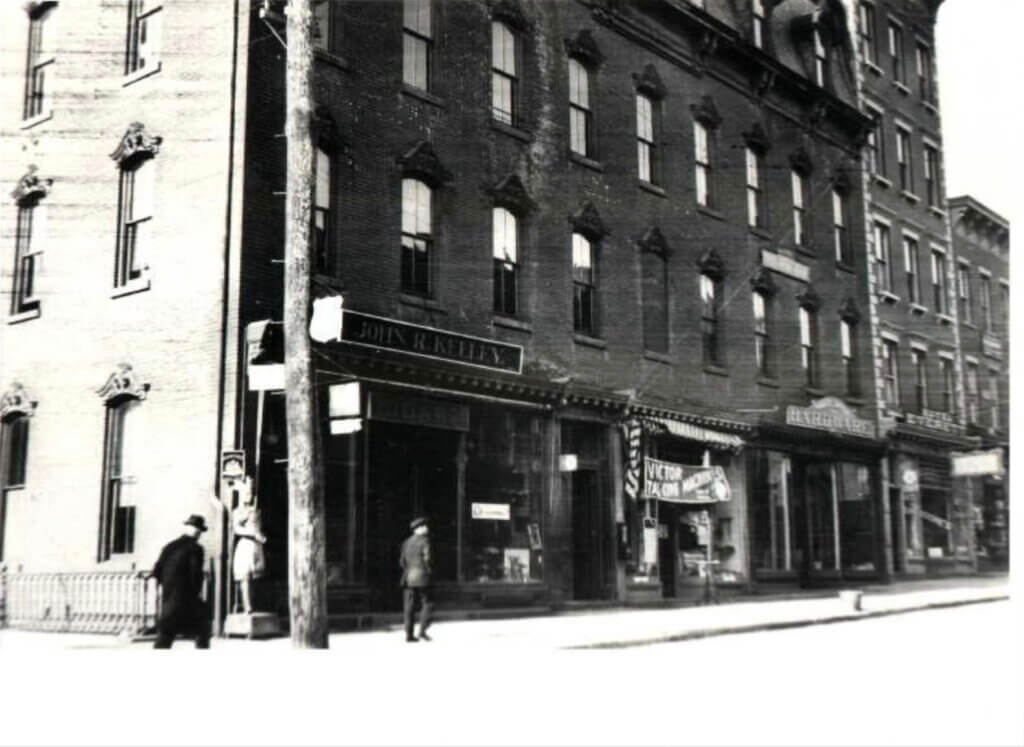
Soon after the war, McElroy began learning the carpentry trade from James C. Wool, a well-established builder in Nyack. Wool had previously teamed up with Isaac Vervalen to build many of Nyack’s early homes before the Civil War. In 1875, McElroy opened his own carpentry shop on land owned by Tunis Depew at the corner of Hudson and Railroad Avenues, near the Nyack train station. His shop remained there until 1909 when the land was acquired for the expansion of the Peerless Finishing Business.
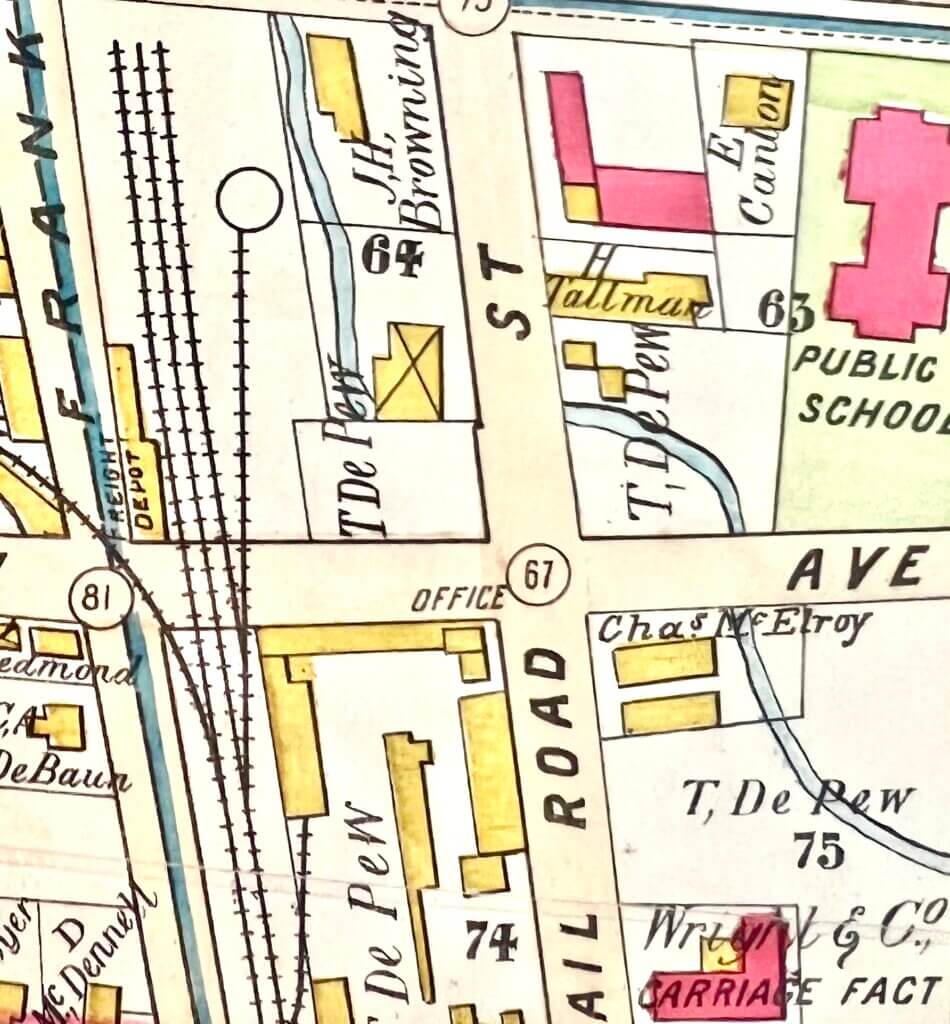
In 1895, a fire broke out in McElroy’s shop, destroying much of the interior and all his building plans. McElroy had no insurance, and he suspected that the fire was set by vandals or a firebug, as he had noticed a broken window. Despite the setback, he continued his business in the same location until 1909. McElroy competed with the DeBaun brothers, who were responsible for many large homes in Upper Nyack. Often, his building projects involved collaborations with mason John Magee, who handled the masonry work on many of McElroy’s structures.
McElroy’s Employees
McElroy was not only known for his skill as a carpenter but also for his excellent relationships with his employees. He earned their respect, as evidenced by two separate occasions when his workers gifted him with life-sized colored portraits, one of him and one of his wife. In return, McElroy showed his appreciation by gifting his employees with baskets of fruit. From 1880 to 1895, McElroy’s shop was especially busy, with many major projects underway.
A Passion for Sports and Community Involvement
Outside of his work, McElroy had a strong interest in sports, particularly baseball, bowling, and rowing. He was an active member of the Nyack Rowing Association and later became vice president of the Nyack Athletic Club (NAC). In 1893, at the age of 57, McElroy formed a team to compete against the NAC’s regulars, and won a basket of oysters as a prize. He also won oysters in a bowling match between carpenters and shoemakers.
As a member of the NAC, McElroy worked with the DeBaun brothers and William White, who owned a large lumber yard across from the train station, to build a new baseball park on Midland Avenue. This new park featured a scoreboard and grandstand and was located on land leased by Arthur Tompkins.
A Public Servant and Politician
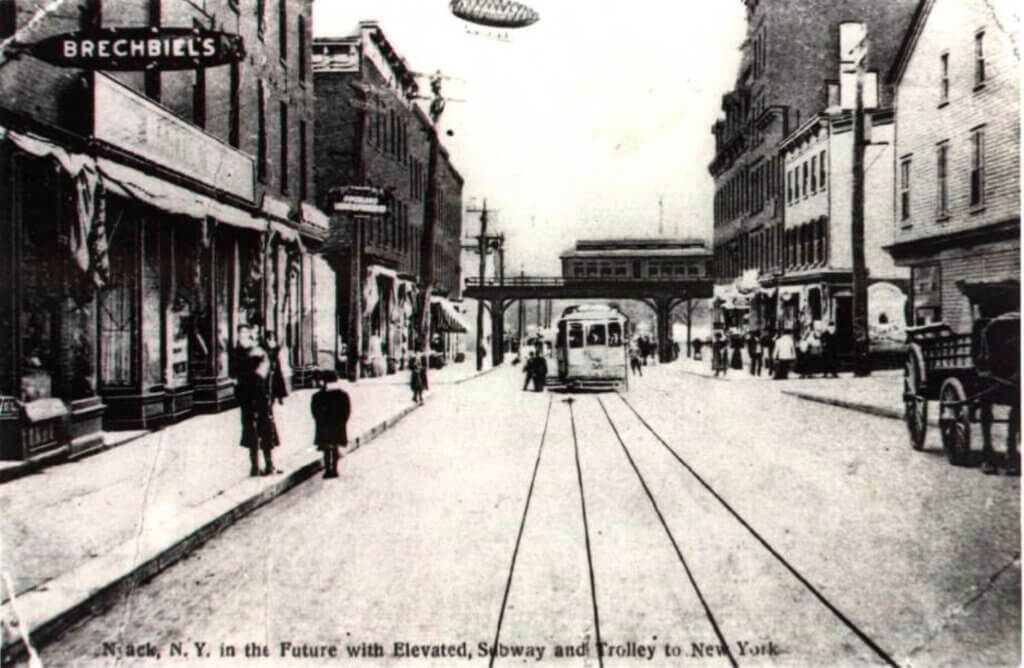
McElroy’s public service extended beyond the construction of homes. As a long-time trustee and president of St. Paul’s Methodist Church, he oversaw the building of a new church in the 1890s. In 1902, when Howard Van Buren retired from the South Nyack Board of Trustees, McElroy was appointed to take his place. He was elected president of the board in 1903 and held the position until 1910. One of the major controversies during his administration involved the laying of trolley tracks for the West Shore Traction Company, a project that had long been a topic of debate. McElroy, ever the politician, found a compromise that satisfied everyone: the workers continued their work, but covered the tracks until later. Ultimately, only a few blocks of track were laid, and the trolley line was never fully realized.
Education and Community Engagement
In addition to his work with the village and church, McElroy served for many years on the Nyack Board of Education, eventually becoming president. In 1910, a controversial election took place when Miss Mary J. Tozer, a Nyack schoolteacher, ran for a position on the school board. Although she had substantial support, McElroy and B.J. Demarest won the election, though Tozer did receive 173 votes.
McElroy’s Major Commercial and Civic Buildings
Throughout his career, McElroy worked on numerous important commercial and civic projects. Some of his notable contributions include:
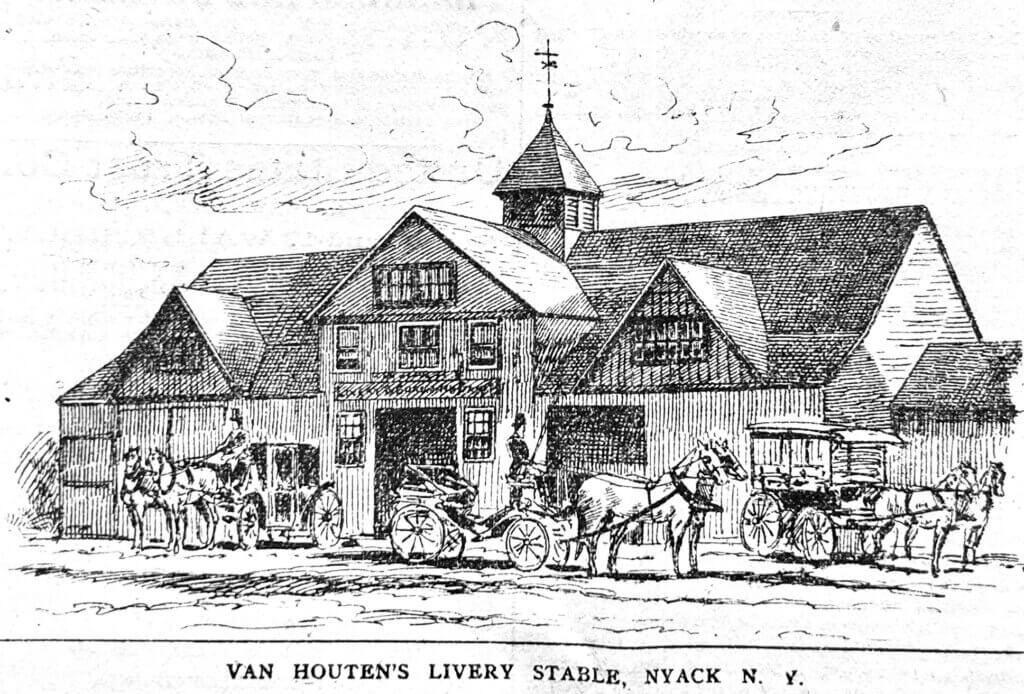
- 1893 Van Houten Livery: McElroy rebuilt a three-story livery at the corner of Church and Liberty streets after fire destroyed the original. The building housed 51 horses and 32 wagons and became the premier livery of its time.
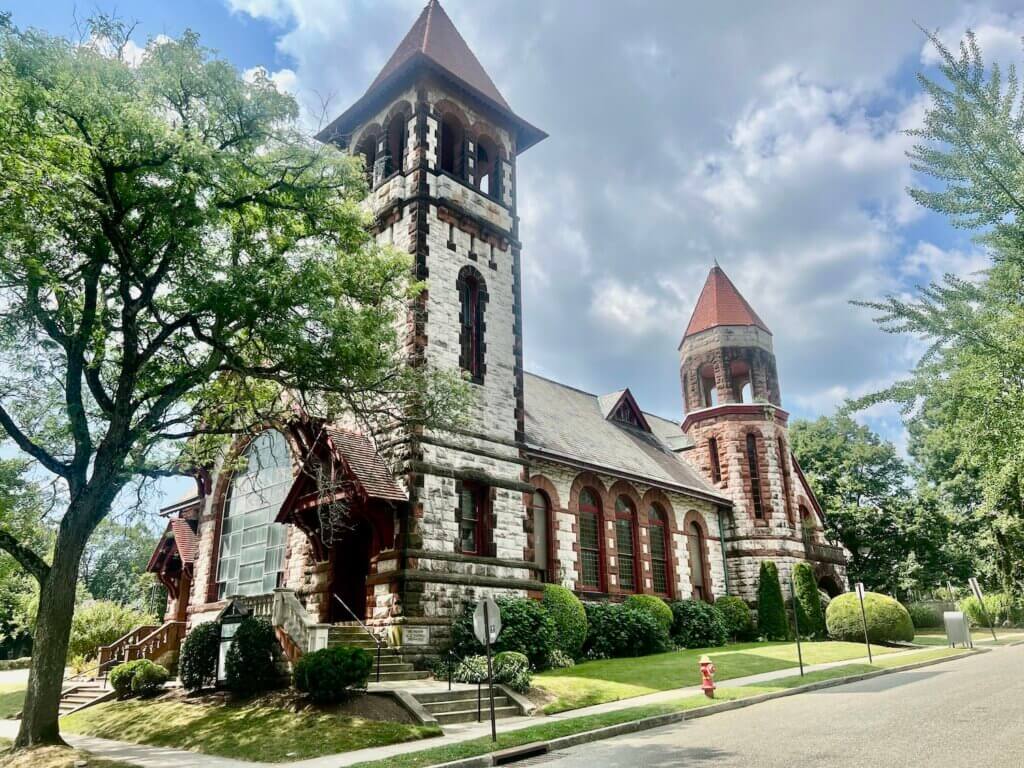
- 1893 St. Paul’s Methodist Church: McElroy crafted the carpentry for the windows and oversaw construction of the church. As president of the board of trustees, he helped select Kingsbridge marble and arranged the move of the Avalon Boarding House to the church’s Broadway frontage.
- 1893 Assembly Hall YMCA: In partnership with the Debaun brothers, McElroy built a large YMCA assembly hall in the former St. Nicholas Hotel.
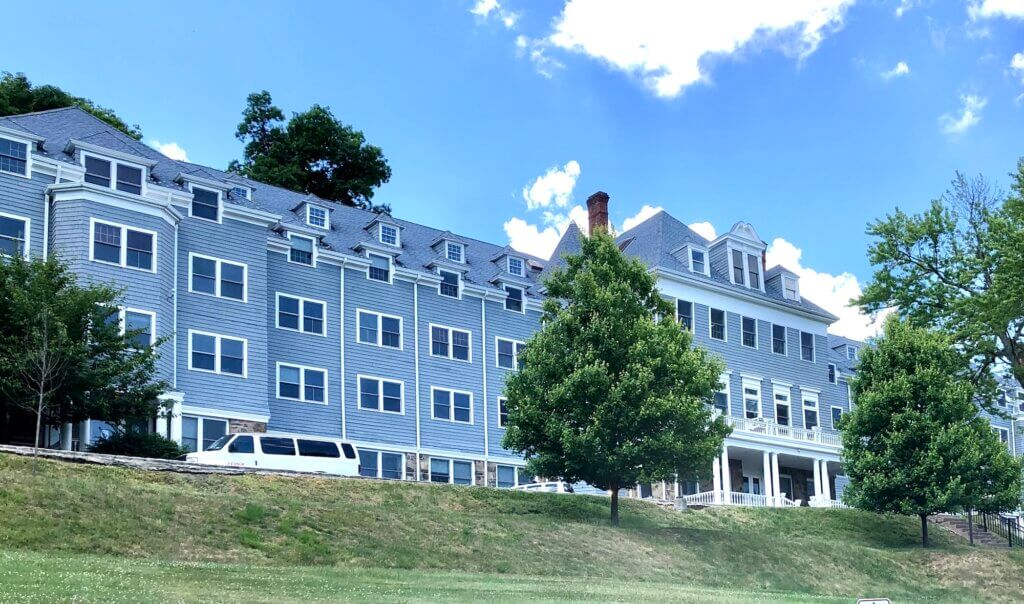
- 1897–1907 Missionary Alliance Buildings: McElroy constructed and expanded several buildings for the Missionary Alliance (later Nyack College), including Simpson Hall, which still stands today.
Selected Residential Homes Built by Charles McElroy
- 1880s: Numerous “Cottages” for Prominent Families
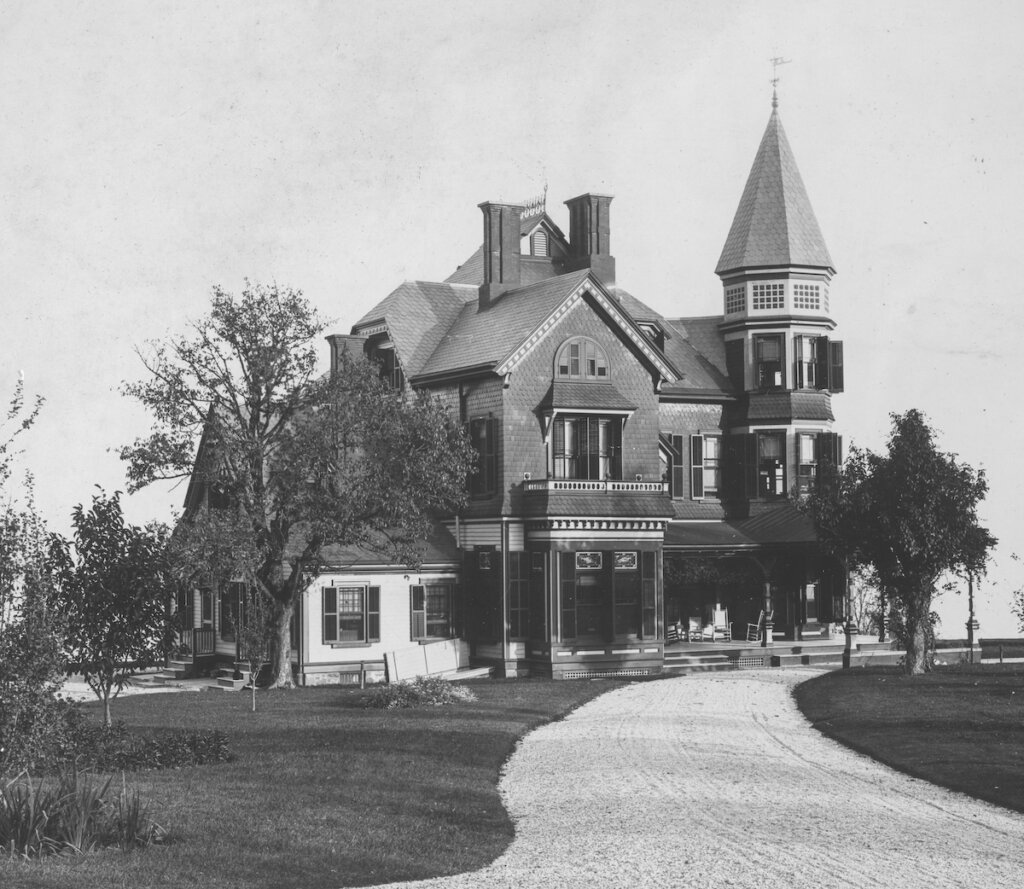
McElroy built several cottages, including homes for the Ernst Brothers and William C. Perry. He also constructed the Julian Davidson house at 117 South Broadway, leaving an early mark on Nyack’s architectural style. - 1885 Tucker Estate: McElroy completed a large Queen Anne Victorian on North Broadway near Hook Mountain for Arthur Tucker. The estate, Underclyffe, included a stately barn and river dock.
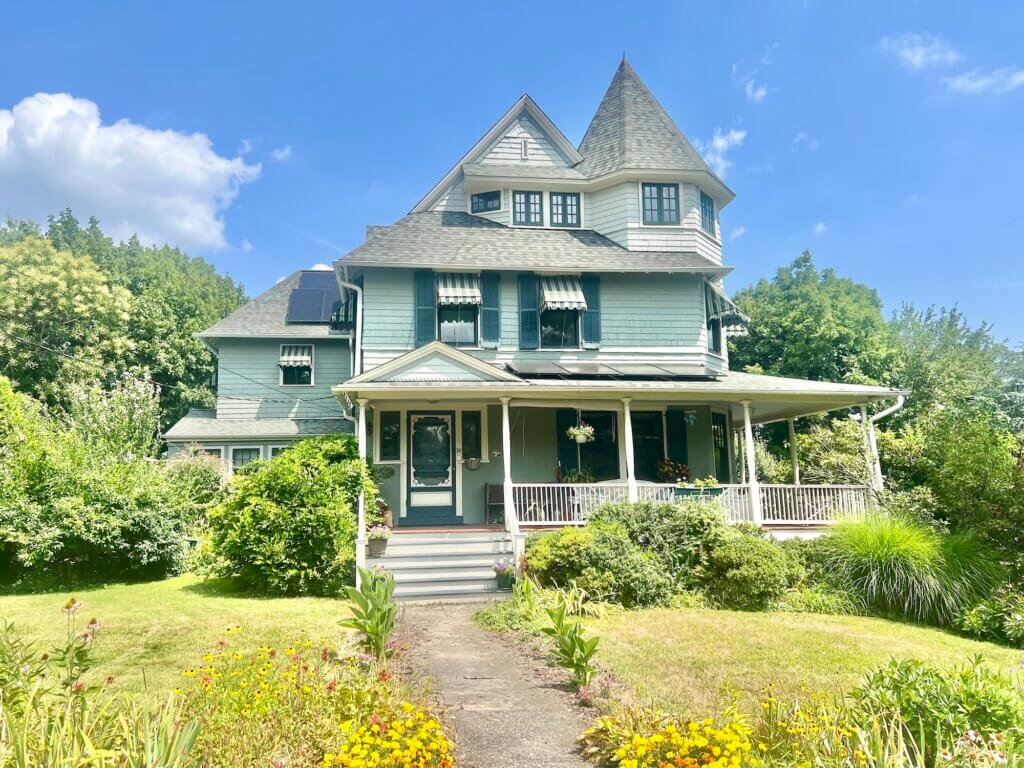
- 1891 Boynton House, 1 Gesner Lane: McElroy built this large Victorian residence, replacing greenhouses once owned by Harry Newtown. Architect Emery designed the plans, and McElroy added the carriage house in 1893. The Cross family still owns the Boynton House.
- 1892 Streit House and Greenhouse, South Broadway near Grand View: McElroy constructed two homes in this emerging residential zone, close to Hillside and the railroad crossing at Broadway.
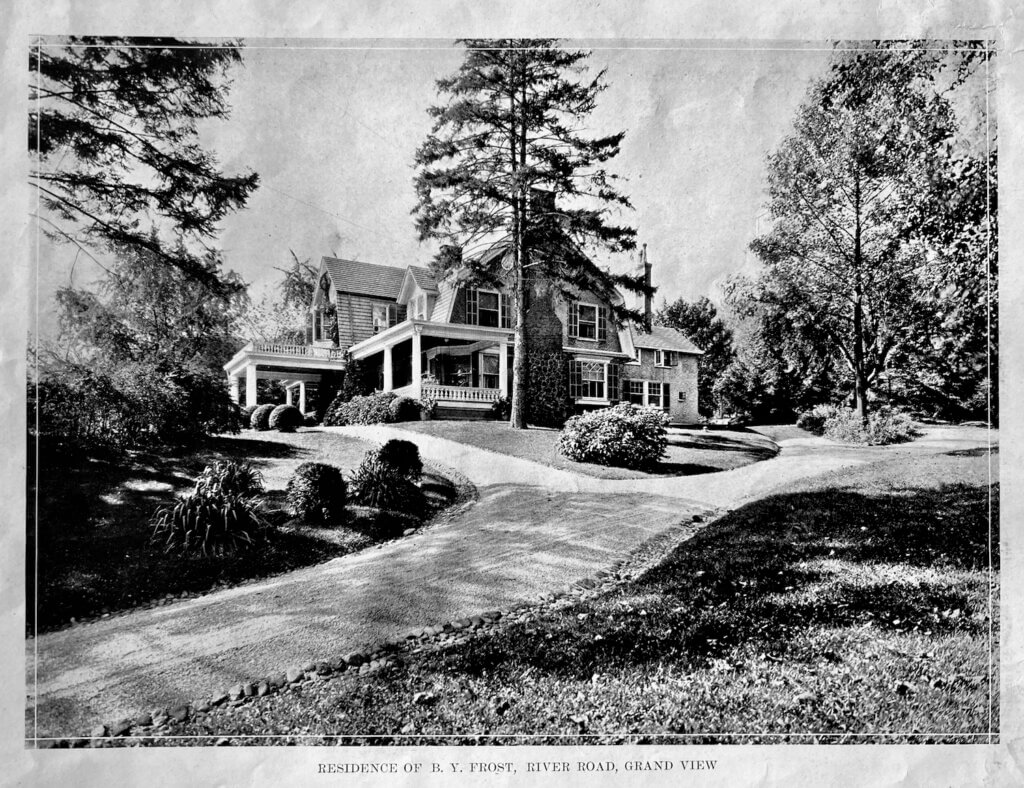
- 1893 B.Y. Frost Family Residence: After many summers in Nyack, the Frost family hired McElroy to build a large house. B.Y. Frost, a leading figure in the local economy, left a legacy his son expanded with a grand North Broadway estate.
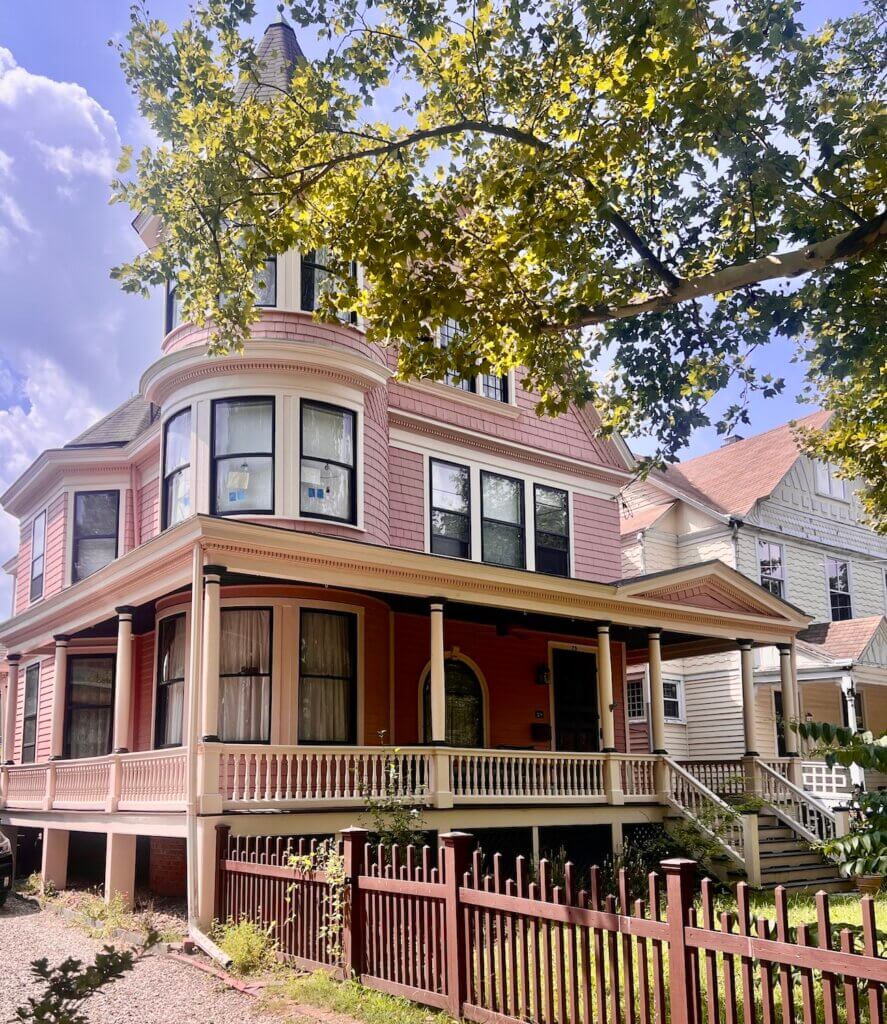
- 1893 McElroy House, 29 Division Avenue: McElroy built this personal residence just west of St. Paul’s Methodist Church. The house reflects his craftsmanship and vision for both form and function.
- 1893 Townsend House, North Broadway: On land once owned by Garret Sarvent, McElroy built a 36×22-foot home with sweeping river views, blending design with natural surroundings.
- 1893 Tompkins House, Tallman Place: McElroy constructed a three-story slate-roof home for Supreme Court Judge Arthur S. Tompkins. A decade later, Tompkins again turned to McElroy for work on his grand Glen Iris estate on North Broadway.
- 1896 William Randolph House, Aldine Park: McElroy built a three-story home for the Rockland County Treasurer, showcasing elegant design for influential locals.
- 1899 Van Buren House, South Broadway: McElroy replaced the old Hart Place with a large new residence, one of his last significant residential commissions.
McElroy’s Legacy
Charles McElroy was not only a respected builder but also a civic leader who made lasting contributions to the community of South Nyack. His legacy is evident in the many homes and buildings he constructed, as well as his role in shaping the village’s infrastructure. Through his leadership in sports, politics, and education, McElroy demonstrated a commitment to improving the community in every way. His ability to balance business with civic duty ensured that his work had a lasting impact on Nyack for generations to come.
Mike Hays has lived in the Nyacks for 38 years. A former executive at McGraw-Hill Education in New York City, he now serves as Treasurer and past President of the Historical Society of the Nyacks, Trustee of the Edward Hopper House Museum & Study Center, and Historian for the Village of Upper Nyack.
Since 2017, he has written the popular Nyack People & Places column for Nyack News & Views, chronicling the rich history, architecture, and personalities of the lower Hudson Valley. As part of his work with the Historical Society, Mike has researched and developed exhibitions, written interpretive materials, and leads well-attended walking tours that bring Nyack’s layered history to life.
Married to Bernie Richey, he enjoys cycling, history walks, and winters in Florida. You can follow him on Instagram as @UpperNyackMike.