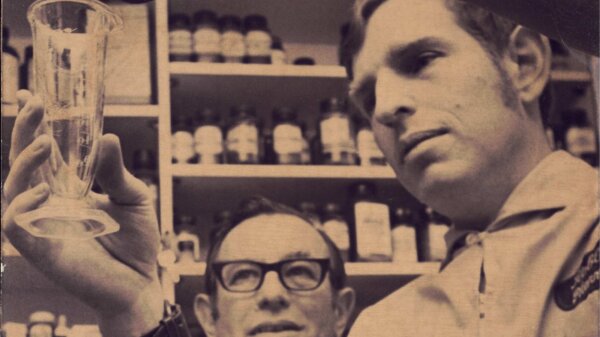
Nyack History A to Z
A Century of Keeping Nyack Cool
For more than a century, the Nyack Ice House stood at 90 Clinton AVenue in South Nyack. Many long-tine residents remember stopping at the small peaked building to pick up bags of ice for picnics and summer outings. The Nyack Ice House operated there until 2003. Five years later the building ws demolished. Built in 1898, the Nyack Ice House survived from an era before electric refrigeration transformed everyday life.

A two-horse team stands beside a loaded wagon as a worker grips a block of ice with iron tongs. Courtesy of the Nyack Library.
The Icebox: A Vital Service
Before electric refrigeration, ice preserved food in American homes, especially during summer. In the mid nineteenth century, ice harvesting became a major industry. Workers cut blocks from frozen lakes, stored them in insulated houses, and delivered them by horse drawn wagons. The familiar phrase “The Iceman Cometh” entered popular culture and later inspired a play by Eugene O’Neill.
In 1802, inventor Thomas Moore developed an early icebox. Typically called a cold closet, it held a large block of ice in a top compartment. Melted water drained into trays below. Because ice melted quickly in warm weather, households required frequent deliveries. As a result, ice reduced reliance on drying, salting, and canning.
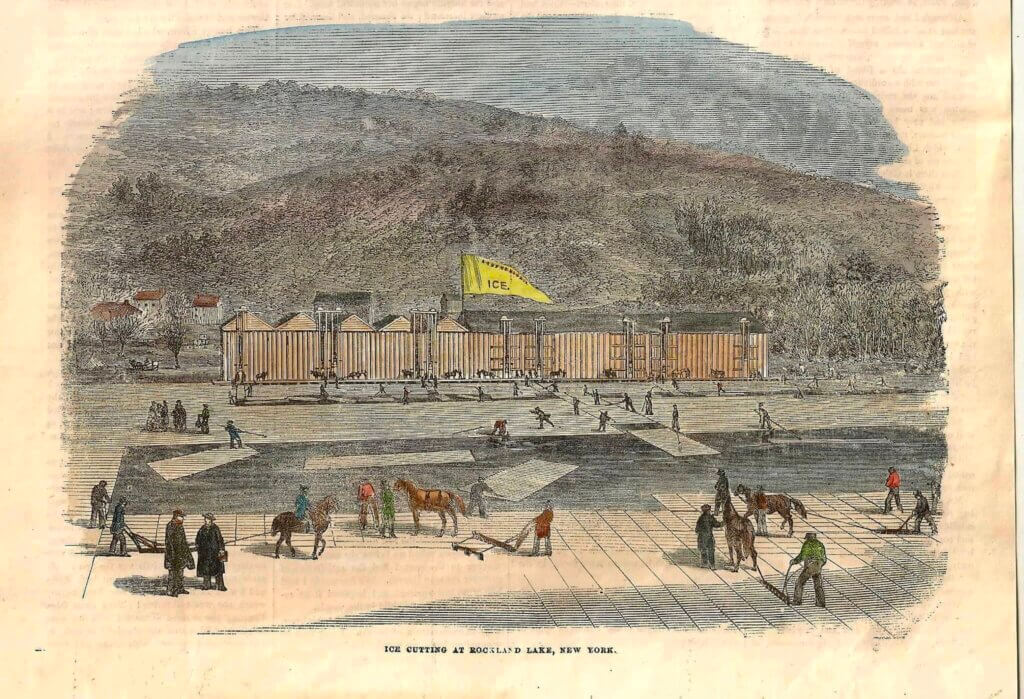
From Harper’s Weekly. Courtesy of the Library of Congress.
Knickerbocker Ice Company: Rockland Lake’s Pure Ice
At the same time, Nyack lay close to the center of the Hudson River ice trade. Each winter, crews harvested thick ice from Rockland Lake and stored it in vast ice houses along the lake’s northeastern shore.

The Village of Rockland Lake appears in the background. The Knickerbocker Ice Company employed hundreds of workers during the winter harvest season. Courtesy of the Nyack Library.
An elaborate system moved the ice to market. Steam powered trams hauled loaded carts up to the Village of Rockland Lake. From there, gravity carried the carts down a wooden incline to waiting barges. From this dock, ice traveled to New York City and beyond. The Rockland Lake brand became known for purity. Ultimately, millions of tons moved down the Hudson each year.
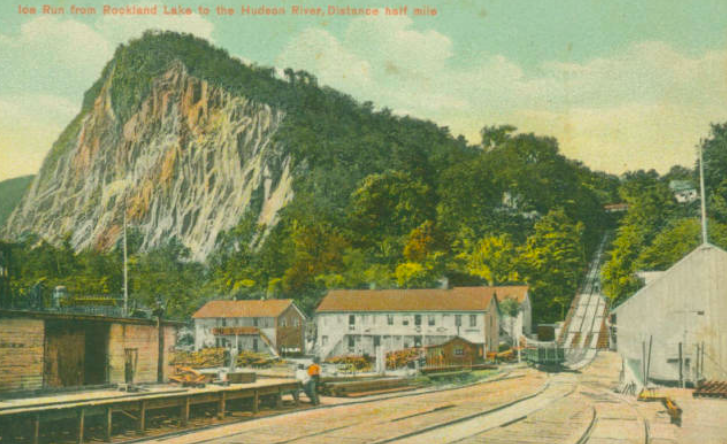
Postcard view of the terminus where ice descended from Rockland Lake to barges at the Hudson River docks. Courtesy of the Nyack Library.
Nyack Ice Pond: A Local Source
Meanwhile, Nyack also maintained its own supply. In 1869, Isaac Lydecker enlarged a small pond owned by James Smith near today’s Routes 9W and 59. He dammed the Nyack Brook and lined the expanded pond with stone. Two large ice houses rose along the eastern bank. One stored Rockland Lake ice, and the other held locally harvested blocks.
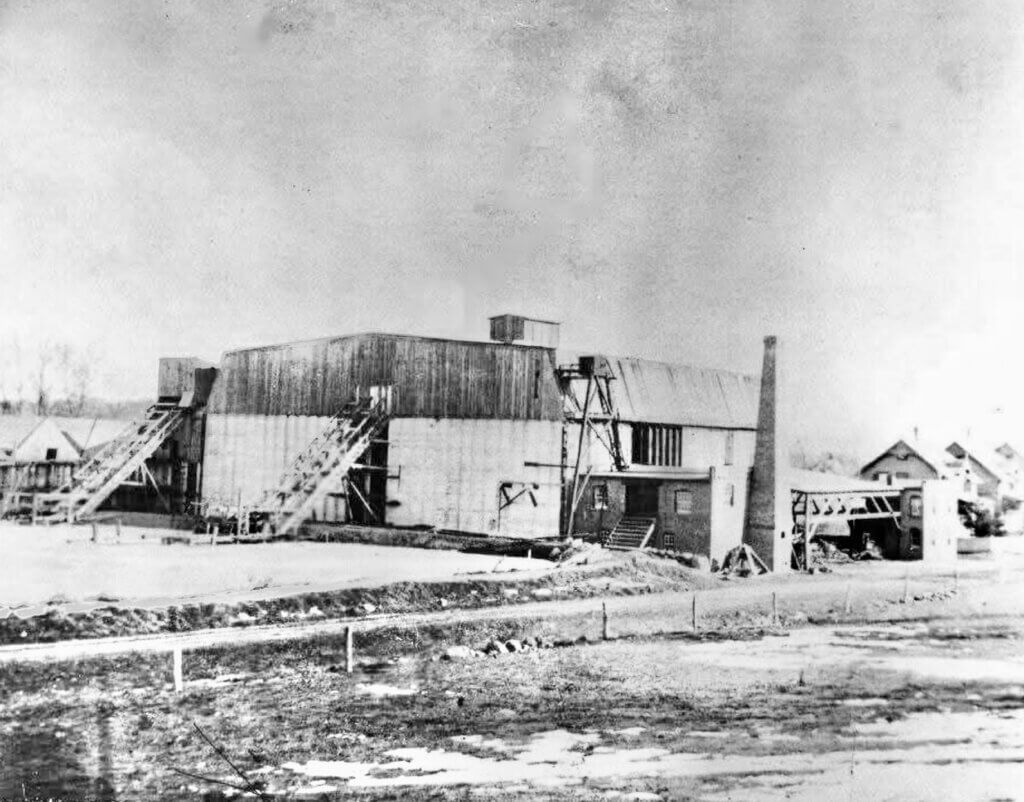
The storage facility stood on the east side of the Nyack Ice Pond. Courtesy of the Nyack Library.
Over time, residents called it the Skating Pond. Even after commercial harvesting ended, winter skating continued. By the 1940s the pond fell into disuse. When the New York State Thruway was built, the pond was filled. Today, the West Gate Inn occupies part of the former site.

The Origins of the Nyack Ice Company
By 1887, John N. Felter owned the Nyack Ice Company. He harvested ice from Garrabrant’s Pond on Mountainview Avenue and from a pond in Mount Moor, an early name for West Nyack. During this period, deliveries continued by wagon. Icemen carried blocks with iron tongs into homes. Some houses even featured exterior ice chutes. This system persisted into the 1920s.
The Rise of Ice Making
Because warm winters reduced supply, distributors often struggled to meet demand. As a result, Felter embraced mechanical ice production. He built a brick factory on an old rail spur and coal yard on Clinton Avenue beside the tracks along Franklin Street.
At the time, ice making represented advanced technology. For several years, the Nyack Ice Company operated as the only ice manufacturing facility between Jersey City and Newburgh. Commercial plants used refrigerants such as ammonia and methyl chloride. Although effective, these chemicals posed hazards. Even so, mechanical production freed the company from dependence on frozen lakes.


Nyack Ice Company newspaper advertisements.
Water pumped from a deep sandstone aquifer supplied the plant. Its location beside the railroad shaped daily life. Local resident Tom Hackett later recalled sitting in the cool window frame as trains passed. Because sightlines at the Franklin and Clinton intersection proved poor, accidents occurred. Eventually, around World War I, officials installed a gate crossing staffed by a gatekeeper who opened and closed the barrier for eighteen daily passenger trains.
The End of the Iceman
Beginning in 1913, inventor Fred W. Wolf introduced an early home electric refrigerator. Mass production of refrigerators followed after General Motor’s William C. Durant acquired the company that became Frigidaire in 1918. By the 1920s, safer refrigerants accelerated adoption. Consequently, demand for delivered ice declined. Felter responded by using his delivery network to distribute coal.
The Nyack Coal and Ice Company
In 1921, Gilbert Crawford purchased the firm. Soon after, he expanded operations. A graduate of Cornell Engineering and a World War I veteran, Crawford later served five three-year terms as Rockland County Treasurer.
He enlarged the plant to 13,000 square feet and erected seven massive coal silos supplied directly from rail cars. An underground tank stored fuel oil for delivery. Nevertheless, electric refrigeration and oil heat steadily eroded the ice trade.
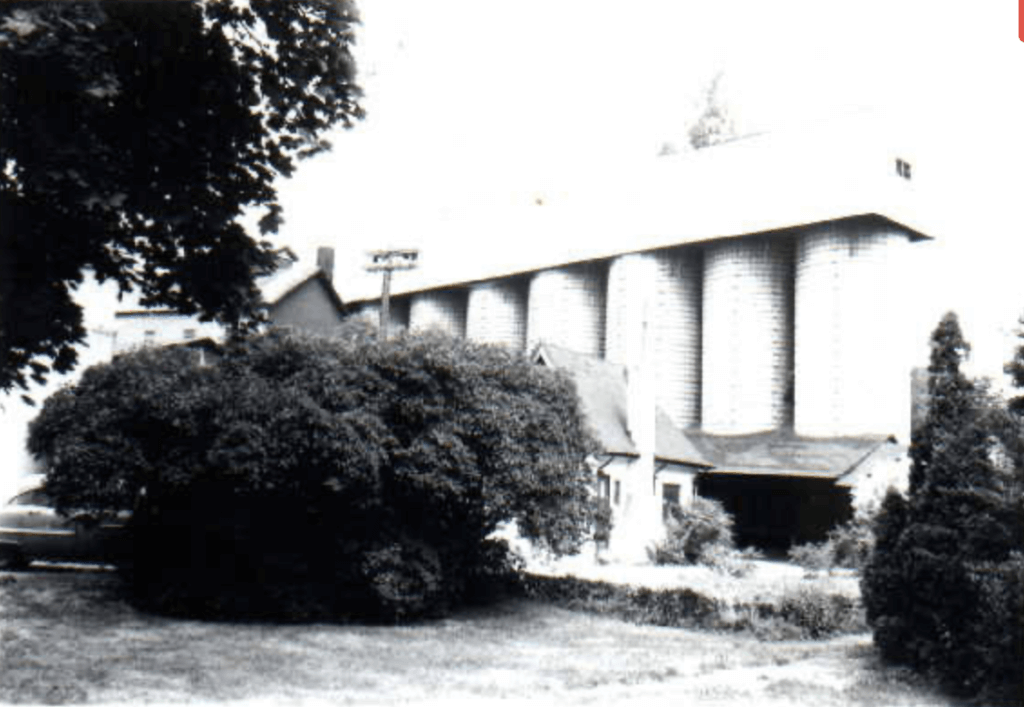
The massive silos dominate the smaller ice house. The tall brick building at left housed refrigeration equipment and ice storage. Courtesy of the Nyack Library.
The Modern Era: Adaptation and Decline
In 1965, Don Liso acquired the company. Liso demolished the coal silos. He shifted toward packaged ice cubes in plastic bags and installed a coin operated kiosk for after hours sales. For a time, summer demand remained strong. Reporters visited during heat waves to describe the cool refuge inside.
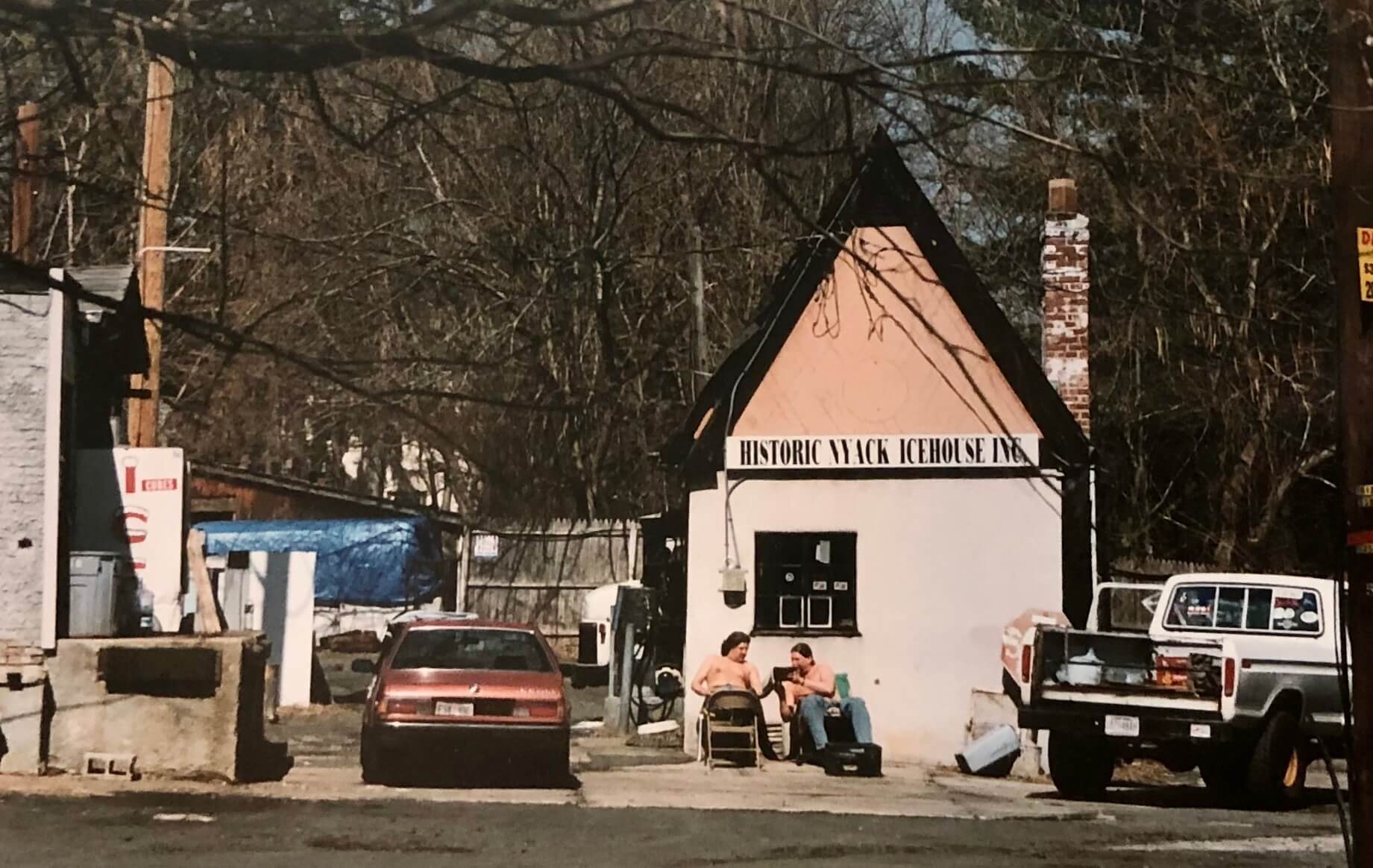
The brick ice-making plant stood just outside the left edge of the frame. Photograph by the author.
In 1988, Stephen Capuano purchased the business. Summer holidays could still bring a rush of customers. Capuano once described the Fourth of July as “like Christmas to us.” Although grocery stores, boaters, and ice sculptors continued to buy block ice, sales declined. In 2000, illusionist David Blaine purchased blocks for his Times Square endurance stunt. Such publicity proved fleeting. By 2003, annual sales had fallen to about 5,000 blocks, roughly five percent of capacity. That year, the Nyack Ice House closed. Five years later, it was demolished.
The End of an Era
The Nyack Ice House was never simply a nostalgic landmark. It remained an industrial operation in an increasingly residential area. Ice production, trucks, and customers brought noise and activity, especially on summer weekends. The work itself could be dangerous. Workers handled 300-pound blocks that could crush fingers and toes. Newspapers occasionally reported injury claims.
Environmental concerns also surfaced. Several underground fuel tanks, including a 12,000-gallon oil tank, required removal. Testing later revealed lead contamination in the well. Consequently, the property underwent remediation before residential construction began.
.Today, no trace of the brick factory remains. Yet for many residents, the Nyack Ice House endures as part of the village’s industrial past.
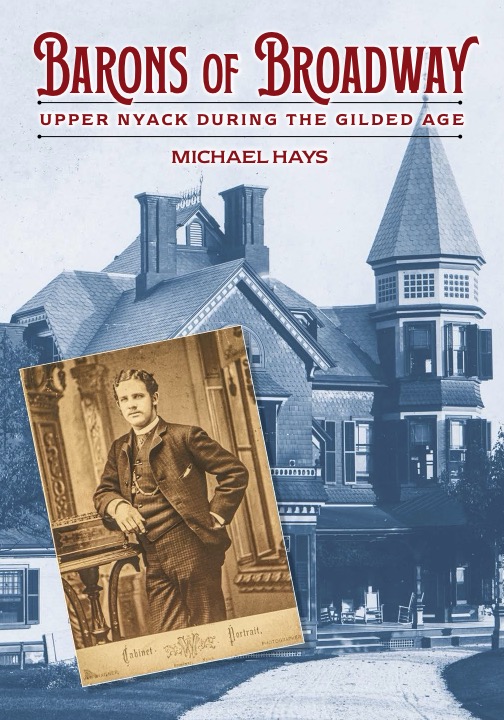
Just Published
Barons of Broadway: Upper Nyack During the Gilded Age
Available at Pickwick Books, Historical Society of the Nyacks, and Amazon
About the author
Mike Hays has lived in the Nyacks for 38 years. After a career as an executive at McGraw-Hill Education in New York City, he now focuses on researching, writing, and interpreting local history.
He serves as Treasurer and past President of the Historical Society of the Nyacks. He is also a Trustee of the Edward Hopper House Museum & Study Center and Historian for the Village of Upper Nyack. In these roles, he works with community partners to preserve historic resources and expand public understanding of the area’s past.
Since 2017, he has written the popular Nyack People & Places column for Nyack News & Views. The series chronicles the history, architecture, and personalities of the lower Hudson Valley.
Hays has also developed museum exhibitions, written interpretive materials, and led well-attended walking tours that bring Nyack’s history to life.
He is married to Bernie Richey. He enjoys cycling, history walks, and winters in Florida. You can follow him on Instagram at @UpperNyackMike.
Editor’s note: This article is sponsored by Sun River Health and Ellis Sotheby’s International Realty. Sun River Health is a network of 43 Federally Qualified Health Centers (FQHCs) providing primary, dental, pediatric, OB-GYN, and behavioral health care to over 245,000 patients annually. Ellis Sotheby’s International Realty is the lower Hudson Valley’s Leader in Luxury. Located in the charming Hudson River village of Nyack, approximately 22 miles from New York City. Our agents are passionate about listing and selling extraordinary properties in the Lower Hudson Valley, including Rockland and Orange Counties, New York.