

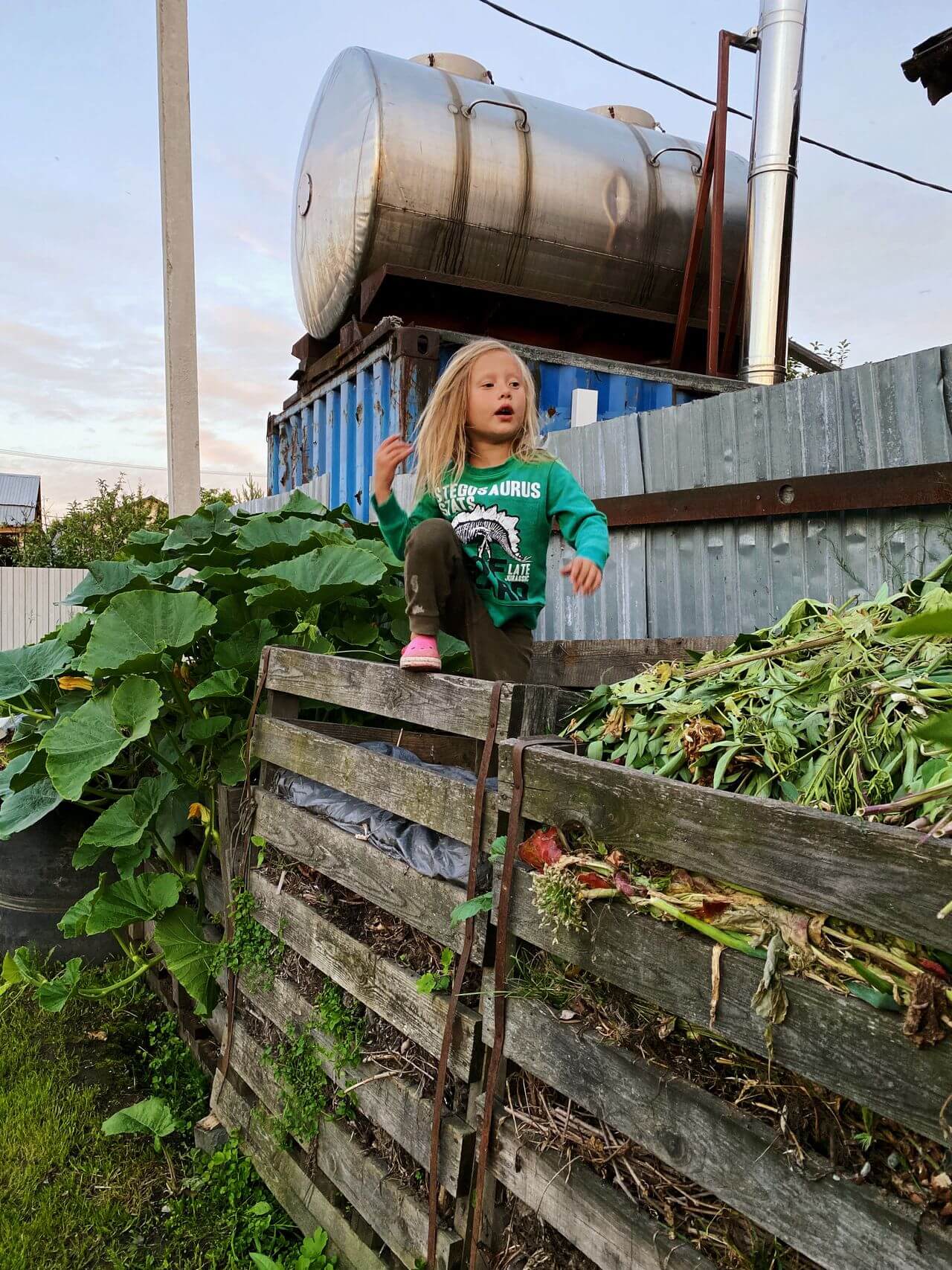
Photo by Reyna Sh/Pexels
There are so many ways teens and families can connect with the environment that benefit Mother Nature and people. They include composting and gardening. In this first part of a two-part series, I explore how composting uses food scraps and other waste wisely, and also look at landfills and the environmental problems they can create.
What’s Composting?
Composting and compost hold many benefits for Mother Nature and may be something you’ll want to try. Composting is the decomposition of organic materials through an aerobic (with oxygen) process. Compost is a soil amendment, a material added to soil that improves its health. Compost can also be used as mulch, another soil amendment that helps to provide nutrients to plants. You can even use compost as soil for houseplants and crops while simultaneously helping the environment.
What’s Compost Made Of?
Compost can’t be made out of any old materials. Its ingredients are commonly broken into two groups: greens (for nitrogen) and browns (for carbon). Nitrogen-rich green materials include coffee grounds, paper tea bags (without staples), fruit and vegetable scraps, and grass clippings. Dry leaves, sawdust, crushed eggshells, and nut shells are examples of carbon-rich materials. You can’t compost meat, fish, pet waste, dryer lint, produce stickers, aggressive weeds, and, surprisingly, compostable bags. You can find more examples of compostable and noncompostable items online.
But these aren’t the only factors that go into composting. There’s also oxygen accessibility, moisture levels, temperature, and location. While that may seem like a lot to manage, it should seem much simpler when I explain more.
Cold and Hot Composting, Indoors or Outdoors
Composting can be done outdoors and indoors. There are two major types of backyard composting: cold and hot. Cold composting is also known as passive composting; hot is active composting. Cold composting is slower, requires less effort, and takes longer to reach its final state. Cold composting will probably not reach the necessary temperature to kill off pathogens so there’s a possibility of harmful pathogenic bacteria, fungi, worms, and other parasites in your finished product. Hot composting is a faster process that requires more effort and attention. While a cold composting process is primarily anaerobic (the opposite of aerobic, meaning without oxygen), hot composting needs the right balance of air and water, and the right ratio of carbon and nitrogen to properly decompose. This process should provide the final product in four weeks to a full year while a cold composting process could take one to two years to reach its final state.
Generally, backyard compost piles don’t reach high enough temperatures to fully decompose so you should check first to see if it will work for your compost or community compost. There’s another option for Nyack and other Rockland County residents: Rockland Green’s Food Scrap Program.
Composting with Rockland Green’s Food Scrap Program
If you want to compost in Nyack, you can bring your food scraps to the Nyack Farmers Market (Thursdays from 8:00 a.m. to 2:00 p.m), a new collection point for Rockland Green’s Food Scrap Program, or to 63 Catherine Street. Collect food scraps in a small bin lined with Rockland Green’s compostable brown bags (available at Nyack Village Hall and the Nyack Library during working hours). Transfer the bagged food scraps from your small bin into a larger white or green bin, and store them until you’re ready to drop them off. It’s important to know exactly what you can and can’t compost; the list is on their website.
Why Is Composting Important?
Agriculture is one of the major consumers of water in the United States and accounts for approximately 80% of the nation’s water use, according to the U.S. Environmental Protection Agency (EPA). Then there’s soil, which studies show has increasing water-retaining capacities with the addition of organic matter. Using compost to help healthy soil, farmers can conserve more water and have higher yields compared to farming with less healthy soil.
Also, food is the leading material sent to landfills in the U.S. compromising 24.1% of municipal solid waste, according to the EPA. And in 2019, 66.2 million tons of thrown out/wasted food was generated in the U.S., and only 5% of that wasted food was composted, also according to the EPA. While I recommend people further research how we can minimize food waste, doing everything we can to decrease it will still leave food scraps that aren’t consumable. That’s where composting comes in: it recycles food scraps.
The benefits of composting include reducing waste, conserving water, and improving soil health. But it’s also important to know that municipal solid waste landfills are the third largest source of human-related methane emissions in the U.S., accounting for around 14% of methane emissions in 2022, also according to the EPA.
Learn More About Composting
If you’re interested in reading more about composting, here are a few sites to explore:
EPA: Composting at Home
Composting 101
Home Composting
What About Landfills?
When it’s not composted, trash sometimes goes into landfills. Landfills are different from dumps, which are less regulated and less monitored openings in the ground that store trash. A 1983 federal law ended the practice of open dumping in the U.S., although other countries still commonly use it to manage trash.
Over time, landfills have modernized. They adhere to certain regulations, and some hazardous items, such as car batteries and motor oil, are banned from them. Very little can decompose in landfills because, in contrast to composting, landfills lack oxygen. Even decades-old newspapers can still be legible. Since 1960 in the U.S., the amount of waste generated has increased 231%. While some is recycled or composted, most ends up in landfills.
Additionally, landfills emit plenty of gases. Two million people live within one mile of landfills, including 120,000 children under the age of five, 920,000 people of color, and 260,000 residents living in poverty. These two million people are prone to respiratory problems, including asthma, from the air pollutants.
Ninety-two percent of municipal solid waste landfills throughout the U.S. self-report their emissions to the EPA’s Greenhouse Gas Reporting Program, but some don’t consistently meet clean air standards and environmental safeguards put in place to protect public health and the environment.
What Happens to a Landfill When It’s Full?
A Municipal Solid Waste Landfill life expectancy is usually from 30 to 50 years; once full, it’s closed with a final cover and top layer of soil. No more trash is added to the landfill, but monitoring continues for decades afterwards. Operators have to pump out leachate (any toxic or contaminated liquid that poses a pollution threat to natural environments), inspect the covering, and test groundwater to ensure toxic chemicals aren’t leaking out.
Sometimes, there’s a new life for a landfill. Mount Trashmore is a “former landfill with 6 million tons of garbage transformed into a recreation destination,” according to the Solid Waste Agency. It was transformed in the late 1960s and ’70s in Virginia, becoming America’s first landfill park. Now it’s a popular destination for tourists and Virginia Beach residents to walk, run, fly kites, and more.
What Can We Do?
I believe we should stay hopeful, tackle our growing waste problem, reduce our reliance on landfills, and focus more on reducing, reusing, recycling, and composting with the goal of reducing greenhouse gas emissions. In some communities, including ours, there are food scrap collection programs that make it easier for residents to compost. We can adopt zero waste goals and take small steps to get closer to achieving it.


Sasha Weintraub is a rising sophomore at Nyack High School who likes writing, art, and music.