When the Cars Came to Nyack
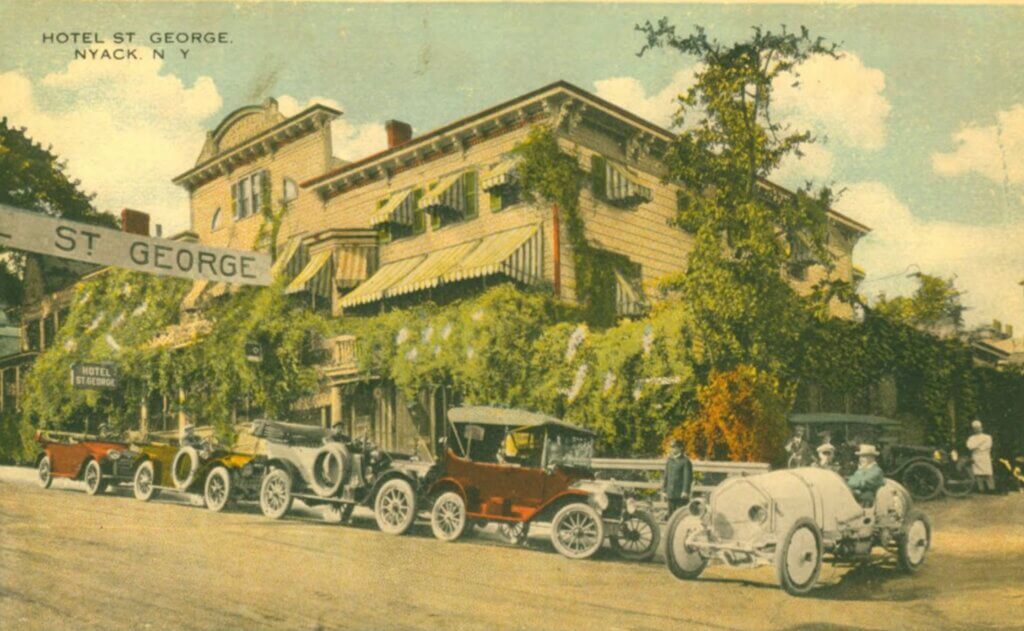
By the early twentieth century, the Hotel St. George stood at the center of life along Burd Street. For decades, steamers, carriages, and a steady flow of arrivals had defined its success.
That pattern began to change.
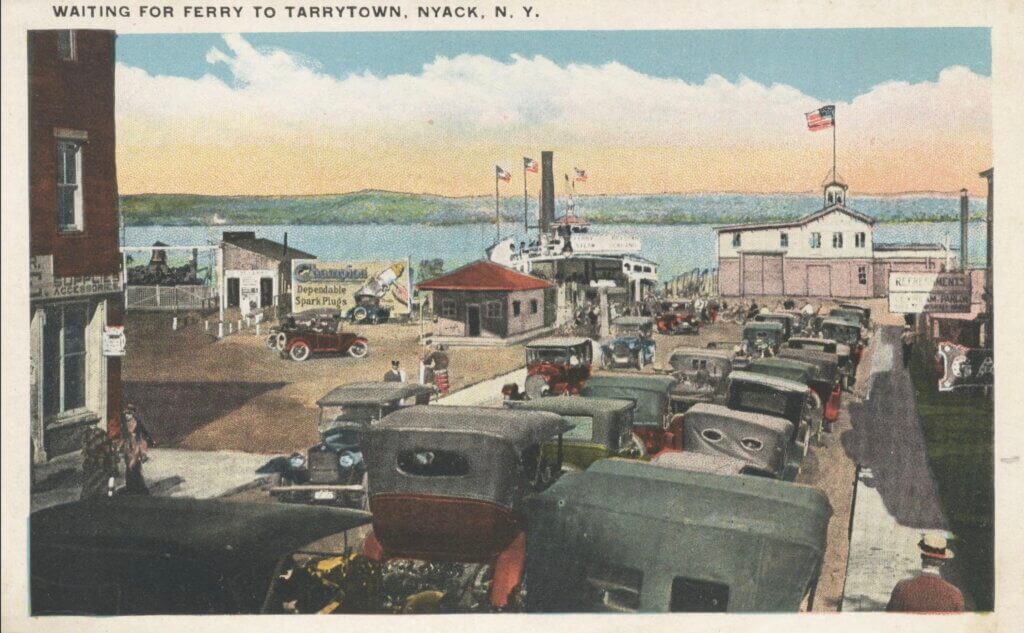
Automobiles replaced schedules with greater independence. Visitors no longer depended on steamers or rail connections. They arrived when they wished, and many passed through without stopping. The ferry remained on Burd Street, but cars no longer required a stop. They arrived and departed on their own schedule.

A Changing Hotel Landscape
At the same time, Nyack’s earlier resort hotels faded from the scene. The Tappan Zee House, the Prospect House, and the Pavilion no longer operated by the dawn of the automobile age. In their prime, these hotels drew prominent guests, including President Grover Cleveland during the interval between his two terms. Their decline underscored how much the region’s role as a destination had already begun to fade.
Newer accommodations such as the Lenox House offered updated rooms and a different model of hospitality. Expectations shifted and longer stays gave way to shorter visits.

From Visitors to Regulars
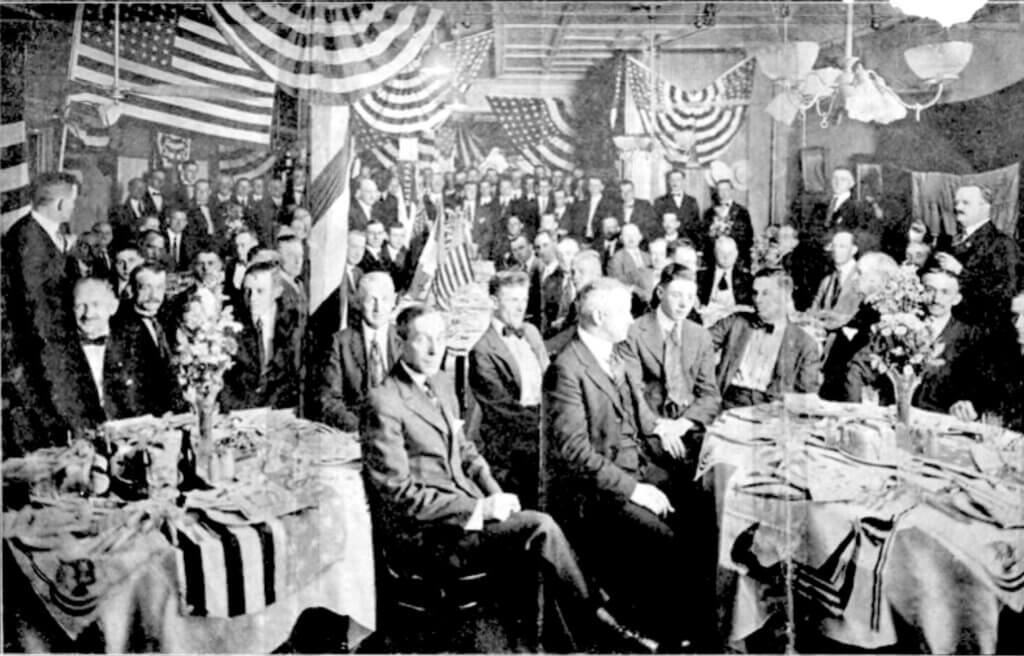
As travel patterns changed, the Hotel St. George turned inward. Its dining room served more local residents, while organizations met there and families gathered for celebrations. The bar drew a steady evening crowd, and large group dinners remained central to its operation.

William Williams, a well-known figure in Nyack, worked as a waiter at the hotel. He was a Black man, a longtime resident of Burd Street, a World War I veteran, and later a Nyack mail carrier. He came to the Hotel St. George following his father, beginning with the task of standing outside the entrance and brushing dust from arriving guests, even those wearing dusters.
Over time, he moved inside, working as a busboy, waiter, and bellboy. He recalled Sundays when a line stretched back to the door, as guests waited to be seated. During the lunch hour, he often performed for diners, playing piano, saxophone, and clarinet. He also led a five piece orchestra known as the Utopians.
Like many African American men of the time, his opportunities remained limited. Access to the hotel as a guest was not equal. As Leonard Cooke later recalled, such boundaries were understood, even if rarely discussed in public. The Hotel St. George stood at the center of village life, but that life was not shared on equal terms.
The Front Bar
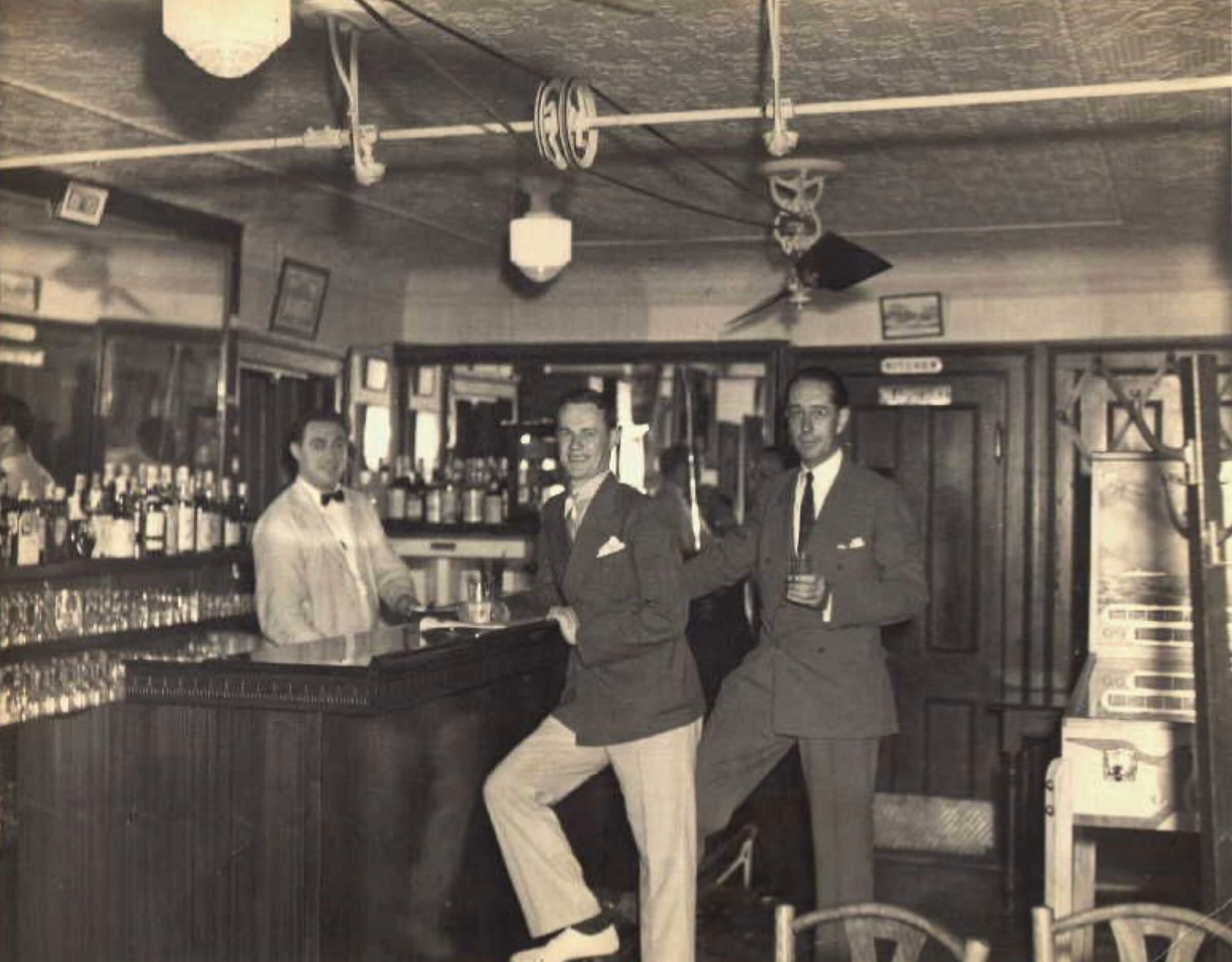
In the 1940s, the small bar at the front of the hotel became a popular gathering place. A few stools, a pinball machine, and steady conversation defined the space, drawing a regular local crowd.
Award winning Nyack writers, Charles MacArthur and Ben Hecht, were among those known to spend time there. Their presence reflected the hotel’s continued connection to the cultural life of the region.
In the 1960s, the bar took on a more animated tone. The start of “Happy Hour” was marked by the ringing of a ship’s bell, a small ritual that brought energy into the room and drew a loyal crowd.

The Fire of 1928
The fire came in 1928. Flames swept through the wooden building, and crowds gathered along Burd Street as the hotel stood at risk. For a time, it appeared that a long familiar landmark might be lost.
It survived. The structure reopened and continued to serve the village, but within a landscape already reshaped by new patterns of travel and competition.
Summer Evenings at the Playhouse
From 1958 to 1972, the Tappan Zee Playhouse operated as a summer stock theater in a converted movie house nearby. It drew well known performers such as Jack Benny and Helen Hayes, and steady audiences to Nyack during the summer months.

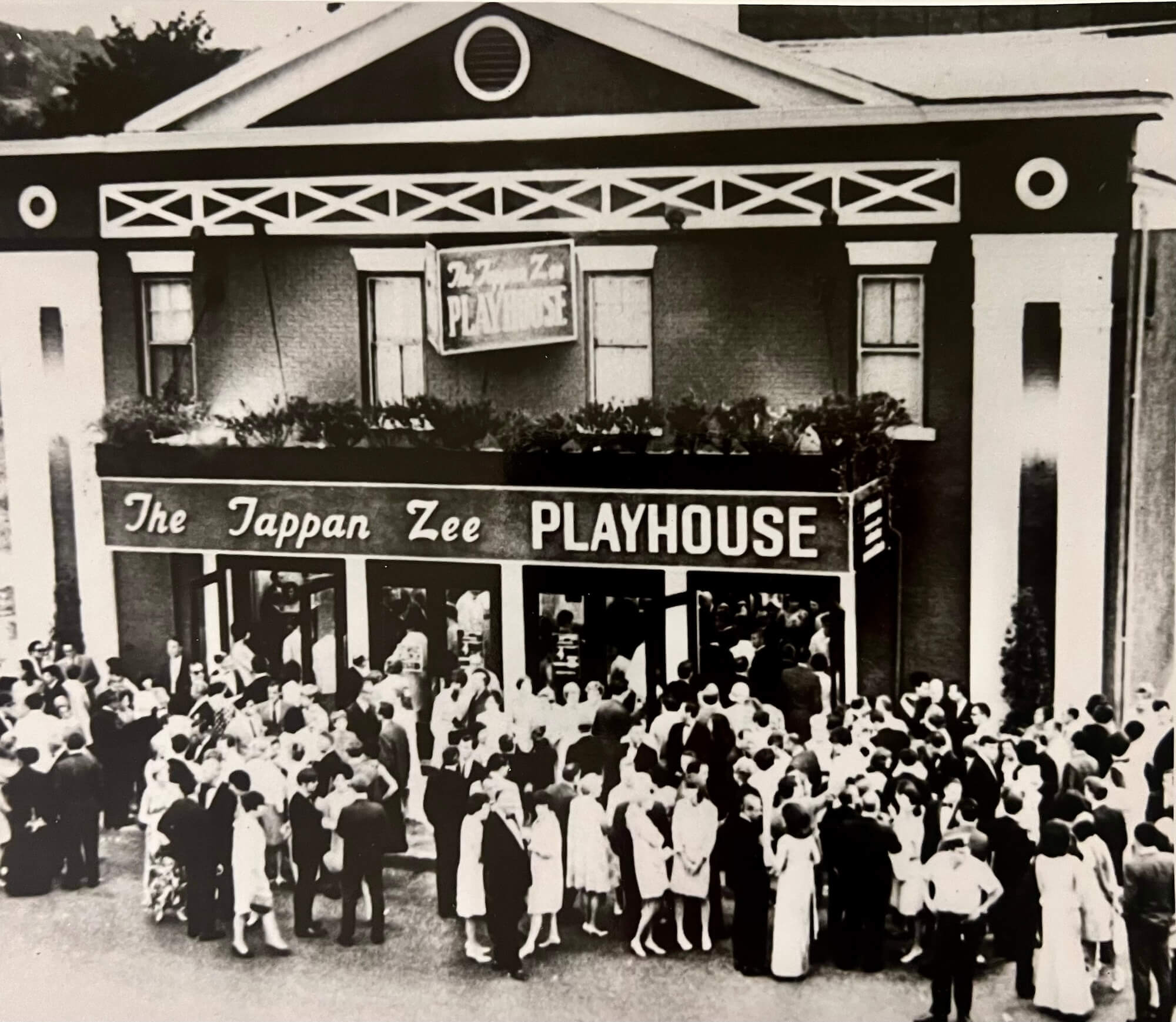
Performances ended, and the audience moved into the streets. Many made their way toward the Hotel St. George, just a short distance along Burd Street. Tables filled again late in the evening, as theatergoers extended their night over dinner and drinks.
The rhythm of the Playhouse shaped the hotel’s dining schedule. Early meals gave way to post performance gatherings. Actors, visitors, and local residents mixed in a setting that remained both public and familiar.
Reinvention
In the 1970s and 1980s, Nyack itself began to change. The village emerged as a destination for antiques and small specialty shops, drawing visitors for a different kind of experience than its earlier resort era.
The Hotel St. George, no longer a hotel or restaurant, became part of that shift. Its ground floor was divided into multiple shops, aligning the building with the new commercial life of the village. Before that transition took hold, George Marsilio, owner of the nearby Hi-Ho Tavern, carried out modest remodeling work that helped stabilize the building and prepare it for reuse.
In 1998, new owners undertook a more ambitious effort. Ed Mistretta and his partner, Joe Maraia, purchased the building with the goal of restoring its historic character. As Mistretta later explained, they set out to return the St. George “to its previous grandeur” and to ensure that its history would endure for the next generation.
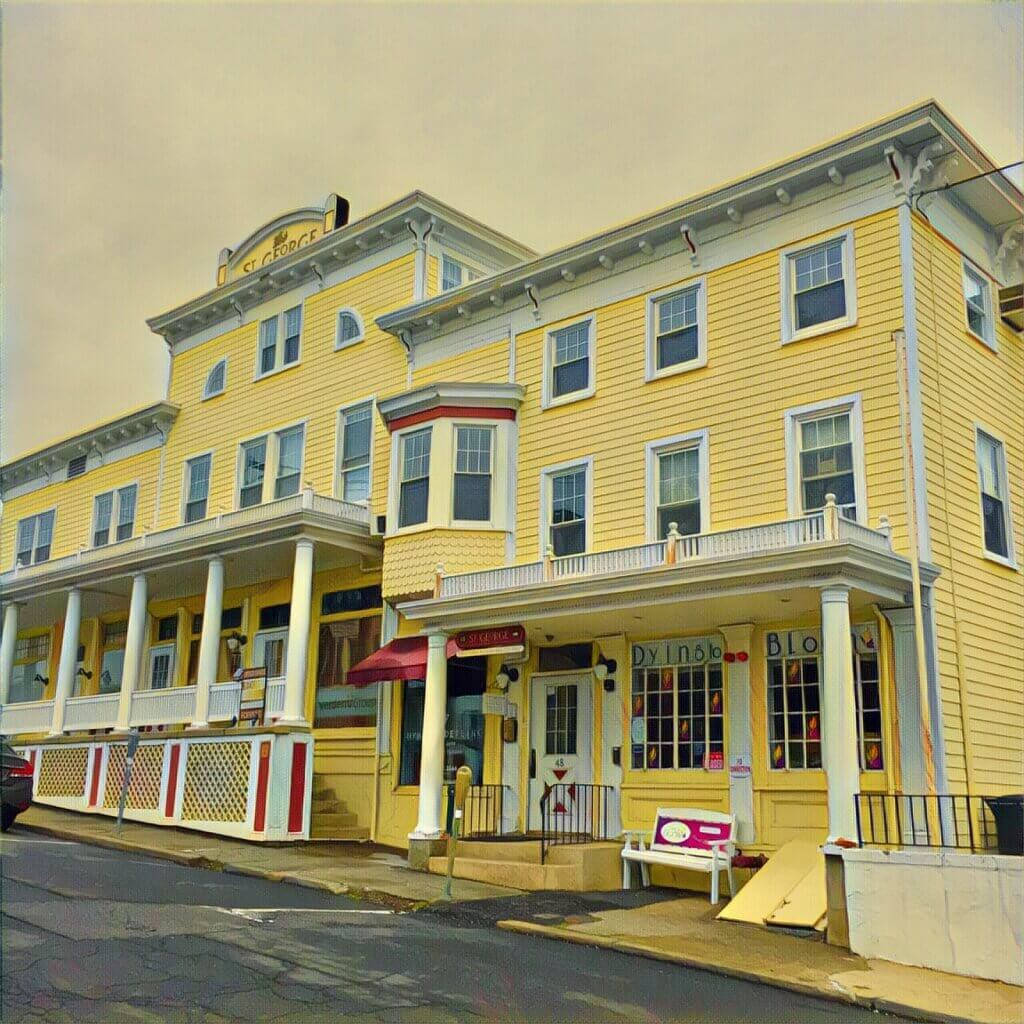
A major renovation followed in the early twenty-first century, restoring the building’s historic frontage along Burd Street. Architect Robert Silurski of S&CO Architecture directed the project.It received the Historical Society of Rockland County’s Historic Preservation Merit Award in 2004, recognizing both the quality of the work and the importance of the building itself.

Still Standing
Today, the Hotel St. George stands along Burd Street. Its restored façade recalls its earlier prominence, even as its purpose has changed. It is the last surviving hotel from Nyack’s Gilded Age.
What remains is not only a building, but a record of how Nyack once came together and how it learned to change.
About the author
Mike Hays has lived in the Nyacks for 38 years. After a career as an executive at McGraw-Hill Education in New York City, he now focuses on researching, writing, and interpreting local history.
He serves as Treasurer and past President of the Historical Society of the Nyacks. He is also a Trustee of the Edward Hopper House Museum & Study Center and Historian for the Village of Upper Nyack. In these roles, he works with community partners to preserve historic resources and expand public understanding of the area’s past.
Since 2017, he has written the popular Nyack People & Places column for Nyack News & Views. The series chronicles the history, architecture, and personalities of the lower Hudson Valley.
Hays has also developed museum exhibitions, written interpretive materials, and led well-attended walking tours that bring Nyack’s history to life.
He is married to Bernie Richey. He enjoys cycling, history walks, and winters in Florida. You can follow him on Instagram at @UpperNyackMike
Editor’s note: This article is sponsored by Sun River Health and Ellis Sotheby’s International Realty. Sun River Health is a network of 43 Federally Qualified Health Centers (FQHCs) providing primary, dental, pediatric, OB-GYN, and behavioral health care to over 245,000 patients annually. Ellis Sotheby’s International Realty is the lower Hudson Valley’s Leader in Luxury. Located in the charming Hudson River village of Nyack, approximately 22 miles from New York City. Our agents are passionate about listing and selling extraordinary properties in the Lower Hudson Valley, including Rockland and Orange Counties, New York.