How a riverfront hotel rose with the steamboat era and became the center of village life.
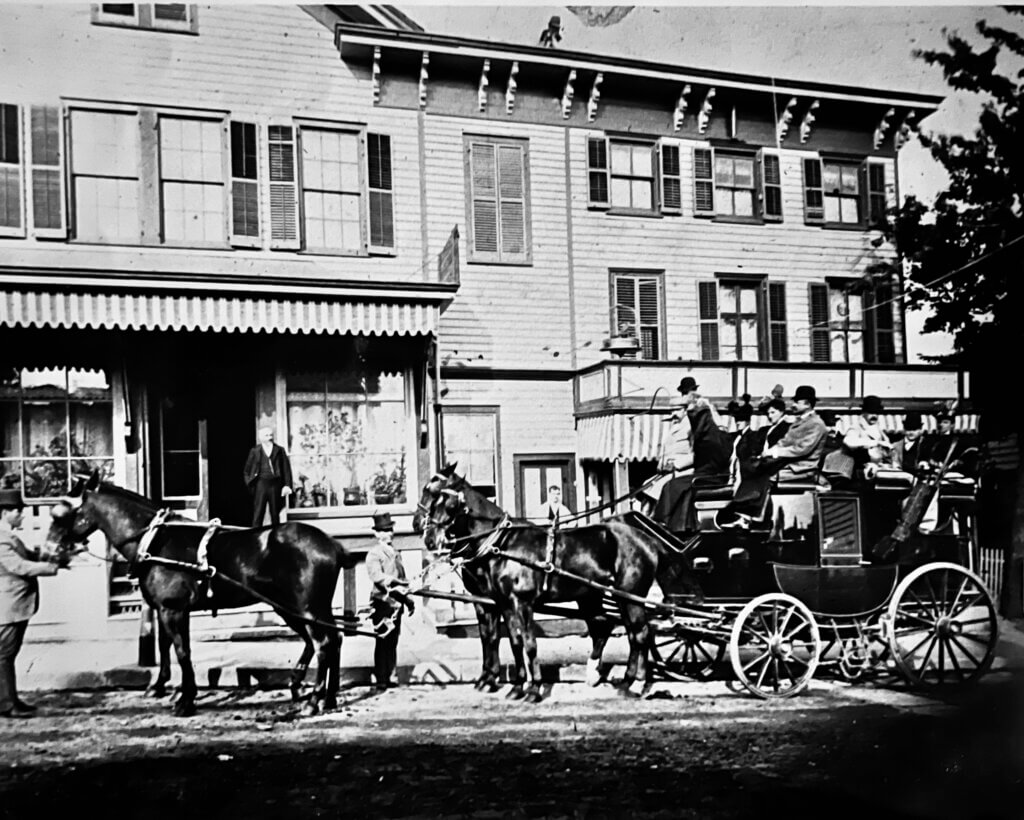
On a summer evening in the 1890s, Burd Street was active. Carriages arrived from the ferry, and well-dressed guests stepped onto the sidewalk. Inside, waiters moved through the dining room as conversations carried across the tables.
At the center of it stood the Hotel St. George. It was not the largest hotel in Nyack, nor the grandest. Instead, it became something more enduring. For decades, it served as the place where Nyack gathered, including locals, visitors, businessmen, performers, and even former President Benjamin Harrison, who dined there after leaving office.
A Hotel at the Right Place and Time
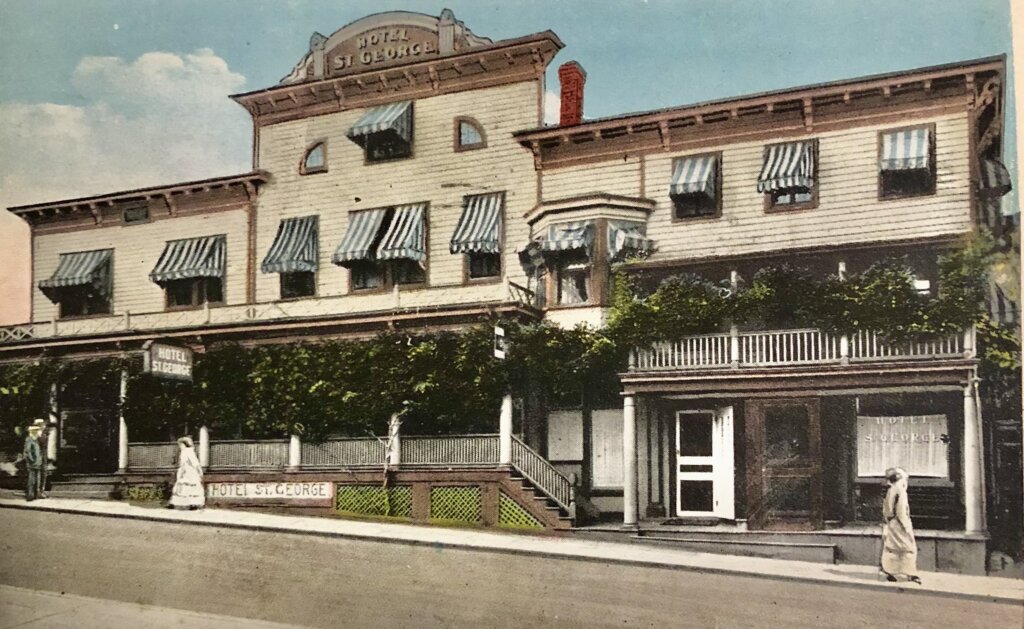
The Hotel St. George opened in 1885, at the height of Nyack’s riverfront appeal. Steamers linked the village to New York City, while railroads extended that reach inland. Visitors arrived in steady numbers, drawn by fresh air and Hudson River views.
Just as important, the hotel stood near the foot of Burd Street, close to the ferry landing. Travelers could step off a boat and reach the door within minutes. That convenience gave the hotel a reliable flow of guests from the start
From Dock to Table
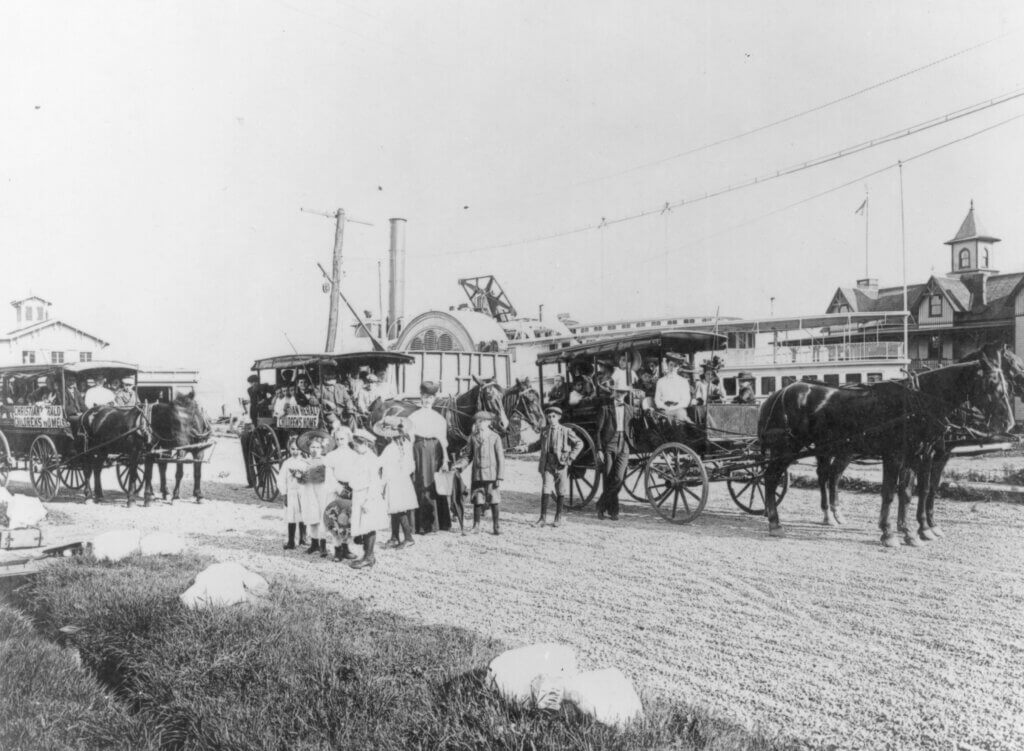
Steamers approached the Nyack docks throughout the day, their whistles announcing arrival before they came into view. Passengers stepped ashore and turned toward Burd Street.
Within minutes, they reached the Hotel St. George. Inside, travel gave way to dining. Coats came off, and tables filled quickly, especially when several parties arrived at once. Some guests ordered a full meal, while others paused briefly before continuing their trip.
The hotel occupied a middle ground that suited this rhythm. It offered more than a simple meal yet remained accessible to travelers passing through. Soon enough, many returned to the docks. Steamers departed as steadily as they arrived.
For a time, the Hotel St. George was not just a destination. It was part of the journey.
The Building Itself
Above, the rooms were simple but adequate, designed for shorter stays rather than extended luxury. Many offered views toward the Hudson River, where steamers arrived and departed throughout the day.
The dining room and the bar and reception area each had porches with balustrades, supported by wooden columns with railings set between them. From there, guests could observe the street, the river, and the steady movement of people that defined daily life in Nyack.
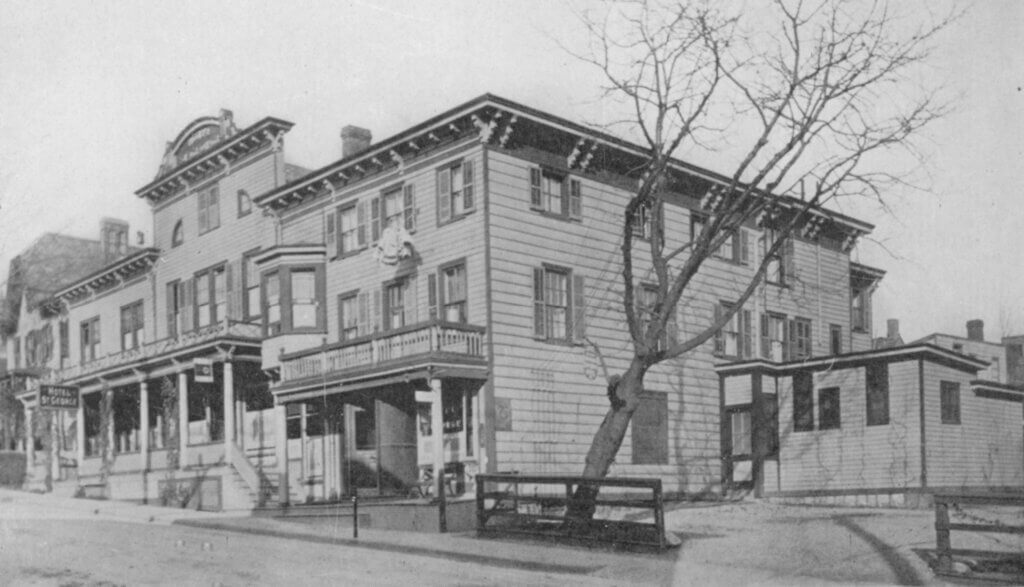
The hotel grew over time. It was not a single structure, but a group of connected buildings. Broad awnings, often shown in red stripes, extended over the sidewalk, shading the façade and signaling activity within.
Bardin’s Table
George Bardin shaped the reputation of the Hotel St. George. A native of Belgium, he brought a European sensibility to the table. Many of the dinners he prepared for large gatherings reflected French culinary traditions.
For formal occasions, the hotel offered a level of refinement that stood out locally. Families came for celebrations. Organizations held elaborate dinners.
A surviving bill of fare shows everyday offerings, while more elaborate menus appeared at formal events:
- Blue Point oysters
- Clam chowder
- Roast beef with gravy
- Spring lamb with mint sauce
- Hudson River shad
- Potatoes, bread, and desserts
The Hotel St. George became one of the village’s more fashionable places to dine.
At the Center of the Village
By the early twentieth century, the Hotel St. George had secured its place in Nyack life. It had become part of the village’s identity. If you wanted to know what was happening, you went there.
From its upper levels today, the view extends south to the span of the Tappan Zee Bridge, a reminder of how much the surrounding landscape has changed. Yet the patterns that sustained the Hotel St. George, steamers, carriages, and a steady flow of arrivals, would not last.
In Part 2, the story continues as automobiles reshape travel and the hotel adapts to a changing world.
About the author
Mike Hays has lived in the Nyacks for 38 years. After a career as an executive at McGraw-Hill Education in New York City, he now focuses on researching, writing, and interpreting local history.
He serves as Treasurer and past President of the Historical Society of the Nyacks. He is also a Trustee of the Edward Hopper House Museum & Study Center and Historian for the Village of Upper Nyack. In these roles, he works with community partners to preserve historic resources and expand public understanding of the area’s past.
Since 2017, he has written the popular Nyack People & Places column for Nyack News & Views. The series chronicles the history, architecture, and personalities of the lower Hudson Valley.
Hays has also developed museum exhibitions, written interpretive materials, and led well-attended walking tours that bring Nyack’s history to life.
He is married to Bernie Richey. He enjoys cycling, history walks, and winters in Florida. You can follow him on Instagram at @UpperNyackMike
Editor’s note: This article is sponsored by Sun River Health and Ellis Sotheby’s International Realty. Sun River Health is a network of 43 Federally Qualified Health Centers (FQHCs) providing primary, dental, pediatric, OB-GYN, and behavioral health care to over 245,000 patients annually. Ellis Sotheby’s International Realty is the lower Hudson Valley’s Leader in Luxury. Located in the charming Hudson River village of Nyack, approximately 22 miles from New York City. Our agents are passionate about listing and selling extraordinary properties in the Lower Hudson Valley, including Rockland and Orange Counties, New York.