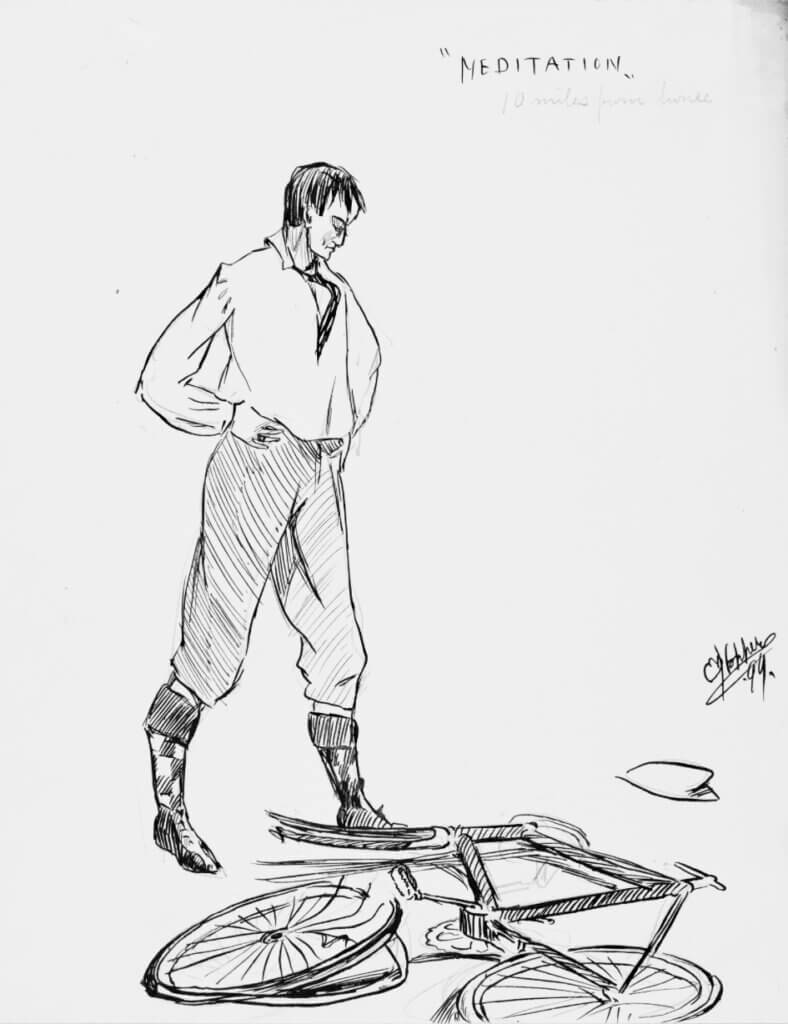
In this early drawing, Edward Hopper depicts himself paused beside a bicycle, a glimpse into both his daily life and his emerging artistic eye in Nyack. Courtesy of the Whitney Museum of American Art.
A century before shared city bikes, Nyack had its own version of a hometown ride, the “Nyack Bike.” These bicycles were not app-based or docked along sidewalks, but they were made here, marketed here, and ridden on village streets.
At the same time, a teenage Edward Hopper was exploring those same streets on two wheels.
So, the question naturally follows: did Hopper ever ride a Nyack Bike?
A Bicycle Boom Comes to Nyack
In the late 1890s, the national economy faltered, but bicycle sales surged. The “safety bike,” with equal-sized wheels, rubber tires, and chain drive, replaced the precarious penny-farthing and made cycling accessible to a wider public. Demand expanded rapidly.
Nyack joined the trend.
In 1897, when Hopper was 15, the Nuttall Manufacturing Company opened near the village train station. Its founder, John Nuttall, had a national reputation as a master nickel-plater. The plant specialized in plating and enameling and secured large industrial contracts, including one to finish 30,000 bicycle handlebars.
Around the same time, a product known as the Nyack Bike appeared on the market.
What Was the Nyack Bike?
The origins of the Nyack Bike remain unclear. No surviving records confirm where it was assembled or who controlled the brand. It may have been tied to Nuttall’s operation, but the connection remains circumstantial.
By 1901, the name appears in the Spalding catalog, which suggests the brand had already been absorbed into a larger distribution network.
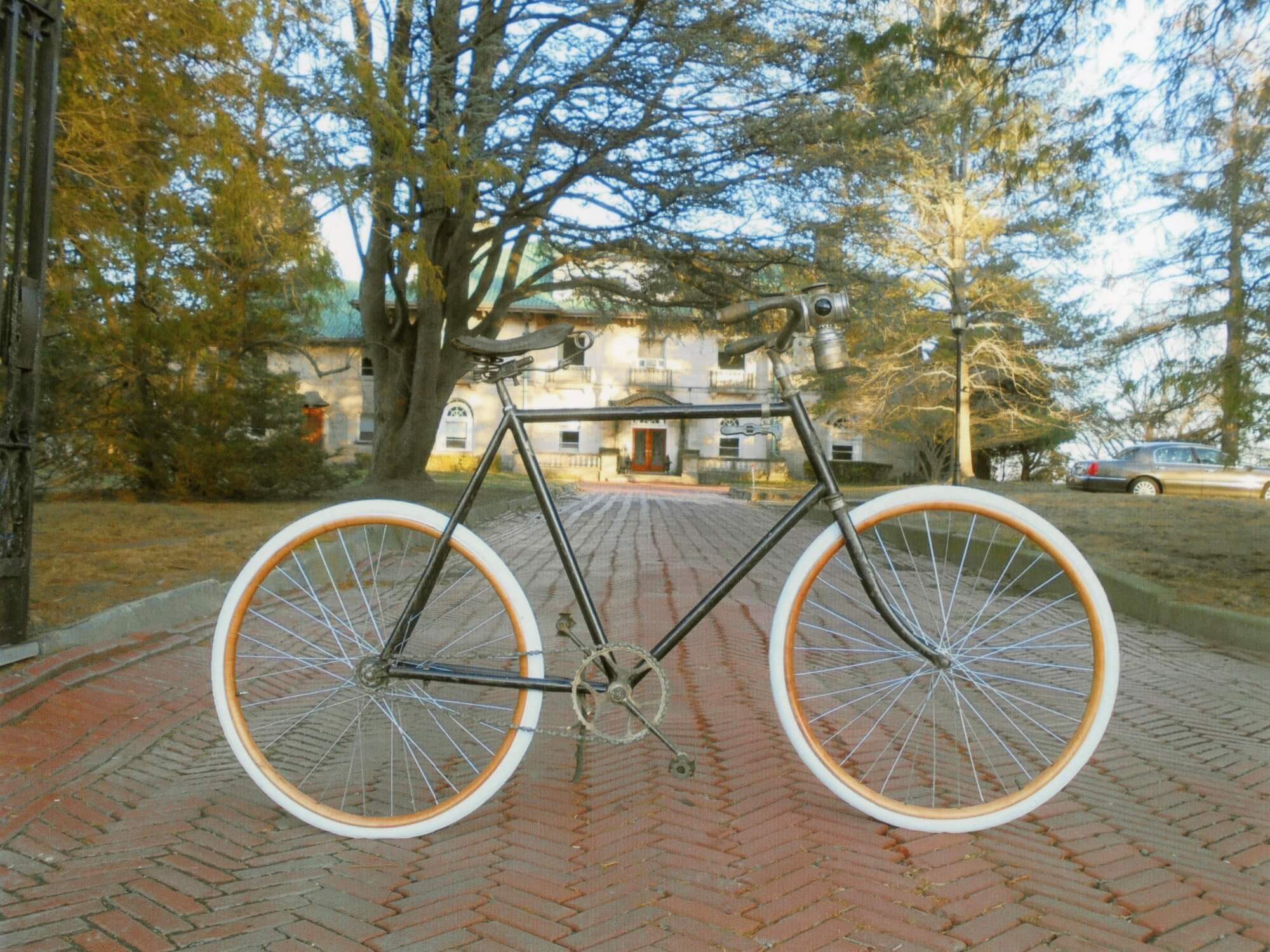
Photographed at the Foss House on North Broadway, this bicycle reflects the design and finish typical of late 19th-century safety bikes, with painted frame and refined detailing that signaled both utility and style. Courtesy of Michael Jamieson and the Nyack Library.
Nyack Bikes were advertised as “easy running, strong, handsome bicycles of marked excellence and finish.” Men’s and women’s models sold for $25, with coaster brakes available for an additional $5. Buyers could choose among several frame sizes, typically painted blue with a red band.
The brand lasted until about 1912. Today, surviving examples are prized by collectors.
Hopper’s Bicycle—Not Made in Nyack
We do not have to speculate about one key fact: Edward Hopper owned a bicycle, and it survives.
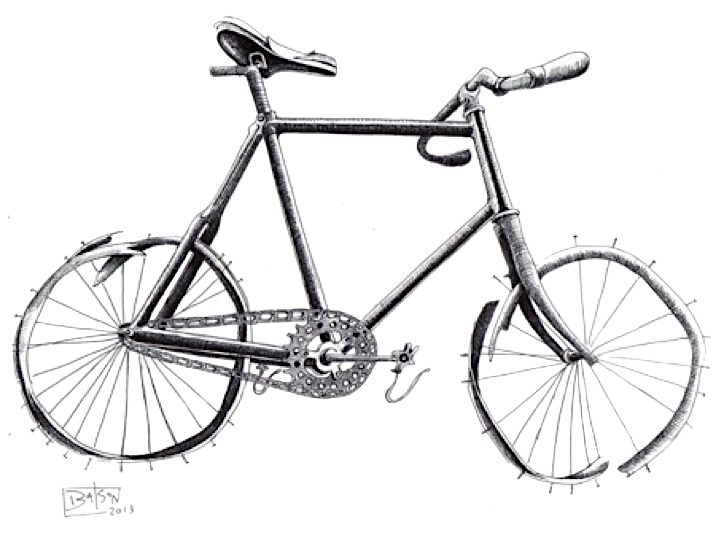
Now preserved at the Edward Hopper House Museum, the bike retains key features including curved handlebars, wooden wheels, and rat-trap pedals, despite heavy wear and corrosion. Illustration by Bill Batson.
That bicycle carries solid provenance, established by local historian Win Perry. Although the frame shows rust and the wooden wheel rims are bent, its defining features remain visible, including a curved handlebar and metal head badge.
The identification is clear. Hopper’s bicycle is not a Nyack Bike.
It is a Crescent Wheel Works Model #9, manufactured in Chicago.
Crescent ranked among the earliest large-scale bicycle producers in the United States. By 1895, the company produced tens of thousands of bicycles each year and shipped them nationwide. Its models typically sold for $40 to $100, well above the price of a Nyack Bike.
☞ Five Facts About the Nyack Bike
- Introduced in the late 1890s during America’s bicycle boom
- Likely connected to Nyack’s Nuttall Manufacturing Company, though not confirmed
- Sold for about $25, with $5 extra for coaster brakes
- Featured painted frames, often blue with a red band
- Disappeared by about 1912 but remains collectible today
Nyack briefly joined a national craze—then quietly faded from the bicycle map.
Hopper the Cyclist
While the make of his bicycle is known, the extent of Hopper’s cycling life must be inferred from contemporary accounts and his early work.
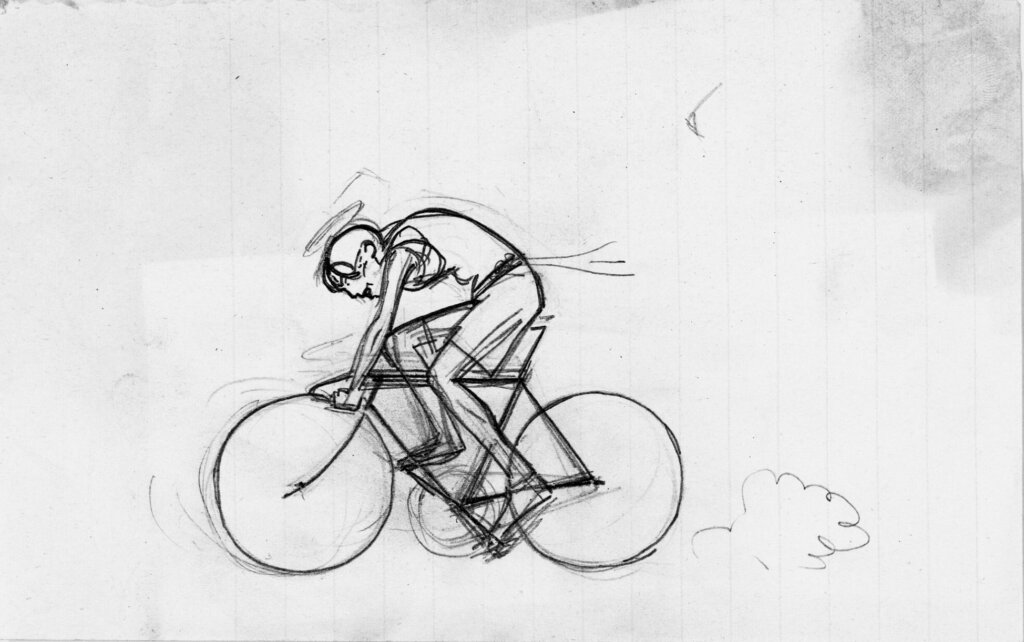
In this drawing, Hopper captures a cyclist in motion, reflecting his interest in the sport and its presence in his daily life in Nyack. Courtesy of the Whitney Museum of Modern Art.
Arthayer R. Sanborn, a Nyack Baptist minister and family friend, recalled Hopper “wandering along the Hudson or riding his bicycle through the county,” absorbing scenes that later shaped his art.
The physical evidence supports that memory. Hopper was tall, thin, and athletic. Early sketches show a rowing machine, a punching bag, and even a boxing match with a friend.
More telling, bicycles appear repeatedly in his early drawings. He sketched bike shops, racers, and riders moving. Cycling was not incidental. It formed part of his daily experience in Nyack.
So—Did Hopper Ride a Nyack Bike?
The answer is uncertain.
Edward Hopper owned a Crescent bicycle, not a Nyack Bike. No evidence shows that he ever owned or rode one. That bicycle, preserved since its discovery in 1971, is now on view at the Edward Hopper House Museum, where visitors can see it firsthand.
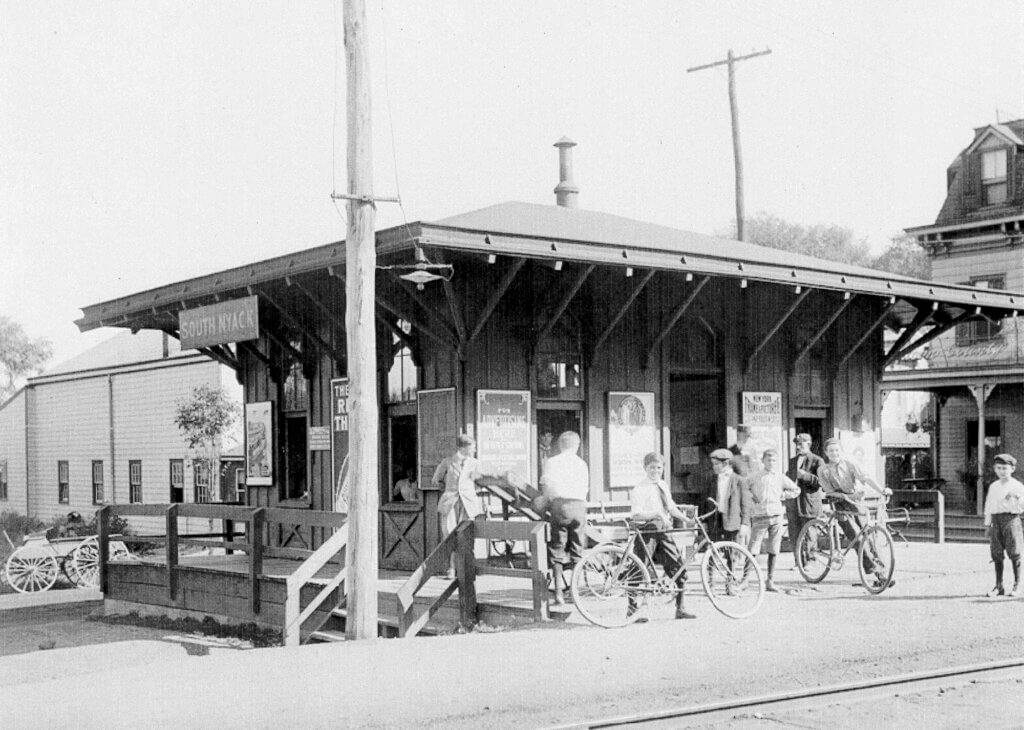
Bicycles were a common sight in Nyack at the turn of the 20th century, as seen here outside the South Nyack station, where young riders gather with their machines. Courtesy of the Nyack Library.
Yet bicycles were part of everyday life in Nyack during his youth, and Hopper was among those who rode regularly. In a village where locally named products were bought and discussed, he would have known the Nyack Bike, whether or not he used one.
The record does not go further. But the possibility remains: a young Hopper riding through Nyack—past storefronts, along the river, and through the streets he later painted—fits within what we know of his early life.
This small question about bicycles opens a larger story. In future pieces, we’ll explore Hopper’s Nyack—his home, his first studio, and the streets that shaped the artist he would become.
☞ Experience Hopper’s Nyack
You can see Edward Hopper’s bicycle for yourself at the Edward Hopper House Museum, where it has been on display since its discovery in 1971. The museum brings Hopper’s early life into focus through exhibitions, programs, and the very spaces where he first developed as an artist.
About the author
Mike Hays has lived in the Nyacks for 38 years. After a career as an executive at McGraw-Hill Education in New York City, he now focuses on researching, writing, and interpreting local history.
He serves as Treasurer and past President of the Historical Society of the Nyacks. He is also a Trustee of the Edward Hopper House Museum & Study Center and Historian for the Village of Upper Nyack. In these roles, he works with community partners to preserve historic resources and expand public understanding of the area’s past.
Since 2017, he has written the popular Nyack People & Places column for Nyack News & Views. The series chronicles the history, architecture, and personalities of the lower Hudson Valley.
Hays has also developed museum exhibitions, written interpretive materials, and led well-attended walking tours that bring Nyack’s history to life.
He is married to Bernie Richey. He enjoys cycling, history walks, and winters in Florida. You can follow him on Instagram at @UpperNyackMike
Editor’s note: This article is sponsored by Sun River Health and Ellis Sotheby’s International Realty. Sun River Health is a network of 43 Federally Qualified Health Centers (FQHCs) providing primary, dental, pediatric, OB-GYN, and behavioral health care to over 245,000 patients annually. Ellis Sotheby’s International Realty is the lower Hudson Valley’s Leader in Luxury. Located in the charming Hudson River village of Nyack, approximately 22 miles from New York City. Our agents are passionate about listing and selling extraordinary properties in the Lower Hudson Valley, including Rockland and Orange Counties, New York.