How Rockland County farmers rushed millions of berries to New York City
In early June, the air along Nyack’s waterfront carried a signal that summer had arrived. It was not a bell or a whistle. It was the scent of strawberries.
By mid-century, that scent meant urgency. Wagons rolled into Nyack’s docks and nearby river landings, their loads packed in small splint baskets. Within hours, those berries—picked across Rockland County—were aboard steamboats and, later, trains bound overnight for New York City.
In 1846 alone, some five million baskets were shipped from Rockland County, many passing through Nyack’s docks and nearby depots before continuing south.
Strawberries became one of the region’s earliest cash crops. Packed into small baskets and stacked into larger hampers, they moved quickly toward a city eager for fresh fruit after a long winter. Today, strawberries are available year-round. In the nineteenth century, they marked the beginning of the fruit season and were celebrated across the county.
Before the Fields
Long before commercial farming, wild strawberries grew in abundance along the Hudson River and in the hills above Nyack. One English observer wrote that a man could hardly set down his foot without crushing them.
That abundance lingered well into the nineteenth century. In 1897, the Rockland County Journal still described wild strawberries on South Mountain in South Nyack as “very plentiful.” Smaller and more acidic than modern varieties, they were nonetheless prized.
Native Americans gathered strawberries each June. They ate them fresh, dried them, and mixed them with meal to make a simple bread. Communities marked the season with festivals, sharing a drink made from strawberries, water, and maple syrup.
Later, African American harvesters in nearby Bergen County carried berries into New York City. They devised splint baskets with handles so the fruit could be strung on poles and transported more easily. That small innovation helped shape the trade that followed.
A Crop Takes Hold
By the early nineteenth century, strawberries moved from wild harvest to cultivated crop. Growers hybridized the native North American berry with a Chilean variety, producing larger fruit with better color and durability.
New varieties appeared steadily after 1830. Among them, the Boston Pine became a favorite along the Hudson River, valued for its reliability and yield.
Demand quickly outpaced supply. Farmers responded by planting large fields in orderly rows, spaced for efficient picking. Labor, however, remained a constant challenge.
Farm families met the need. Children joined the harvest during peak season. In parts of Bergen County, schools closed in June because so many students were absent in the fields. Picking contests added a competitive edge. In 1897, on a farm in Tallman, two young men tied after filling 155-quart boxes each in a single day.
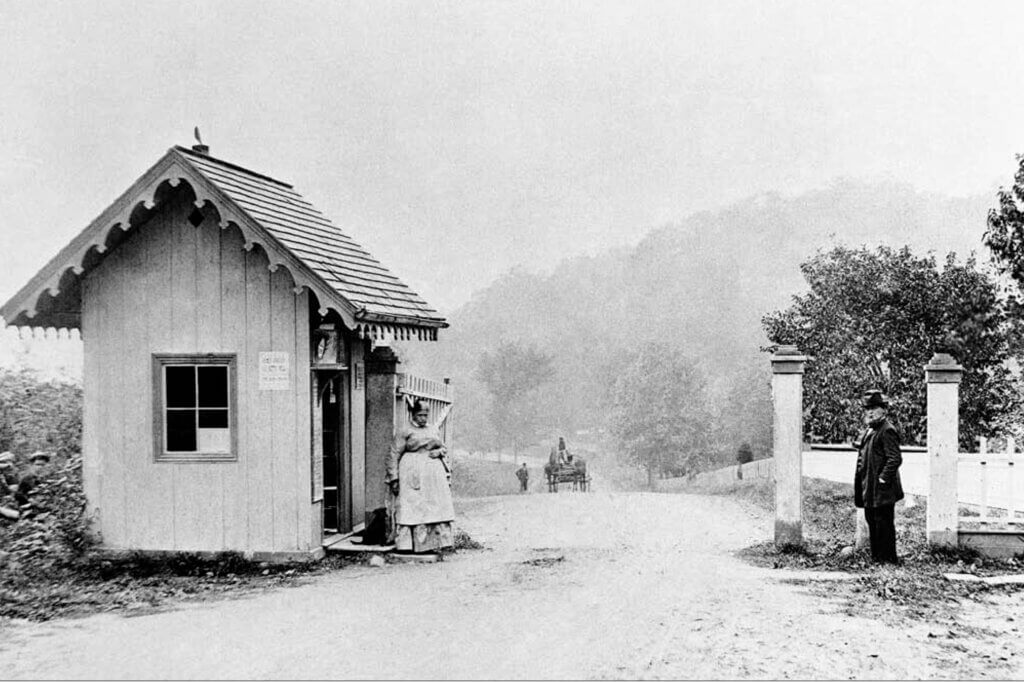
In Central Nyack, farms like those of the Waldron family and John Baker produced heavily. Baker, a Civil War veteran who kept the toll gate on the Nyack Turnpike, also tended nearby strawberry fields, a reminder that the trade depended as much on local roads as on boats and trains. By mid-century, much of that fruit began the same journey, moving from inland fields to the river landings at Nyack and beyond.
In 1869, Edgar Waldron of Central Nyack drew notice for two strawberries that together weighed an ounce and a half and measured five inches in circumference, a small but telling sign of how carefully the crop was grown.
Packing the Crop
Strawberries demanded careful handling. They bruised easily and spoiled quickly if mishandled.
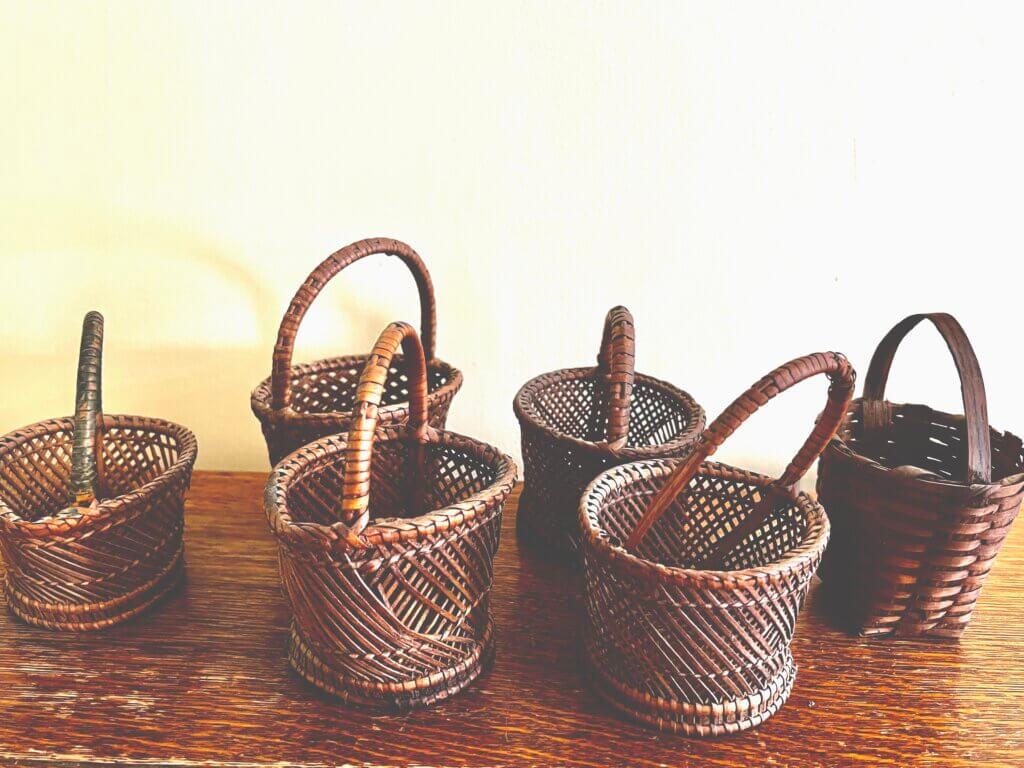
Farmers packed the fruit in small splint baskets known as punnets, each holding about a half pint. These were then placed into larger hampers or trays for shipment. During the winter months, many farmers made their own baskets from hickory. Others relied on skilled basket makers.
Each basket carried a mark so it could be returned to its owner after sale. By the late 1850s, new whitewood boxes began to appear, offering a sturdier alternative.
By the time the hampers reached Nyack’s docks or the nearby rail depots, the berries were already sorted, measured, and ready to move.
Harvest Time
Aside from the weather, the greatest challenge in strawberry farming was labor. The fruit ripened quickly and had to be picked at once.
Large families made the work possible. Children and adults moved through the fields daily during the short harvest window. In some communities, the demands of the season reshaped daily life. Schools closed. Work schedules shifted. Entire farms focused on the crop.
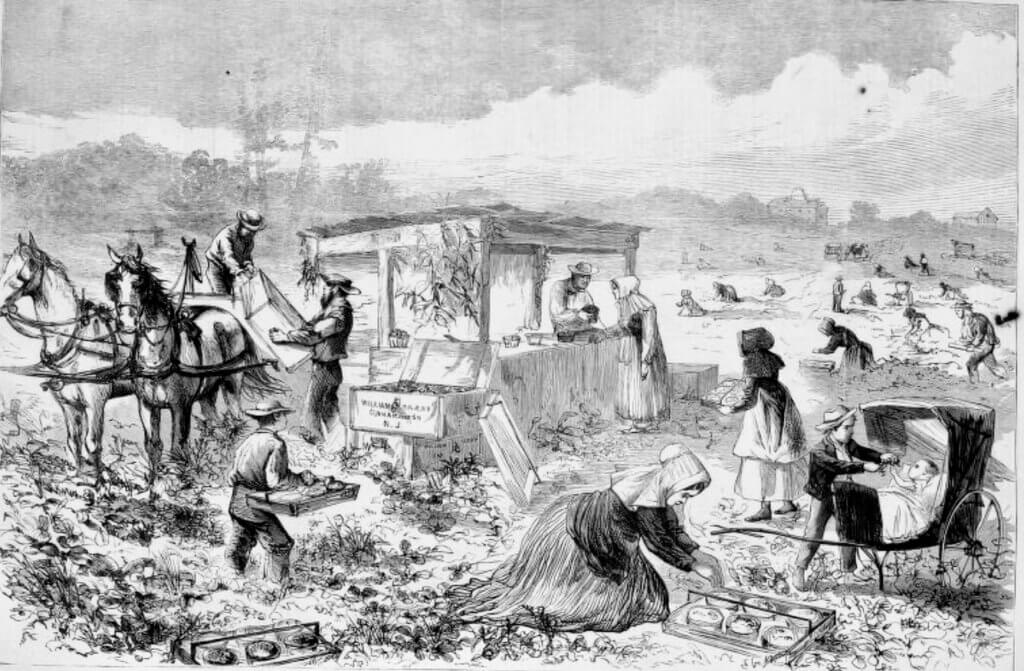
In later years, as labor became harder to secure, some farms adapted. As late as 1967, the Duryea farm in South Monsey, then in its third generation, operated as a pick your own farm. Even then, the rhythm of the harvest echoed earlier times.
By Steamboat
By the 1830s, steamships provided a reliable link between the Hudson River and New York City. Farmers soon turned to them to move strawberries quickly to market.
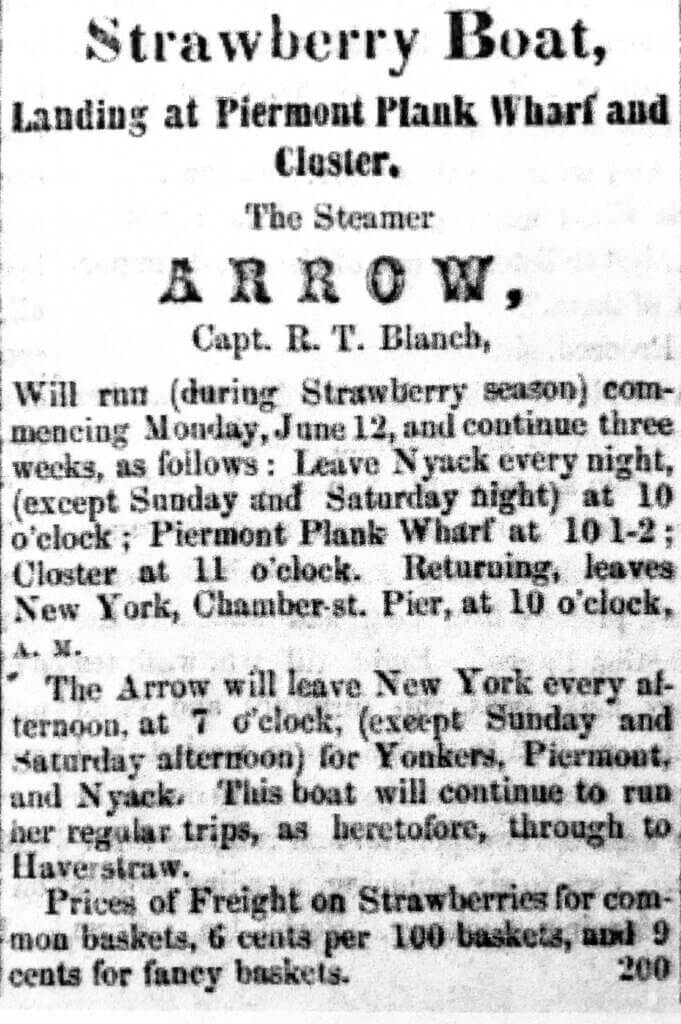
By the 1840s, nightly strawberry boats ran during the season. Farmers paid modest fees to ship their fruit. Boats stopped at Nyack, Piermont, and Closter, gathering cargo as they moved south. Nyack’s docks, controlled by the Smith family, became a central loading point.
One of the best-known vessels was the Arrow, built in 1838. With a shallow draft suited to west shore landings, it played a key role in the trade.
The Arrow also gained a reputation for mishap. In 1845, a fire broke out aboard the vessel at night. Cast loose from the dock, it drifted burning into the river before Captain Isaac Smith boarded it and helped bring it back under control. The boat burned again in 1851 but returned to service.
Schedules were tight. Boats left New York in the evening, reached Nyack by night, loaded quickly, and continued south. Night after night, the pattern repeated. Wagons arrived. Baskets were stacked. And from Nyack, the strawberry trade moved south under steam.
By Rail
Despite early doubts, railroads quickly overtook river traffic. Speed gave them a decisive advantage.
As lines expanded through Sparkill and Piermont, berries increasingly shifted to rail. Nyack remained tied to the flow, with fruit moving through its docks or toward nearby depots.
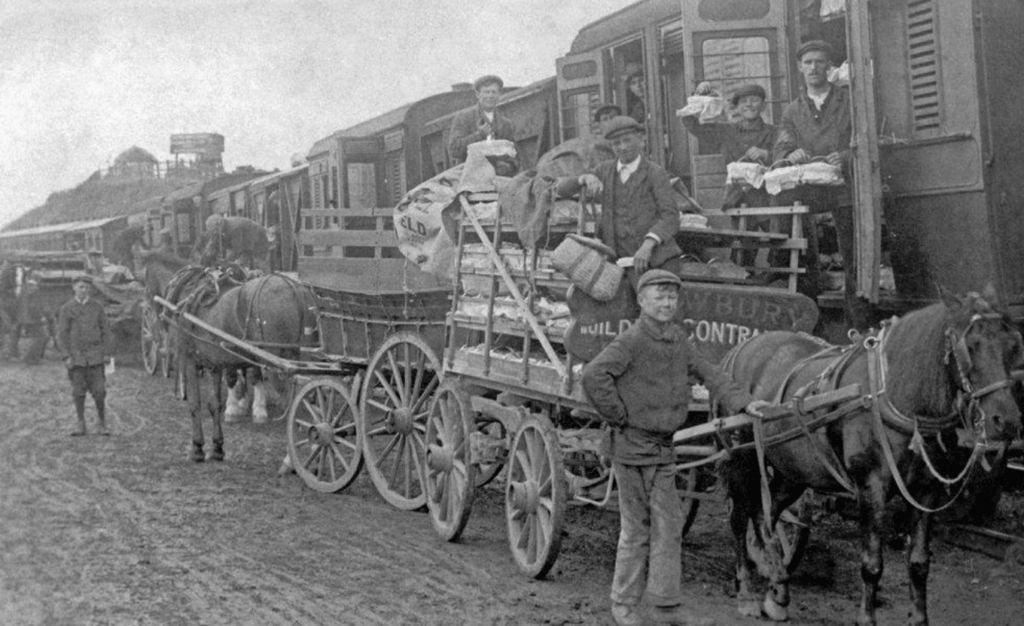
In 1859, the Northern Railroad of New Jersey began running a dedicated strawberry train during the season. Leaving Piermont in the evening, it carried fruit directly to Jersey City and returned the same night.
The scale was striking. Farmers could earn significant sums in a short season, even after freight costs and commissions.
The center of gravity shifted to the rails, but the schedules remained familiar. Fruit gathered near Nyack and moved quickly toward market.
Strawberry Season in Nyack
In Nyack, strawberries shaped community life as much as commerce.
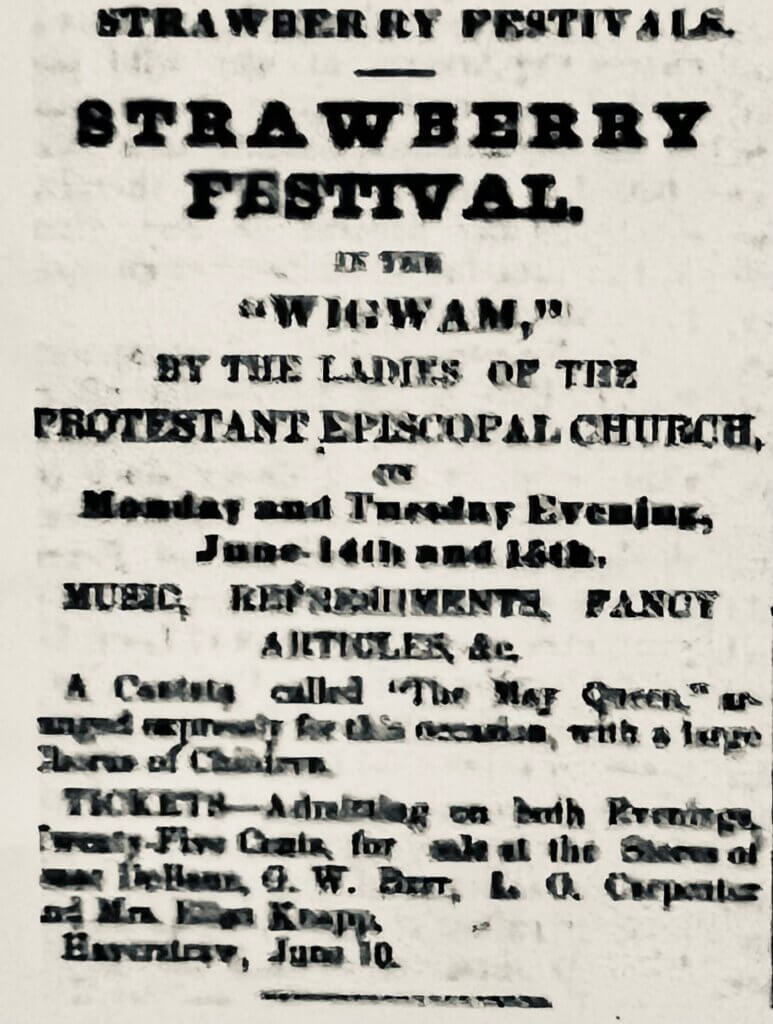
Each June, churches and local groups marked the season with strawberry festivals. In 1854, the Methodist Church held a strawberry and ice cream festival in DePew’s Grove, drawing residents to an outdoor setting that combined fresh fruit with music and social gathering. A few years later, in 1862, the Episcopal Church hosted a strawberry festival and fair at the Sturtevant piano factory, transforming an industrial space into a temporary center of community life.
These events reflected the height of the season. For a brief time, strawberries were everywhere, from the fields to the docks to the center of village life.
Similar festivals took place throughout Rockland County.
What Remains
Today, strawberries arrive year-round, and their season passes with little notice.
Yet in Nyack, the story endures. For a few weeks each June, the village stood at the center of a seasonal rush to market. Wagons rolled toward the docks. Steamboats waited in the dark. Later, trains carried the harvest south at speed.
The berries are still here, at farm stands and in local gardens. But the urgency is gone. What remains is the echo of those early summer nights, when the scent of strawberries filled the streets and the docks were busy into the night.
About the author
Mike Hays has lived in the Nyacks for 38 years. After a career as an executive at McGraw-Hill Education in New York City, he now focuses on researching, writing, and interpreting local history.
He serves as Treasurer and past President of the Historical Society of the Nyacks. He is also a Trustee of the Edward Hopper House Museum & Study Center and Historian for the Village of Upper Nyack. In these roles, he works with community partners to preserve historic resources and expand public understanding of the area’s past.
Since 2017, he has written the popular Nyack People & Places column for Nyack News & Views. The series chronicles the history, architecture, and personalities of the lower Hudson Valley.
Hays has also developed museum exhibitions, written interpretive materials, and led well-attended walking tours that bring Nyack’s history to life.
He is married to Bernie Richey. He enjoys cycling, history walks, and winters in Florida. You can follow him on Instagram at @UpperNyackMike
Editor’s note: This article is sponsored by Sun River Health and Ellis Sotheby’s International Realty. Sun River Health is a network of 43 Federally Qualified Health Centers (FQHCs) providing primary, dental, pediatric, OB-GYN, and behavioral health care to over 245,000 patients annually. Ellis Sotheby’s International Realty is the lower Hudson Valley’s Leader in Luxury. Located in the charming Hudson River village of Nyack, approximately 22 miles from New York City. Our agents are passionate about listing and selling extraordinary properties in the Lower Hudson Valley, including Rockland and Orange Counties, New York.