How a 1955 plan to expand Memorial Park into the Hudson River, then reinvent it as a marina, restaurant, and heliport, collapsed and left a concrete relic behind
What Is That Concrete Hulk?
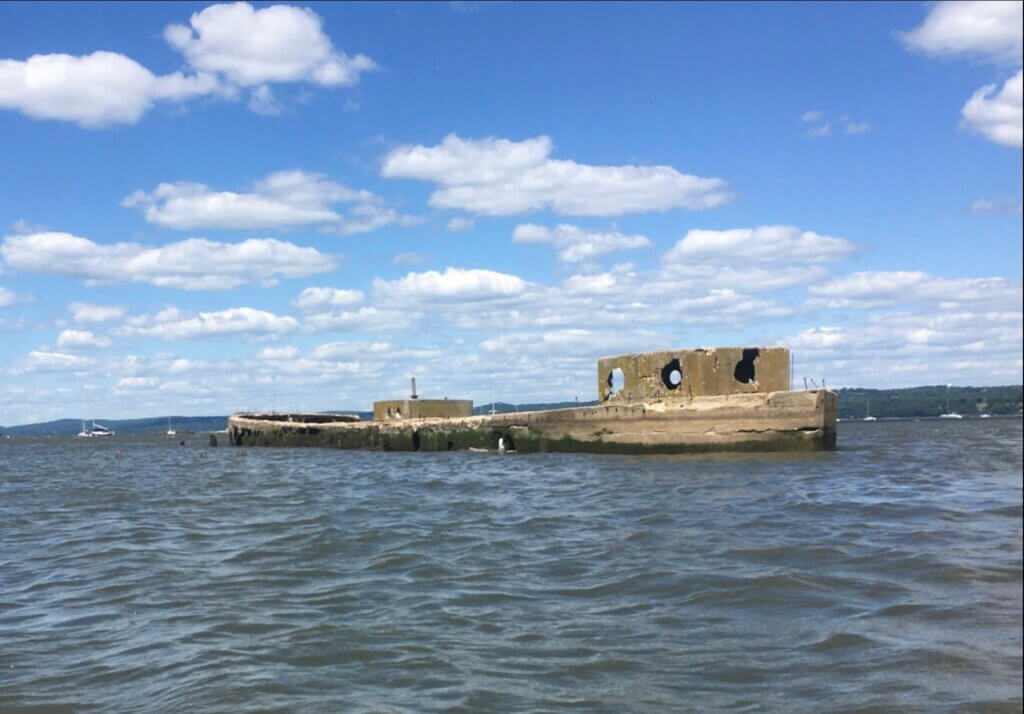
Visitors ask the question the moment they notice it, low in the water, half-buried, about 100-yards offshore from Memorial Park. Many locals know it is a barge. Few know why it is there.
The answer is more interesting than expected. It is not a wreck. It is not an accident. Instead, it is the visible remnant of one of the most ambitious, and ultimately unsuccessful, plans in Nyack’s history.
Before the Park
To understand the barge, we need to start long before the park.
Around 1790, Theunis DePew purchased a large farm at the mouth of Nyack Brook. He soon became the largest landholder in Nyack. A grist mill and mill pond anchored the property. A sandstone quarry operated west of the mill pond during the 1800s.
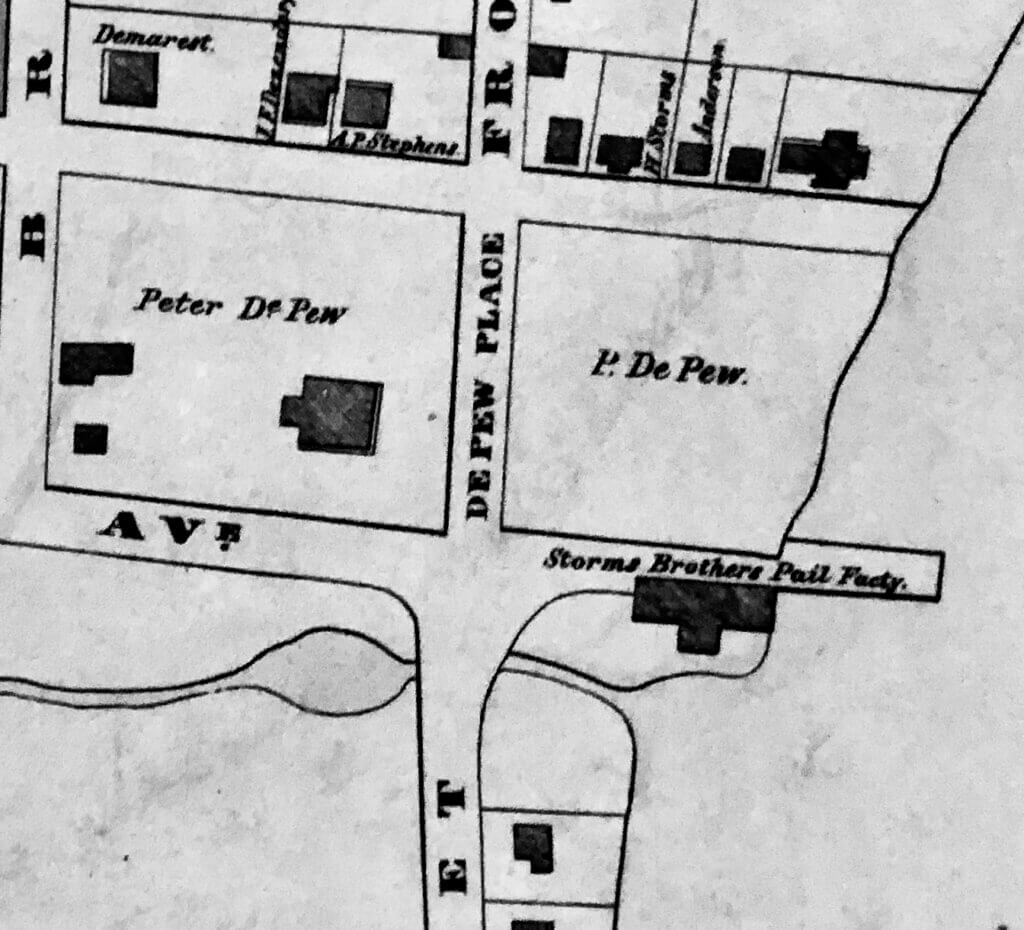
Meanwhile, the DePews expanded into greenhouse operations. They first built along what became South Broadway and later moved onto the upper level of today’s park. From their docks, they shipped thousands of cut roses daily to New York City. They also supplied grape stock to Upper Nyack farmers.
This was not open parkland. It was a working industrial shoreline.
A Park Is Born
After World War I, Nyack set out to honor its fallen soldiers.
Civic leaders organized the Soldiers and Sailors Memorial Park Association. They raised funds quickly and purchased the DePew land in 1920. Volunteers cleared the old industrial structures. The Nyack Garden Club laid out trees and landscaping on the upper level.
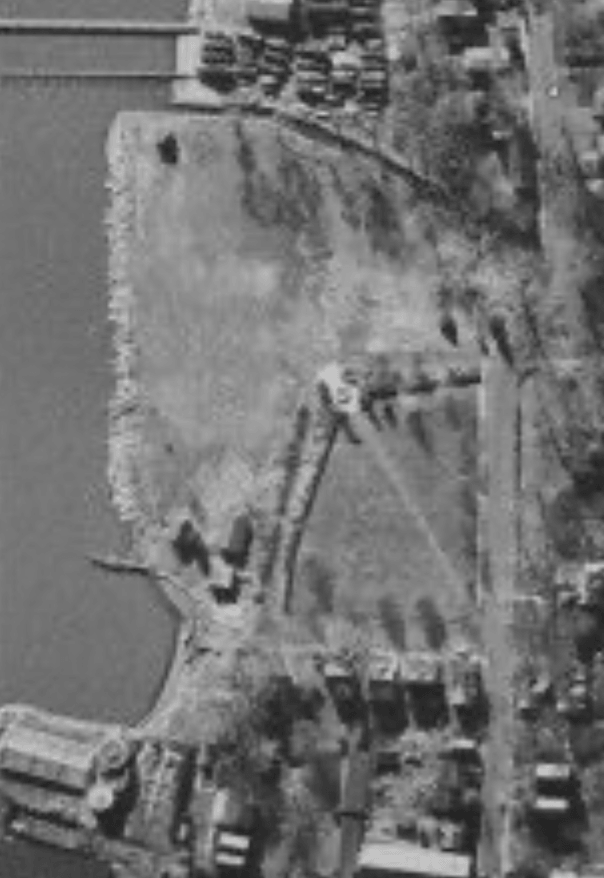
However, the park looked very different from today. The upper level formed the usable space. The lower level barely existed. During storms, water often covered much of it. In summer, the Women’s Civic League of Nyack ran a playground and playhouse on the northern edge of that lower ground.
“on rainy days, the kids would be in the playhouse, doing puzzles or games, or making things. Outside, we had the baseball field with boys and girls teams. We used to go wading in the brook and into the dark tunnel it came out of.”
Nyack in the 20th Century
Even after its creation, the Hudson River still defined the park’s edge.
Enter Mayor Kilby’s Plan
Everything changed in 1955.
Mayor John V. Kilby proposed a bold expansion first articulated by Orangetown Supervisor Harold Williams in 1953. . Kilby wanted to push the park out into the Hudson River, more than doubling the lower level from two acres to six. The Nyack Village Board approved the plan.
To do it, Kilby assembled two key ingredients donated by local companies:
- Discarded construction barges from the Tappan Zee Bridge project
- Fill from the demolition of old Route 9W
Workers arranged nine wooden barges offshore in a wide U-shape. They bolted them together and anchored them with piles. The barges would act as a breakwater. Fill would then create new land behind them.
Initial plans included boat ramps, ballfields, courts, winter skating areas, and parking. For a moment, Nyack imagined a transformed waterfront.
Kilby’s Folly
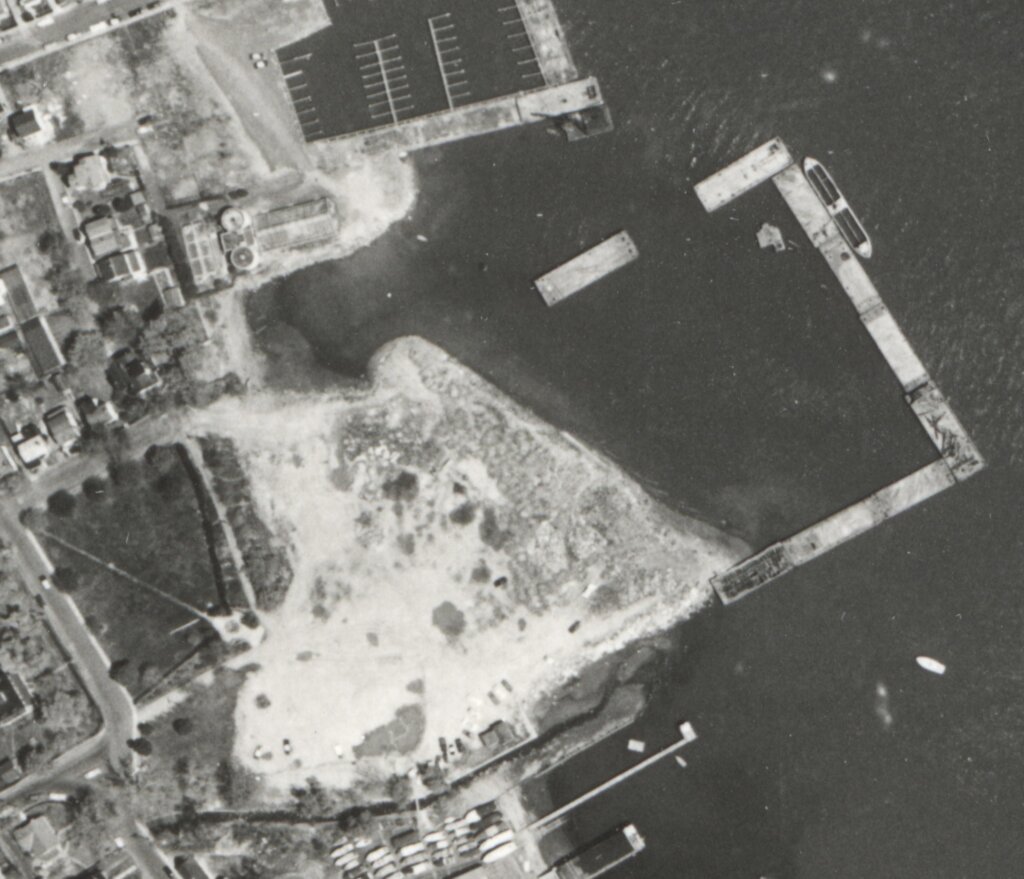
Memorial Park expansion underway, 1958 aerial. Barges form a U-shaped breakwater offshore; the concrete barge sits just beyond the wooden line at the northeast corner. Courtesy of the Rockland County Planning Department.
At first, the plan moved forward.
In early 1955, trucks delivered thousands of tons of fill. Bulldozers spread it across the site. However, without proper containment, some of it washed away, especially along the southern edge.
Residents soon complained about dust and noise. The village halted deliveries. At the same time, the supply of fill dried up. Whether the state ran out or the village miscalculated the amount needed remains unclear.
By 1956, the consequences were clear. A wide gap still separated the shoreline from the barges offshore. At that point, the entire concept shifted.
Instead of expanding the park, officials proposed a marina within the enclosed water. In 1957, Tappan Zee Yacht Club, Inc., nascent since 1928, offered to lease the site. The club imagined a more ambitious waterfront, including a full-service marina, a restaurant, and even a heliport.
For a brief moment, Nyack stood on the verge of building a destination waterfront. A lease followed and plans advanced. However, within a year the proposal collapsed. The marina was never built, and the open water remained. From that point forward, residents referred to the failed effort as Kilby’s Folly.
The Concrete Barge
Now we return to the mystery.
One of those barges was not wooden. It was concrete. Located just outside at the northwest corner of the wooden barges, it stood out.
At first glance, it seems impossible. Concrete is heavy. It sinks.
However, a concrete barge does not rely on weight alone. It relies on design.
Like steel ships, these vessels contain hollow compartments. Those sealed spaces trap air and displace water. As long as the vessel weighs less than the water it displaces, it floats.
Engineers used this approach during World War I, when steel was scarce. Shipbuilders experimented with reinforced concrete as an alternative and produced a small fleet of barges to carry oil, fuel, and other cargo.
The Memorial Park barge is a rare survivor from that experiment—a solid-looking structure that once floated and worked before becoming part of Nyack’s most ambitious waterfront plan.
Research by maritime historians, including the “Crete Fleet,” suggests this barge dates to around 1918. It likely belonged to a small group of experimental vessels used to transport oil and asphalt for the Standard Oil Company of New York.
In other words, the object offshore is not random debris. It is part of a short-lived chapter in global shipbuilding history.That is the “gee-whiz” moment.
What Happened Next
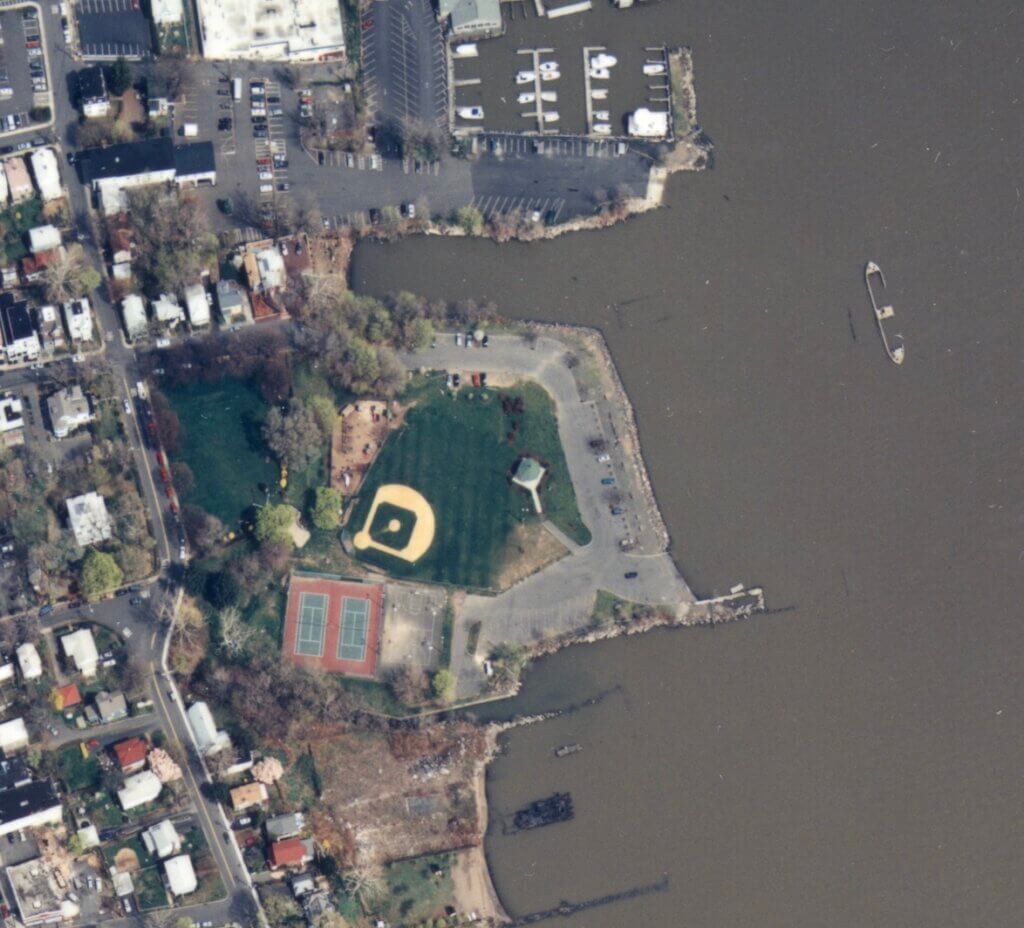
Over the following decades, the wooden barges decayed. Only fragments remain visible at low tide. The concrete barge endured.
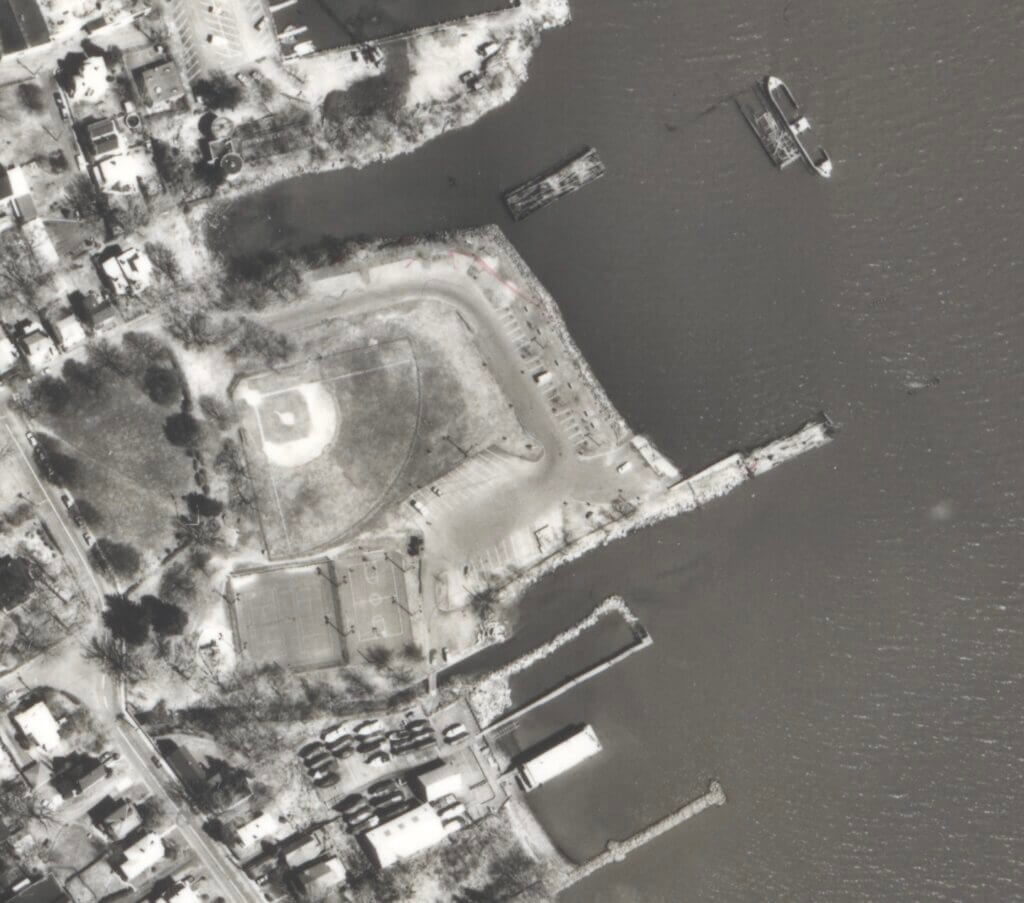
Memorial Park shoreline, 1987. With the expansion abandoned, wooden barges had largely decayed while ballfields, courts, and other park features filled the reclaimed land. Courtesy of the Rockland County Planning Department.
Efforts to remove the barges surfaced repeatedly in the 1960s, 1970s, and beyond. Each time, costs proved too high. Plans stalled. Storms reshaped the shoreline.
Meanwhile, Memorial Park continued to evolve. Renovations improved the waterfront, and new facilities replaced earlier ambitions. Yet the concrete barge stayed in place.
A Solved Mystery
So what is that concrete hulk?
It is the remnant of a failed mid-century expansion.
It is part of a forgotten marina plan.
It is a survivor from an experimental era of concrete shipbuilding.
And it is still there, quiet, half-submerged, and largely unexplained.
Perhaps it should not be removed.
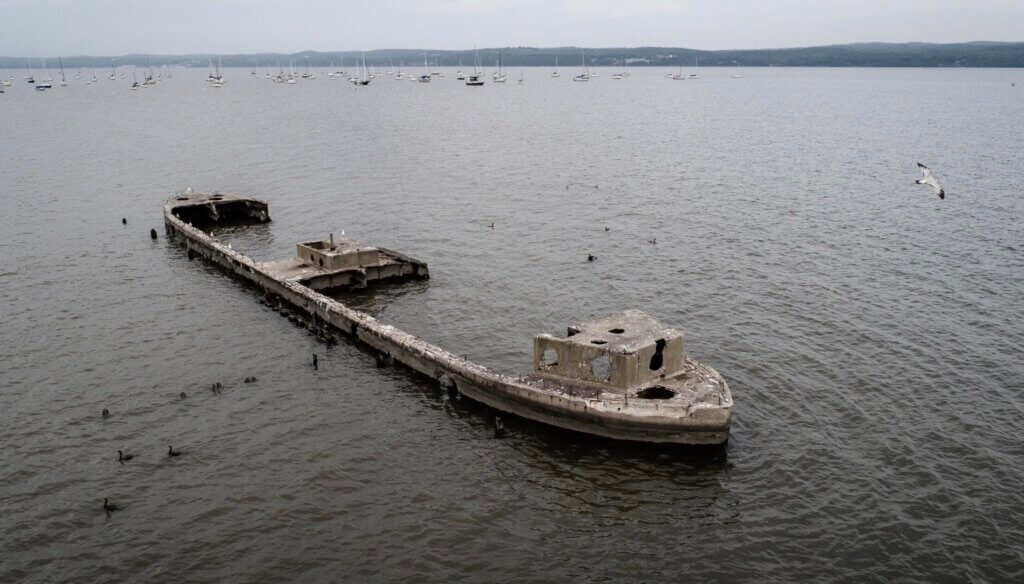
Concrete barge detail at low tide. A rare World War I–era vessel, it now stands as the last physical remnant of Kilby’s Folly. Courtesy of r/Shipwreck Porn.
🛎️ Note: For a lengthy study of the history of the barges and in particular a very detailed study of concert barges and the identity of this specific barge check out https://thecretefleet.com/f/nyack’s-concrete-barge Nyack’s Concrete Barge-History in the Hudson, August 5, 2023
👏 Thank you to Andrew Goodwillie who provided the scans.
About the author
Mike Hays has lived in the Nyacks for 38 years. After a career as an executive at McGraw-Hill Education in New York City, he now focuses on researching, writing, and interpreting local history.
He serves as Treasurer and past President of the Historical Society of the Nyacks. He is also a Trustee of the Edward Hopper House Museum & Study Center and Historian for the Village of Upper Nyack. In these roles, he works with community partners to preserve historic resources and expand public understanding of the area’s past.
Since 2017, he has written the popular Nyack People & Places column for Nyack News & Views. The series chronicles the history, architecture, and personalities of the lower Hudson Valley.
Hays has also developed museum exhibitions, written interpretive materials, and led well-attended walking tours that bring Nyack’s history to life.
He is married to Bernie Richey. He enjoys cycling, history walks, and winters in Florida. You can follow him on Instagram at @UpperNyackMike
Editor’s note: This article is sponsored by Sun River Health and Ellis Sotheby’s International Realty. Sun River Health is a network of 43 Federally Qualified Health Centers (FQHCs) providing primary, dental, pediatric, OB-GYN, and behavioral health care to over 245,000 patients annually. Ellis Sotheby’s International Realty is the lower Hudson Valley’s Leader in Luxury. Located in the charming Hudson River village of Nyack, approximately 22 miles from New York City. Our agents are passionate about listing and selling extraordinary properties in the Lower Hudson Valley, including Rockland and Orange Counties, New York.