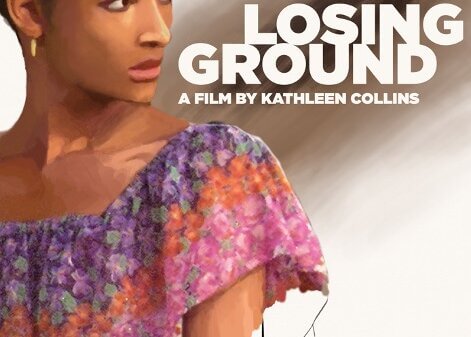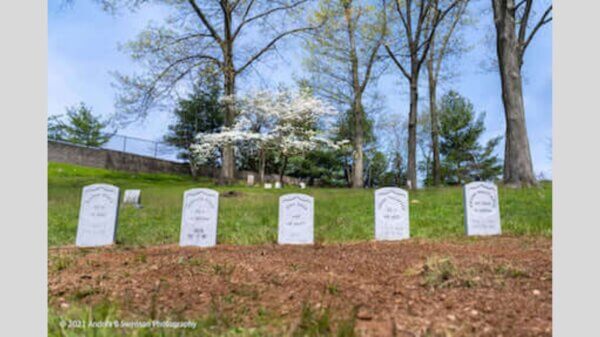
Last night I attended Rivertown Film Society’s showing of “Losing Ground” at the Nyack Center. The film was produced, written and directed by Piermont and Nyack’s own Kathleen Collins. It was shot on location in Haverstraw and Harlem and features many familiar local faces including well-known filmmaker, Bill Gunn. The event was in honor of Black History Month and was co-sponsored by community partners: The Historical Society of Nyack, The Piermont Historical Society, The African American Historical Society of Rockland County, Nyack and Spring Valley NAACP, and The CEJJES Institute.
According to Rivertown’s website, “Kathleen Collins (1942-1988) made “Losing Ground,” one of the first feature films to be directed by a Black woman filmmaker. When the artist husband of a philosophy professor sells a painting to a major museum, he decides the couple should head off to the country for the summer, and picks Haverstraw because he feels drawn to the landscape, the light, and “those Puerto Rican ladies.”
It was rarely seen until 2015, when it was the opening night film of the seminal Film at Lincoln Center series, “Black Independents in New York, 1968-1986.” Rave reviews quickly led its first ever theatrical run and a wide theatrical release. Had that happened when it was made it would have been recognized as one of the most important and original films of its time (“A cinematic masterwork” – Richard Brody, The New Yorker, 2015).”
There is a fantastic backstory about how the film was re-discovered, preserved, and distributed properly, particularly through the efforts of Collin’s daughter, Nina. (for the full story, listen to my BEING FRANK podcast with Nina Collins here –
The film itself is a remarkable look into a rarely seen aspect of the lives of Black Americans, i.e. as intellectuals. It is a deep dive into the lives and minds of a diverse and fascinating group of people that are seldom, if ever, seen in mainstream cinema. It is challenging but also witty. It makes you think AND smile. THAT’S great cinema.
The film has such a great influence on other Black filmmakers that in the discussion that followed the movie, Collin’s son Emilio told the story of meeting Spike Lee and when Emilio asked Lee if he knew of his mother’s work, Lee responded: “Know? If it wasn’t for your mother, I wouldn’t be where I am today.” High praise indeed.
The venue was packed and the audience very appreciative. There was only one thing missing: black folk. I estimated the crowd to be between 150 and 200 hundred people. Out of that number, I counted 4 black people. And virtually no “young” people. Even if I estimate is off, the number would still be far below what one might expect. What is further distressing to me is that this is not the only Nyack event where I have witnessed this phenomenon. Nyack prides itself on being a diverse, progressive community. And it IS that. However, from my observation, there STILL seems to be a vast distance between the races here, at least in terms of community participation. It’s not that there is NO racial mixing here, there just isn’t enough. Even when some events are supposedly scheduled specifically to appeal to Black audiences (like last evening), most attendees appear to be older, white folk. Why? What is the cause?
I approached Nicole Hines, NAACP Regional Director Mid-Hudson Westchester and President, Nyack Branch for her thoughts on the issue.
This is her response:
“If our Village is racially diverse, but our overall culture and shared spaces are not, we must pause. Not to shame. Not to blame. But to ask a deeper and more honest question: “How are we building and with whom?” instead of, “Why aren’t they coming?”
This is not about optics. People participate where they feel seen, valued, and genuinely welcomed. Diversity does not equal belonging. A space can be technically open to everyone and still feel as though it belongs to only a few.
Are we truly building the kind of shared civic culture we claim to value?
Diversity without participation becomes symbolic. Participation without shared leadership becomes performative — and shared leadership must extend beyond organizations to include everyday community members. Community requires co-creation.
If we truly believe in Nyack’s identity as a diverse and progressive community, then we must move beyond celebrating diversity and commit to practicing it — intentionally, structurally, and collectively.”
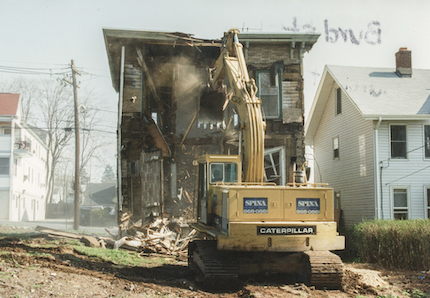
So much of what Ms. Hines can be traced back to the disastrous “Urban Renewal” policy initiative instituted by the Village government back in 1960’s and ‘70’s. It is the subject of a brilliant documentary, “What Ever Happened to Jackson Ave.” During that time 125 families, 80% of them Black, lost their homes to create a parking lot – yes, a parking lot. And not only were families displaced, but many thriving black-owned businesses were also shuttered. It literally changed the face of Nyack. This week’s photo of the bias destruction of urban renewal was taken by a leader in the Black community of the time, Leonard Cooke.
In other words, it “gentrified” and lost the diversity that made it so special. The effects of it, obviously, are still being felt today. Any equity that might have been accumulated by Black families was wiped out in an instant, never to recover. Think of it. If you walk through the village as I so often do, check out the businesses in town and ask yourself how many of them are Black owned? I can tell you that you don’t need 5 fingers to count them. And how many posters celebrating Black History Month will you see? I don’t think that I’ve seen many – if any. How many thriving Black neighborhoods filled with successful businesses and solidly middle-class homes, as there ONCE were, exist today? None.
So, the point is the fault lies not in the event or the activity. It’s in creating a truly inclusive society where EVERYONE is given the same opportunities to not only claim their share of the American dream but to do so by feeling valued in doing so. Black history is not about a “month.” It’s about acknowledging the vast contributions Blacks have made. And not just today, but every day.

Frank LoBuono is a Nyack resident, photographer, blogger and retired CBS News journalist.
Editor’s note: The views expressed in this article are those of this independent writer and not the Nyack News & Views editorial staff. We welcome submissions from anybody who is interested in publishing their thoughts, ideas and perspectives about issues facing our community, both large and small. Please send submissions to info@nyacknewsandviews.com.
Photo credit: George Pejoves